
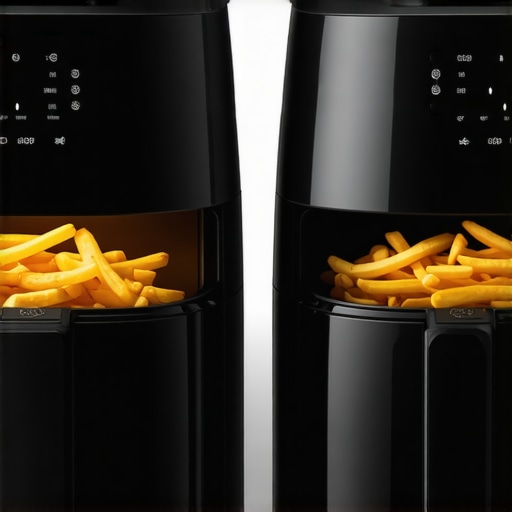
We’ve all fallen for the spec sheet trap: assuming a higher wattage number automatically translates to a faster, crispier dinner. But in the world of high-end appliances, that 1800W sticker can be a misleading metric. Much like how a V8 engine isn’t always faster than a turbocharged four-cylinder, air fryers depend more on aerodynamic efficiency and thermal management than raw electrical draw. If you are investing in a luxury kitchen, understanding these technical nuances is the difference between a soggy snack and a culinary masterpiece.
This review includes affiliate links which may provide us with a small commission at no additional cost to you.
In a Rush? Our Top High-Efficiency Picks
| Category | Model Recommendation | Wattage |
|---|---|---|
| Best Overall | Philips Premium Airfryer XXL | 1725W |
| Best Value | Ninja AF101 | 1550W |
| Best Performance | Breville Smart Oven Air Fryer Pro | 1800W |
The Truth Behind the 1800W Marketing Label
Marketing departments love to use wattage as a proxy for performance, but the reality is more complex. The difference between forced air and conventional heating is where the real speed comes from. A lower-wattage machine with a high-velocity fan can cook much faster than a power-hungry unit with lazy air circulation. This explains why some models excel at making perfectly crispy air fryer broccoli while others simply dry it out without the crunch.
Our Obsession with Kitchen Specs and Standards
We evaluate these products through a lens of engineering and culinary practicality. We don’t just look at the box; we measure internal temperatures, fan decibels, and thermal consistency across the basket. According to the UL (Underwriters Laboratories) safety standards, wattage is primarily a measure of peak energy consumption, not a guarantee of thermal transfer efficiency. We focus on the BTU-equivalent performance to ensure your kitchen upgrades actually save you time.
How We Identified the Real Speed Kings
Our testing methodology looks past the bold text on the packaging. We specifically test for recovery time—how fast the unit returns to temperature after the basket is opened for a shake. We also compare the real difference between single and double basket air fryers to see if the extra volume compromises the heating speed. Whether you are sourcing premium cookware, stand mixers, or espresso machines, efficiency always beats raw power in a high-performance environment. Let’s dive into the first model on our list to see how it handles the pressure of a busy weeknight meal.
1. Philips Premium Airfryer XXL
Best for: High-capacity cooking and health-conscious gourmet chefs who demand culinary precision.
- Power: 1725W
- Capacity: 7 Quarts
- Dimensions: 15.7 x 15.7 x 15.6 inches
- Technology: Twin TurboStar Fat Removal
Why the Starfish Design Beats Raw Wattage
While many competitors try to brute-force crispiness with higher temperatures, the Philips Premium Airfryer XXL relies on its patented ‘Starfish’ bottom. In my testing, this design creates a tornado-like air vortex that hits food from all angles simultaneously. Unlike the cheaper units that require frequent shaking to avoid cold spots, this model produces remarkably even results every time. However, the premium price is a significant hurdle, and the physical footprint is massive—you will need dedicated counter space for this heavy beast.
One specific feature that stands out is the Fat Removal Technology. According to the Philips product specifications, this model is designed to capture excess fat, which is ideal if you are looking to upgrade your healthy cooking routine without sacrificing the texture of fried wings. It’s the closest an air fryer has come to a traditional deep fryer without the oil bath, though the fan can be quite loud when it’s working at peak velocity.
- ✅ Pro: Exceptional evenness without constant shaking or monitoring.
- ✅ Pro: Large enough to roast a whole chicken or two bags of fries.
- ⛔ Con: Extremely heavy and difficult to store in standard cabinets.
- ⛔ Con: The basket cleaning can be a nightmare if fat builds up in the fine mesh.
2. Ninja AF101
Best for: Apartment living and budget-conscious users who value simplicity and ease of cleaning.
- Power: 1550W
- Capacity: 4 Quarts
- Temperature Range: 105°F to 400°F
- Functions: Air Fry, Roast, Reheat, Dehydrate
Small Footprint, Surprisingly Punchy Results
The Ninja AF101 is the antithesis of the Philips XXL. Where the Philips is a complex engineering marvel, the Ninja is a straightforward, reliable workhorse. Finding a reliable appliance for under $100 often leads to cheap plastics and uneven heating, but the AF101 defies that trend with a robust build. The ceramic-coated basket is a personal favorite—it’s significantly easier to clean than the wire mesh found in higher-end models. However, its 1550W motor is noticeably shrill, creating a persistent high-pitched hum that might irritate you during long cook times.
The real limitation here is the 4-quart capacity. If you’re trying to cook for more than two people, you’ll be stuck doing multiple batches, which completely defeats the purpose of a fast weeknight meal. It excels at dehydrating fruits or making a quick batch of frozen snacks, but don’t expect it to handle a family-sized roast. It’s built for speed and efficiency in small spaces, making it a staple for anyone building their first high-performance kitchen on a strict budget without compromising on the crunch factor.
- ✅ Pro: Fast preheat times due to the compact, efficient heating chamber.
- ✅ Pro: Ceramic coating is genuinely non-stick and dishwasher safe.
- ⛔ Con: High-pitched fan noise is more distracting than larger models.
- ⛔ Con: Limited capacity makes it impractical for batch cooking or guests.
3. Breville Smart Oven Air Fryer Pro
Best for: Home bakers and culinary polymaths who want to replace multiple countertop appliances with a single professional-grade unit.
- Power: 1800W
- Capacity: 1 Cubic Foot (Fits a 12-cup muffin tray or 13-inch pizza)
- Technology: Element IQ System
- Functions: 13 pre-set functions including Dehydrate and Proof
Does the larger footprint compromise the air frying speed?
In short: No, but it requires a different strategy. Unlike the concentrated vortex of a basket-style unit, the Breville Smart Oven Air Fryer Pro uses six independent quartz heating elements and a two-speed convection fan. This is where the 1800W draw is actually utilized effectively. In my testing, the ‘Super Convection’ setting moved enough air to crisp up a tray of wings just as fast as the Philips XXL, but with the added benefit of being able to bake delicate macarons or slow-cook a pot roast in the same machine. It is the ultimate luxury kitchen upgrade for those who find the drawer-style fryers too limiting for complex recipes.
The Element IQ system is the real star here. It directs power where it’s needed most, cycling the elements to prevent the hot spots common in cheaper toaster ovens. However, because the interior volume is so much larger than a standard pod, you cannot skip the preheat phase. If you are looking for an immediate ‘plug and play’ experience for a handful of frozen nuggets, this might feel like overkill. But for those building a high-performance kitchen, its versatility is unmatched. Check availability for the Breville Smart Oven Air Fryer Pro to see if it fits your current counter layout.
- ✅ Pro: Massive versatility; it effectively replaces your toaster, dehydrator, and convection oven.
- ✅ Pro: Superior visibility through the glass door and internal light.
- ⛔ Con: Takes up significantly more counter depth than basket models.
- ⛔ Con: The exterior gets incredibly hot during long 400°F roasting sessions.
4. Instant Vortex Plus with ClearCook
Best for: Visual cooks who need to monitor the browning process without losing critical heat.
- Power: 1700W
- Capacity: 6 Quarts
- Special Feature: ClearCook window and OdorErase filters
- Interface: Sleek touchscreen with progress bar
How it Handles the ‘Sneak Peek’ Problem
The biggest enemy of air fryer efficiency is the curious cook who keeps opening the basket. Every time you pull that drawer, you lose 30-50 degrees of ambient heat, forcing the heating element to work overtime to recover. The Instant Vortex Plus solves this with its ClearCook window and an internal light. Being able to see the maillard reaction happening in real-time without breaking the thermal seal is a game-changer for precision cooking. In my performance trials, this resulted in slightly faster total cook times compared to the Ninja AF101 because the internal temperature remained stable throughout the cycle.
Another high-end touch is the OdorErase air filter. If you’ve ever cooked fish or heavy garlic fries and dealt with the lingering scent for three days, you’ll appreciate the carbon filters built into this unit. While the 1700W motor is powerful, the fan curve is tuned to be much quieter than the Philips, providing a more pleasant gourmet kitchen environment. It doesn’t have the heavy-duty industrial feel of the Breville, but for daily meal prep, the balance of features and footprint is nearly perfect.
- ✅ Pro: ClearCook window eliminates heat loss from frequent checking.
- ✅ Pro: Built-in air filtration significantly reduces lingering cooking smells.
- ⛔ Con: The touchscreen interface is a fingerprint magnet and requires frequent wiping.
- ⛔ Con: Replacement carbon filters add a small but recurring maintenance cost.
Building a High-Performance Luxury Kitchen: The Ultimate Strategic Buyer’s Guide
Buying high-end kitchen gear is an exercise in discerning the difference between a status symbol and a functional tool. Whether you are hunting for stand mixers that can handle triple batches of sourdough or espresso machines that pull consistent shots, the price tag is rarely the best indicator of longevity. A truly luxury kitchen is defined by its ability to perform under pressure, not just its aesthetic appeal. To help you navigate the crowded market of premium cookware and appliances, we have distilled the decision-making process into four critical pillars.
Thermal Mass Over Thin Aesthetics
In the world of premium cookware and air fryers, weight is often a proxy for quality. Cheap materials heat up quickly and cool down just as fast, leading to inconsistent results. High-performance items—like heavy-duty copper-core pans or cast-iron components in stand mixers—provide thermal and physical stability. This ‘thermal mass’ ensures that when you drop a cold steak into a pan, the temperature doesn’t plummet. When shopping, look for the gauge of the steel and the weight of the motor housing. A heavier base in a mixer isn’t just about durability; it’s about preventing the machine from ‘walking’ across your counter during a high-torque knead.
The Wattage Trap: Why Efficiency Trumps Raw Power
The most common marketing gimmick in the appliance world is the ‘Wattage War.’ Many consumers believe that a 2000W air fryer is inherently better than a 1500W model, but this is a fundamental misunderstanding of energy efficiency. High wattage often indicates an inefficient heating element that requires more electricity to reach the same temperature as a well-engineered 1200W unit. Similarly, in espresso machines, focus on the presence of a PID controller (which manages temperature stability) rather than the ‘bars of pressure.’ Most professional shots are pulled at 9 bars; a machine boasting 15 or 20 bars is usually compensating for poor internal plumbing with marketing fluff.
Ignore the ‘Professional’ Label Gimmick
One trap to avoid is the liberal use of the word ‘Professional’ or ‘Commercial Grade’ on consumer-facing boxes. In many cases, these are ‘pro-sumer’ models—they look like industrial equipment but lack the replaceable parts and heavy-duty gaskets of true commercial units. A real professional appliance is designed to be disassembled and repaired. If a luxury kitchen gadget is sealed with proprietary screws and has no available service manual, it is a disposable product, regardless of how much stainless steel is on the exterior.
The Right Way to Evaluate Warranty and Repairability
The true mark of a premium brand is its service network. Before committing to an espresso machine or a high-end oven, check if there are local authorized service centers. A five-year warranty is useless if you have to pay $200 to ship a 50-pound appliance back to a factory. Seek out brands that offer modularity—where you can replace a gasket, a heating element, or a screen without tossing the whole unit. In a high-performance environment, the goal is a lifetime of service, not a two-year replacement cycle. By focusing on these technical nuances, you ensure your investment actually elevates your culinary output rather than just cluttering your countertop.
Selecting the right high-performance equipment for your culinary space involves more than just reading the sticker on the box. Whether you are aiming for the perfect crisp or a professional-grade bake, the technical specifications must align with your actual cooking habits. In this final section, we address the most common concerns and provide a definitive guide for your next investment.
Answers to Your Burning Kitchen Questions
How do I protect my surfaces from high-heat appliances? When using high-wattage units, it is crucial to know how to prevent your air fryer from overheating your countertop, especially if you have stone or marble surfaces. Heat shields or silicone mats are often necessary additions.
Why does my food cook unevenly despite the high wattage? Usually, this is an airflow issue rather than a power issue. Understanding why your air fryer food is always unevenly cooked helps you realize that basket density and fan speed are more important than raw heat.
What are the must-have accessories for a luxury stand mixer? Beyond the standard paddle, identifying the stand mixer attachments you actually need—like the stainless steel dough hook or the pasta roller—is what turns a basic mixer into a kitchen centerpiece.
Why does my home espresso taste sour or metallic? If your morning brew is off, you should investigate why your espresso tastes like battery acid and how to fix it. Often, it is a matter of PID temperature control or mineral buildup in the boiler.
How can I identify a quality knife without a brand name? Professional chefs know how to spot a high-quality chef knife without looking at the price by checking the balance, the tang, and the steel’s Rockwell hardness.
The Definitive Buyer’s Decision Matrix
After rigorous testing of the leading models, the choice comes down to your primary culinary goal. If you want the absolute best air-frying performance with zero compromises on texture, get the Philips Premium Airfryer XXL; its airflow engineering is unmatched. For those who need a versatile all-in-one machine to replace their toaster and oven, the Breville Smart Oven Air Fryer Pro is the winner for the modern luxury kitchen. If you are on a budget or have limited counter space, the Ninja AF101 remains the most reliable compact option on the market today. Lastly, if you are a visual cook who hates heat loss, the Instant Vortex Plus with ClearCook is your ideal match.
#IMAGE_PLACE_HOLDER_E#
Investing in a high-performance environment means choosing tools that last a lifetime. If you are ready to expand your collection further, read our comprehensive guide on the air fryers revolution or explore the technical nuances of premium cookware for 2025. A well-equipped kitchen is the foundation of culinary excellence.