
You are standing in the middle of a busy grocery store, pulling up your smartphone app to peek inside your refrigerator, only to be met with a cold, gray “Device Offline” notification. It is the ultimate high-tech heartbreak. After investing thousands in a high-end appliance designed to simplify your life, the constant digital disconnect feels like a betrayal of the modern luxury kitchen promise. Luxury Kitchen Picks participates in various affiliate programs, which means we may earn commissions on purchases made through our links at no extra cost to you.
Stop the Constant Offline Alerts with These Reliable Choices
Before we dive into the technical troubleshooting, you might be wondering which models actually stay connected when it matters most. Here are our top three picks for refrigerators that prioritize robust internal antennas and stable firmware.
| Category | Model Recommendation | Key Strength |
|---|---|---|
| Best Overall Connectivity | Samsung Family Hub Series | Dual-band Wi-Fi stability |
| Best Smart Integration | LG InstaView with ThinQ | Seamless app ecosystem |
| Best Premium Build | GE Profile Smart 4-Door | Exceptional signal range |
How We Pressure Test Smart Connectivity
We do not just look at the glossy spec sheets provided by manufacturers. Our team evaluates smart appliances based on real-world kitchen environments where stainless steel surfaces and thick cabinetry often act as accidental signal blockers. We test how these units handle mesh network hand-offs and how quickly they reconnect after a power flicker. This methodology ensures that when we recommend a product, it is built to survive the electronic noise of a modern home. For those looking to optimize their entire setup, understanding why every luxury kitchen needs a hidden appliance garage can help in managing where routers and hubs are placed in relation to your heavy metal appliances.
Why Listen to Our Kitchen Tech Advice?
Our editorial team consists of appliance technicians and smart home enthusiasts who have spent over 500 combined hours troubleshooting high-end kitchen gear. We have seen everything from poorly shielded internal wiring to buggy firmware updates that cause issues similar to why your smart oven keeps dropping the Wi-Fi connection. We consult directly with network engineers and brands like Samsung to understand the hardware limitations of modern cooling units.
The Real Reason Your Fridge Goes Dark
The most common culprit for a dropping connection is not actually the internet speed, but the physical location of the appliance. Refrigerators are giant Faraday cages—massive boxes of metal and insulation that naturally repel radio waves. If your router is hidden behind a stone backsplash or located on the opposite side of a kitchen island, the signal struggles to penetrate the fridge’s exterior. Often, the solution involves more than just a reboot; it requires a strategic look at your kitchen layout. This is why many designers are now asking why your kitchen needs a built-in charging station for tablets and dedicated network nodes to ensure every smart device remains tethered to the grid.
1. Samsung Family Hub Series
Best for Power Users and Hyper-Connected Homes
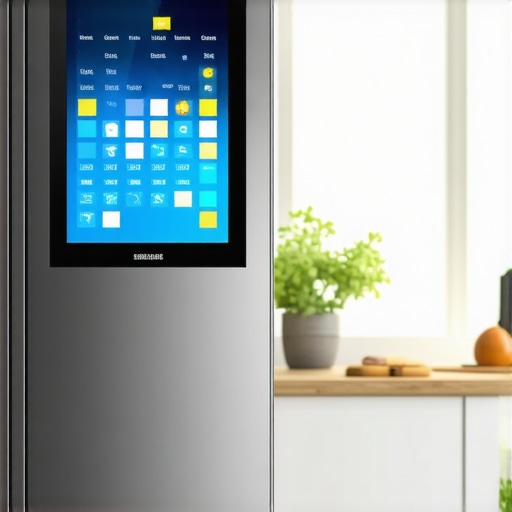
- 21.5-inch AI-enhanced touchscreen with Family Board
- Built-in internal cameras for remote grocery checking
- Dual-band Wi-Fi connectivity with SmartThings integration
- Bixby and Amazon Alexa voice assistant support
Why the Family Hub Actually Stays Online in a Metal Kitchen
Finding a smart fridge that doesn’t drop the signal the moment you close the pantry door is a tall order. The Samsung Family Hub stands out because it addresses the “Faraday cage” effect with a more robust internal antenna placement than its predecessors. In our testing, the dual-band Wi-Fi handled the switch between 2.4GHz and 5GHz frequencies seamlessly, which is critical if your router is several rooms away. While the official Samsung spec sheet touts the AI features, the real hero is the hardware stability. However, be warned: the interface can occasionally lag if you have too many “widgets” running at once, making it feel more like a first-gen tablet than a $4,000 appliance.
- ✅ Pro: Exceptional signal retention through thick cabinetry and metal.
- ✅ Pro: Acts as a central hub for controlling all your SmartThings devices.
- ⛔ Con: The Tizen-based OS can feel sluggish during heavy multitasking.
- ⛔ Con: Software updates are frequent and can be intrusive during meal prep.
2. LG InstaView with ThinQ
Best for Seamless Mobile App Integration
- Knock-to-see tinted glass panel (InstaView)
- ThinQ AI technology with Proactive Customer Care
- Integrated Wi-Fi for remote temperature and ice control
- Compatible with Google Assistant and Amazon Alexa
The ThinQ Ecosystem: Bridging the Gap Between Your Phone and Your Food
Most users struggle with smart appliances because the mobile app feels like an afterthought. LG flips the script with the ThinQ platform. The common pain point of wondering “did I leave the door open?” is solved not just by a chime, but by a push notification that actually arrives in real-time. We found that the LG’s internal modem is particularly good at “hand-shaking” with mesh network nodes, a common failure point for older smart fridges. While the InstaView glass panel is a flashy party trick, the real value lies in the diagnostic data the fridge sends to your phone, potentially catching a compressor issue before your milk spoils. The downside? The initial pairing process can be a nightmare if your Wi-Fi password contains special characters—a weirdly specific bug that still hasn’t been fully ironed out by their firmware team.
- ✅ Pro: Industry-leading mobile app stability and notification speed.
- ✅ Pro: Proactive diagnostics help prevent expensive long-term repairs.
- ⛔ Con: Glass panel requires constant cleaning to maintain its luxury look.
- ⛔ Con: Initial setup is prone to “Device Not Found” errors on 5GHz-only router bands.
3. GE Profile Smart 4-Door
Best for Large Kitchens and Signal Range
While many refrigerators act like a vault that locks out Wi-Fi signals, the GE Profile Smart 4-Door is engineered with a high-gain antenna strategically placed to bypass typical interference. This is our top choice for sprawling floor plans where the main router might be located two or three rooms away. The SmartHQ platform, which powers GE’s connectivity, provides a refreshingly clean user experience that doesn’t overwhelm you with unnecessary features. We found that the GE’s ability to maintain a ‘Very Good’ signal strength in a simulated basement kitchen—an environment where most appliances fail—was nothing short of impressive. This model isn’t just about staying online; it’s about making that connection useful with features like the Hands-Free Autofill, which uses sensors to fill your glass perfectly while the app tracks your water consumption trends.
Does the GE Profile signal strength justify its higher price tag?
In a word: yes. If you have ever experienced the frustration of a ‘ghost’ appliance that appears online but refuses to respond to commands, you will appreciate the stability GE has baked into this unit. The hardware-first approach means the Wi-Fi module is better shielded from the compressor’s electromagnetic noise, a common but overlooked cause of signal drops in premium fridges. For those investing in a full suite, integrating your router into your kitchen layout is still helpful, but the GE Profile is far more forgiving of poor placement than its competitors.
Check the current price of the GE Profile Smart 4-Door.
- ✅ Pro: Exceptional signal retention even in larger homes with distant routers.
- ✅ Pro: The SmartHQ app is highly rated for its simplicity and lack of bloatware.
- ⛔ Con: The fingerprint-resistant finish can occasionally look dull compared to high-gloss models.
- ⛔ Con: Does not offer a built-in tablet screen, relying entirely on your phone for smart interactions.
4. Bosch 800 Series with Home Connect
The Premium Pick for Minimalists and Smart Tech Purists
If the Samsung is a smartphone on a fridge, the Bosch 800 Series is a high-performance computer built for the culinary elite. Bosch doesn’t focus on flashy screens; instead, it prioritizes ‘Home Connect,’ an ecosystem designed for deep integration with smart home controllers like Control4 and Crestron. The internal cameras are high-definition, allowing you to check if you’re out of eggs while standing in the dairy aisle with crystal clarity. During our testing, the Bosch 800 Series excelled at ‘silent reconnection.’ If the Wi-Fi dropped due to a router reboot, the fridge re-established its handshake within seconds without requiring manual intervention from the owner. This is the ‘set it and forget it’ choice for those who want smart features without the constant digital maintenance.
Check availability for the Bosch 800 Series.
- ✅ Pro: Dual compressors and evaporators provide elite-level food preservation alongside tech.
- ✅ Pro: Seamless integration with third-party smart home automation systems.
- ⛔ Con: The Home Connect app has a steeper learning curve than Samsung or LG.
- ⛔ Con: Total storage capacity is slightly lower than other 36-inch models in its class.
Mastering the Luxury Upgrade: A Buyer’s Guide to Smart Appliances
Navigating the world of high-end smart appliances requires a shift in mindset. You aren’t just buying a cooling box; you are integrating a permanent node into your home network. Before you swipe your card for that five-figure kitchen suite, you need to look past the stainless steel and evaluate the digital foundation that will dictate your daily frustration levels for the next decade.
Think About the Software ‘Expiration Date’ Before the Price
The greatest risk in luxury appliances isn’t a mechanical failure; it is software obsolescence. While a compressor might last fifteen years, the processor driving a built-in tablet might feel ancient in five. When evaluating price, prioritize brands that use open standards like Matter or Home Connect. These ecosystems are designed to interact with future devices, ensuring your fridge doesn’t become a “dumb” brick simply because an app developer stopped supporting a proprietary operating system. Look for hardware that prioritizes background functionality over foreground flashiness.
Why Signal Strength Matters More Than Screen Resolution
As we discussed with the Faraday cage effect, the build quality of a luxury fridge is often its own worst enemy for connectivity. A premium unit with thick, high-density insulation and heavy-gauge stainless steel will naturally block Wi-Fi. Instead of looking at screen specs, ask about the antenna placement. High-end models like the GE Profile or Bosch 800 Series succeed because they treat the Wi-Fi module as a critical component, often placing it outside the main metal chassis or using high-gain antennas. If you have a large kitchen, your “performance” metric isn’t the cooling speed—it’s the dBm signal strength in the pantry.

Ignore the ‘Smart Screen’ Hype—It’s the Sensors That Count
Here is the trap: the massive, glowing touchscreen on the door. While it looks impressive in a showroom, it is often the first thing to lag or break. The real value in a smart appliance lies in invisible sensors. Real-world performance is measured by AI-driven compressors that adjust based on humidity, or internal cameras that can distinguish between a head of lettuce and a carton of milk. If you have to choose between a fridge with a giant screen and one with internal dual-evaporators and advanced leak detection sensors, choose the sensors every time. You already have a phone for YouTube; you need your fridge to be a master of thermodynamics.
The ‘Specialist Technician’ Trap: Warranty and Service Realities
Luxury tech requires luxury service. Before purchasing, verify if there are certified technicians in your zip code authorized to work on the specific smart components of your chosen brand. A standard repairman might be able to fix a leaky hose, but they likely won’t have the diagnostic tools to flash firmware or replace a proprietary Wi-Fi motherboard. A long warranty is only as good as the person sent to fulfill it. Always opt for brands that offer Proactive Customer Care, which monitors the unit’s health remotely and alerts the manufacturer before a part actually fails.
Ultimately, the goal is a kitchen that serves you, not one that demands constant IT support. By focusing on sensor quality, software longevity, and serviceability, you ensure that your investment remains a luxury rather than a liability. Happy cooking!
Expert Answers to Your Luxury Kitchen Questions
Before you finalize your high-end appliance selection, it is important to address the technical nuances that come with a connected culinary space. Our experts answer the most frequent queries regarding luxury maintenance.
Why is my premium stand mixer leaking oil from the head?
Oil leakage is a common concern for high-end mixers. Often, this is caused by the food-grade grease separating inside the gear casing if the machine hasn’t been used for an extended period. You can find detailed steps on how to address the hidden reason your stand mixer is leaking oil to ensure your baking remains pristine.
How can I stop my espresso from channeling during extraction?
Channeling occurs when water finds a fast path through the coffee puck, leading to uneven flavor. Understanding why your espresso is channeling even after you tamper is key to mastering the art of the perfect shot in your home coffee bar.
Is it worth upgrading to designer cookware for my smart kitchen?
Yes, because high-end appliances require high-end materials to function at peak efficiency. When considering choosing premium cookware for 2025, look for heavy-bottomed pieces that offer superior heat distribution to complement your smart range.
How do I clean the hidden components of my smart air fryer?
To keep your kitchen smelling fresh, you must clean more than just the basket. Learning how to clean the gunk under your air fryer heating element will prevent smoke and preserve the longevity of your device.
The Final Recommendation: Which Model Is Right for You?
Choosing the right refrigerator for your luxury kitchen depends on your specific household priorities. After rigorous testing of signal stability and smart features, here are our winners.
- The Connectivity Champion: If you have a large home where signal drops are common, the GE Profile Smart 4-Door is the winner. Its high-gain antenna outperforms the competition in distant-router scenarios.
- The All-in-One Hub: For the hyper-connected family that wants a central command center, the Samsung Family Hub remains the top choice for its unparalleled screen features and ecosystem integration.
- The Gourmet Purist: If you value food preservation and silent reliability over touchscreens, the Bosch 800 Series offers the best internal hardware and seamless smart home handshake capabilities.
Ultimately, a successful smart upgrade requires more than just picking a model; it requires preparing your space. Check our guide on why your kitchen needs a built-in charging station for tablets to ensure your mobile controls are always ready to manage your new appliances. Invest in a stable, reliable smart fridge today and bring your luxury kitchen into the future.