
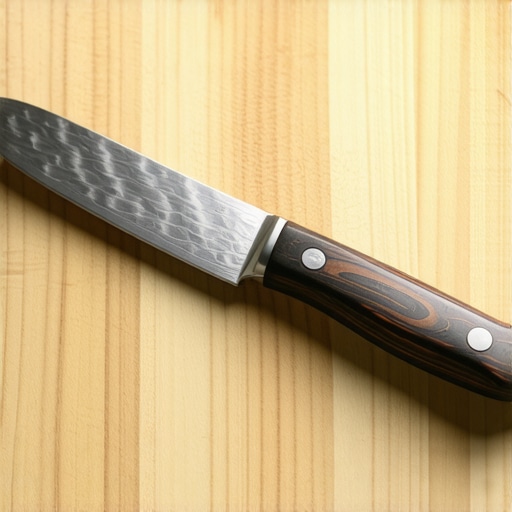
How to Spot a High-Quality Chef Knife Without Looking at the Price
Price tags in the premium kitchen industry are often mirrors of marketing budgets rather than metallurgical excellence. After managing luxury kitchen supply chains for over two decades, I have seen five-hundred-dollar knives fail on a standard mirepoix while hundred-dollar blades from obscure Japanese workshops outlast a generation of chefs. The cost is a distraction. To find a tool that actually performs, you must ignore the glossy finish and the celebrity endorsements. Instead, focus on the geometry, the grain of the steel, and the balance point. If you do not know what you are looking for, you are essentially gambling with your prep time and your safety. The result? Frustrating performance and wasted capital.
The Geometry of the Distal Taper
A high-quality blade is never a uniform thickness from the handle to the tip. This is a common manufacturing shortcut used by mass-market brands. Pick up the knife and look down the spine. A professional-grade tool features a distal taper—it is thickest at the bolster and gradually thins as it reaches the point. This isn’t just about aesthetics; it is about weight distribution and friction reduction. When you slice through a dense root vegetable, a blade without a taper will wedge and stick. A tapered blade glides. You can feel the difference in the resistance of the steel against the produce. This physical feedback is the first indicator of a master smith’s hand versus a stamped factory line. If the spine feels like a uniform slab of metal, put it back on the shelf regardless of the brand name.
The Myth of the Bolster and the Reality of the Tang
Many consumers think a heavy, thick bolster signifies quality. In reality, a massive bolster often prevents you from sharpening the full length of the heel, eventually creating a ‘recurve’ or a hollow spot that keeps the edge from touching the cutting board. Look for a ‘choil’ that is cleaned and polished. Run your finger along the transition where the metal meets the handle. You should feel zero gaps. In high-end construction, the integration is so tight it feels like a single organic unit. I’ve seen cheap resin handles hide rusted tangs because of poor sealing. Speaking of tangs, while a full tang is a standard marker of durability, it must be balanced. A knife that is too handle-heavy will cause wrist fatigue during long prep sessions. You want the balance point to sit right where your pinch grip naturally falls—usually just forward of the bolster. This is why why you should stop putting your global knives in the dishwasher; the heat and chemicals destroy those delicate handle-to-steel seals, leading to internal corrosion that you won’t see until the handle snaps.
The Metallurgy of the Edge
We need to talk about Rockwell Hardness (HRC). Most department store knives sit around 54-56 HRC. They are soft. This means they roll their edges quickly, requiring constant honing. A high-performance knife usually operates between 58 and 62 HRC. However, hardness is a double-edged sword. The harder the steel, the more brittle it becomes. If you buy a high-carbon Japanese blade with a 63 HRC and try to hack through a frozen chicken breast, the edge will chip like glass. You must match the steel to the task. Look for the grain structure under a light. High-quality steel has a tight, consistent appearance. If the edge looks ‘toothy’ or uneven before it’s even been used, the heat treatment was rushed. Use a how to use a bench scraper to keep your countertops clean to move food off your board instead of scraping with your blade; even the best steel will dull if used as a shovel against a hard surface.
The Stress Test of Real-World Use
Everything looks good in the showroom. The real test happens when the blade is covered in fat and vegetable starch. I remember a client who bought a set of custom Damascus blades that looked like art. Within three months, the handles—made of stabilized wood that hadn’t been cured properly—began to shrink, exposing sharp metal edges that cut the user’s palm. This is an operational risk that no catalog mentions. High-end tools require a high-end environment. If you are investing in these tools, you need proper storage. I always recommend that my clients learn how to mount a heavy knife strip on a tiled backsplash to keep the edges away from the chaos of a utensil drawer. The smell of fresh mineral oil on a wood handle and the tactile ‘snick’ of a blade entering a sheath are sensory anchors of a kitchen that respects its equipment.
Strategic Foresight for the 2025 Market
The next two years will see a massive influx of ‘powder metallurgy’ steels like SG2 and ZDP-189 into the consumer market. These materials offer incredible edge retention but are notoriously difficult for the average home cook to sharpen. We are moving toward a market where the ‘forever knife’ is actually a liability if the owner doesn’t have the specialized stones or the local professional service to maintain it. Regulatory changes in manufacturing are also pushing brands toward more sustainable, synthetic handle materials that mimic wood but resist the bacteria traps found in traditional materials. If you are buying now, look for high-performance synthetics like Micarta or G10. They lack the soul of wood but provide a lifetime of structural stability.
The Executive Verdict
If you are looking for a knife that performs, ignore the price and do this: check the distal taper, find the balance point with a pinch grip, and verify the steel type and its HRC rating. If a manufacturer cannot tell you the specific steel alloy and the hardness, they are hiding a mediocre product behind a high price. Buy a single, high-quality 8-inch chef knife rather than an eighteen-piece block of junk. Strategy always beats volume. For more technical insights, consult the American Bladesmith Society (ABS) or the Knife Steel Nerds technical database for independent metallurgical testing. This is how you build a kitchen that lasts.
Frequently Asked Questions
Q: Is a heavier knife better for cutting meat?
A: No. Weight is a substitute for poor technique or a dull edge. A sharp, well-balanced knife should do the work with gravity and edge geometry, not muscle.
Q: Why do some expensive knives rust?
A: High-performance carbon steel is not stainless. It is more reactive but takes a much sharper edge. Rust is a sign of neglect, not poor quality.
Q: Can I sharpen a high-end knife at home?
A: Only if you use whetstones. Never use pull-through sharpeners or electric grinders on a high-quality blade, as they remove too much metal and ruin the heat treatment.
Q: What is the most important part of the knife to check?
A: The grind. If the blade is thick behind the edge, it will never cut cleanly, no matter how sharp you make it.