
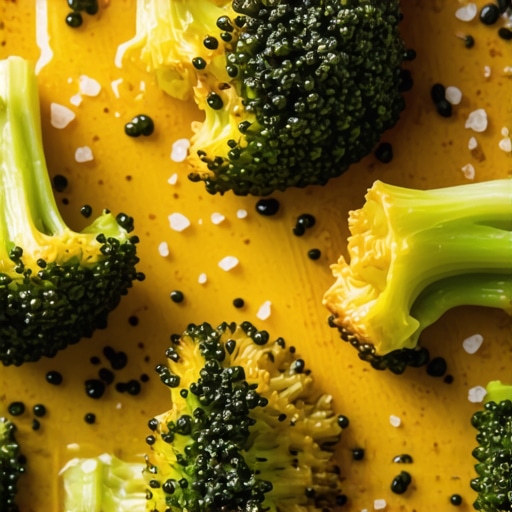
The Secret to Perfectly Crispy Air Fryer Broccoli
Most home cooks treat their high-end air fryer as a miniature oven. This is a fundamental engineering error. After fifteen years managing luxury kitchen installations and troubleshooting professional-grade appliances, I have seen that the difference between a soggy mess and a restaurant-quality char lies in managing moisture vapor pressure. Broccoli is 90 percent water. When you introduce it to a high-velocity heat environment, you are not just cooking; you are managing a rapid phase change. The result of ignoring this? A limp, sulfurous heap that wastes your investment in premium cookware.
The technical reality is that air frying relies on a high-velocity fan to circulate heat, a process known as forced convection. If you do not understand the difference between forced air and conventional heating, you will likely overcrowd the basket. In a crowded environment, the water vapor escaping the florets cannot be evacuated fast enough. This creates a localized steam jacket. Instead of the Maillard reaction—that browning we crave—you get a steaming effect that softens the cellulose without crisping the exterior. My field experience suggests that maintaining a single layer with at least 30 percent open space in the basket is the non-negotiable standard for success.
Thermal Velocity and Moisture Management
To achieve the perfect texture, you must eliminate surface moisture before the broccoli ever touches the heating element. I tell my clients that if their broccoli is wet from washing, the air fryer will spend the first four minutes of the cycle just evaporating that water. By the time the surface starts to crisp, the interior is overcooked. This is a classic thermal bridging issue. You want the exterior to hit 300 degrees Fahrenheit while the interior remains firm. To do this, the floret must be bone-dry. I recommend using a salad spinner and then a lint-free kitchen towel to ensure zero residual moisture.
Oil choice is equally vital. Low-smoke point oils break down under the intense, direct heat of the air fryer’s coil. You need a lipid that can withstand the concentrated airflow. Understanding the best oil to use for high-heat air frying is the difference between a clean, nutty flavor and a kitchen filled with acrid smoke. I prefer avocado oil or refined grapeseed oil for their stability and neutral profiles. The oil should be applied in a thin, atomized layer. If you see oil pooling in the bottom of the basket, you have failed the calibration. It should be just enough to act as a heat transfer medium between the air and the plant matter.
Equipment Failures and Practical Realities
Not all machines are built equal. I have disassembled dozens of units, from budget models to five-hundred-dollar top models that redefine healthy cooking in 2025. The cheaper units often suffer from inconsistent PID (Proportional-Integral-Derivative) controllers. This leads to massive heat spikes. One minute you are at 370 degrees, the next you are at 410. This volatility ruins delicate vegetables like broccoli. If you find your edges burning while the stalks are raw, you are likely dealing with temperature fluctuations in your air fryer that the manufacturer did not account for. High-end units utilize better sensors to maintain a steady thermal environment.
I remember a consultation for a client in a high-rise who complained her expensive air fryer was underperforming. The smell of scorched oil was unmistakable. The issue? She was using the left side of a dual-basket unit which had a failing fan motor. The air was stagnant. Without that velocity, the machine was just a hot box. The clank of the basket being forced into a warped frame is another warning sign. Heat stress on cheap plastics and thin-gauge metals causes the housing to expand, which can interfere with the safety interlocks. If you have to slam the basket, your unit is structurally compromised.
Strategic Foresight for the Modern Kitchen
Looking at the trajectory of kitchen technology for the next 24 months, we are moving toward integrated moisture sensors. Future air fryers will likely adjust fan speed based on the humidity levels detected inside the chamber. This will remove the guesswork from vegetables like broccoli. Until those sensors become standard in luxury builds, the burden of precision remains on the operator. We are also seeing a shift toward ceramic-coated baskets over traditional non-stick, which often flakes under high-velocity friction. This is an important safety consideration for the long-term health of your household.
According to the Association of Home Appliance Manufacturers (AHAM), air fryers have become a staple in over 60 percent of American households, but the knowledge gap in proper maintenance remains wide. Similarly, reports from the National Kitchen & Bath Association (NKBA) indicate that built-in air frying capacity is now a top-three request for high-end renovations. This shift means that understanding these technical nuances is no longer just for enthusiasts; it is for anyone who wants to maintain the value and utility of their kitchen space.
The Executive Verdict
If you want crispy broccoli, stop treating it like a side dish and start treating it like a thermal engineering project. The buy/sell/hold advice here is simple: Buy a unit with a powerful, heavy-duty fan and a ceramic basket. Sell the idea that you can cook two pounds at once. Hold your patience and ensure the vegetables are dry. If you are in a situation where you need to cook for a large group, run multiple small batches rather than one large, crowded one. The quality loss in a crowded basket is exponential, not linear. This is why air fryer food is often unevenly cooked—the physics of airflow simply do not allow for overcrowding.
Technical FAQ
Why does my broccoli smell like sulfur after air frying?
This happens when the broccoli is steamed rather than seared. The prolonged exposure to moisture at mid-range temperatures releases organosulfur compounds. To fix this, increase the temperature to 390 degrees and reduce the quantity in the basket to ensure rapid browning.
Can I use parchment paper in the basket?
Technically yes, but strategically no. Parchment paper blocks the vertical airflow through the basket holes. If you must use it, ensure it is perforated. Blocking the airflow defeats the purpose of the convection engine and leads to soggy results.
How do I prevent the florets from burning?
The florets have a high surface area and low mass, making them prone to rapid heat absorption. Lightly coat them in oil and check the basket at the 4-minute mark. If they are browning too fast, move them to the center of the basket where the direct radiant heat from the coil is slightly less intense.
Is it necessary to preheat the air fryer?
Absolutely. You want the thermal mass of the basket to be up to temperature before the food enters. This creates an immediate sear on contact, preventing the broccoli from sticking and initiating the crisping process the second the cycle starts.