
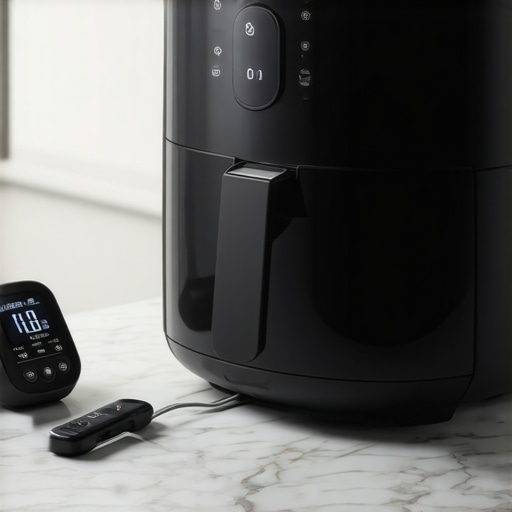
How to Fix the Temperature Fluctuations in Your Air Fryer
Thermal instability in a high-end air fryer is not merely a technical nuisance; it is a fundamental failure of convection physics that ruins the integrity of expensive proteins and artisanal bakes. After fifteen years of diagnosing the mechanical entrails of luxury kitchen appliances, I have identified a hard truth: most temperature fluctuations stem from a breakdown in the feedback loop between the thermistor and the control board. When your appliance fails to maintain a steady state, you are no longer cooking; you are gambling with high-velocity heat. Fixing this requires more than a restart. It requires a forensic look at the thermal sensors and the airflow dynamics that dictate the interior environment.
The Engineering Reality
An air fryer operates as a high-performance convection cell. A Nichrome heating element generates heat while a high-speed fan forces that energy across the surface of the food. The brain of the operation is the Proportional-Integral-Derivative (PID) controller. This system calculates the heat loss and compensates by pulsing power to the element. If the PID receives faulty data from a fouled thermistor, the entire cycle collapses. You might see a target of 400°F, but the actual cavity temperature could be swinging between 350°F and 450°F. The result? Uneven maillard reaction and structural collapse in pastries. To address this, one must first recalibrate the thermostat in your convection air fryer. This is the baseline for restoration. If the software and hardware are misaligned, no amount of cleaning will solve the variance.
The cost-benefit of maintaining thermal precision is clear. A stabilized unit extends the lifespan of the heating element by preventing unnecessary duty cycles. Overworking the relay leads to premature component death. In the world of high-end culinary tools, a 10-degree variance is the difference between a Michelin-star crust and a soggy disappointment. We are talking about the science of heat transfer. The Association of Home Appliance Manufacturers (AHAM) notes that consistent airflow is the primary driver of safety and performance in convection-based appliances. Any obstruction in this flow translates directly into temperature spikes.
The Messy Reality of Implementation Risks
Theory is clean; the kitchen is not. One of the most frequent causes of thermal drift is carbonized grease. I have stood in luxury kitchens where the smell of scorched oil was unmistakable, a clear sign that the internal fan blades were weighted down by sticky residue. This weight reduces the RPM of the motor. When the fan slows, the air stays in contact with the heating element too long. The temperature skyrockets. The sensor reacts, cuts power, and the temperature plummets as the slow fan struggles to move the cooling air. It is a violent oscillation. You must regularly clean the fan blades inside your air fryer to ensure the motor operates within its designed torque parameters. I once saw a flagship model catch fire because the fan stopped completely while the element was at full power. The smell of melting plastic is something you never forget. It signifies a total failure of the safety thermal fuse.
Another overlooked variable is the surrounding environment. Heat needs to escape. High-end kitchens often prioritize aesthetics over thermodynamics, leading to cramped installations. If you ignore the problem with putting your air fryer too close to the wall, you are effectively choking the intake. The machine pulls in its own hot exhaust, confusing the intake sensors and leading to an artificial reading of high heat. This creates a false-positive environment where the food remains cold despite the display showing peak temperatures.
Market Corrections and Strategic Foresight
Looking at the next 18 months, the industry is moving toward solid-state heating and integrated infrared sensors. These will replace the traditional probe-style thermistor. For now, we are stuck with mechanical components that age. The regulatory landscape is also tightening around energy efficiency. Newer models may throttle power more aggressively to meet green standards, which inherently creates more temperature fluctuations if the insulation is sub-par. If you are using an older, premium model, you have a better thermal mass than the newer, lightweight plastic versions. Protect that mass. Avoid the temptation of cheap components. If a part fails, avoid cheap air fryer replacement baskets or third-party elements that do not match the original thermal conductivity specifications. Underwriters Laboratories (UL) standards are there for a reason. Non-compliant parts can alter the resistance of the circuit, leading to erratic heat behavior.
The Executive Verdict
Precision is the only metric that matters. If your air fryer is swinging more than 15 degrees from the setpoint, it is time for a hard intervention. First, verify the intake and exhaust clearances. Second, perform a deep clean of the internal sensors and fan assembly. Third, run a calibration test with an independent thermocouple. If the unit remains erratic after these steps, the logic board is likely failing due to heat fatigue. Buy a unit with a heavy-duty DC motor and a high-grade heating coil. Sell or scrap units that utilize thin-walled aluminum baskets which fail to retain heat. Hold your ground on maintenance; it is cheaper than a replacement. If you are in a high-humidity environment, pay extra attention to the control board housing, as moisture can cause the PID signals to drift.
Frequently Asked Questions
Why does my air fryer stay hot even after I turn it off? This is residual thermal energy in the heating coil and the surrounding insulation. High-quality models use heavy-duty components that take longer to shed heat, which is actually a sign of good thermal mass.Can a firmware update fix temperature swings? Only if the issue is logic-based. Most fluctuations are mechanical or environmental. Check the fan and sensors before blaming the software.Is it dangerous if the air fryer smells like burnt toast? If there is no bread in it, yes. This usually indicates grease buildup on the heating element or the fan motor is overheating. Power down immediately.How often should I test the temperature accuracy? For a professional-grade kitchen, every six months. Use a high-quality digital thermometer to ensure the internal cavity matches the display.