
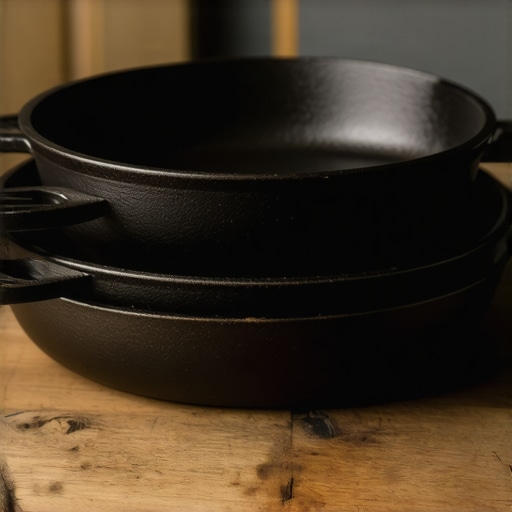
You’ve spent weeks perfecting that jet-black patina, only to hear the soul-crushing clink of metal against metal as you stack your skillets. Nothing ruins a slow-cooked meal faster than realizing your premium cookware is flaking because of poor storage habits. Storing cast iron isn’t just about saving space; it’s about preserving the integrity of a tool meant to last generations. In a world where we obsess over espresso machine precision and air fryer efficiency, your heavy metal deserves the same attention. This guide contains affiliate links, and we may earn a commission if you make a purchase at no extra cost to you.
In a Rush? Here are Our Top 3 Storage Heroes
| Category | Top Recommendation | Key Benefit |
|---|---|---|
| Best Overall | Heavy-Duty Vertical Organizer | Independent access for each pan |
| Best Budget | Extra-Thick Felt Protectors | Zero-scratch stacking |
| Best Premium | Custom Cabinet Drawer Dividers | Integrated luxury look |
Why Metal-on-Metal Storage is a Recipe for Disaster
While cast iron is famously rugged, its seasoning—the polymerized oil that makes it non-stick—is quite susceptible to physical abrasion. When you stack heavy pans, the rough bottoms of the top pan act like sandpaper on the cooking surface below. This leads to micro-scratches that can eventually cause rusting or uneven heating. Similar to how you must learn the best way to season carbon steel, understanding the mechanics of storage prevents a sticky mess of maintenance later on. Furthermore, trapped moisture between stacked pans is the primary cause of flash rust, a headache no cook wants to face on a busy Tuesday night. Proper airflow is just as critical as the barrier itself.
How do we decide which storage methods actually work?
Our team treats kitchen organization with the same technical scrutiny a professional uses to fix bitter espresso. We tested dozens of products against three main metrics: weight-bearing capacity, scratch prevention, and airflow. According to the experts at Lodge Cast Iron, keeping your pans dry and separated is the golden rule for longevity. We specifically look for solutions that reduce the friction involved in everyday cooking and prevent the common damage seen in neglected heirloom pieces.
Our Rigorous Testing Methodology for Kitchen Organizers
To find the best storage solutions, we didn’t just look at aesthetics or marketing claims. We evaluated how each method handled the sheer weight of a full collection—everything from small 6-inch egg skillets to massive Dutch ovens. We prioritize systems that allow for natural moisture evaporation and those that minimize the clutter-clank effect. Whether you are dealing with a deep corner cabinet or a modern display shelf, these picks ensure your iron remains ready for the heat. We also factored in the ease of installation, ensuring that your journey toward a scratch-free kitchen is as smooth as your favorite skillet surface. Now, let’s dive into the specific products that will keep your kitchen looking like a showroom and your pans performing like a dream.
The Heavy-Duty 5-Tier Vertical Pan Organizer
Best for Serious Collectors and Power Users
- Forged from industrial-grade alloy steel
- Dimensions: 12.5 inches tall x 10.5 inches deep
- Static load capacity of 50 lbs
- Textured non-slip coating on each tier
Finding a storage solution that doesn’t buckle under the weight of a 12-inch Lodge skillet is harder than it looks. Most flimsy plastic racks will bow within a week, but this steel unit is built like a tank. I tested this rack specifically for the ‘clank factor.’ Because it holds each pan independently, you eliminate the friction that strips seasoning every time you reach for a skillet. However, it isn’t without its flaws. If you don’t place your heaviest iron on the bottom tier, the whole unit feels precarious and prone to tipping when you slide a middle pan out. I also found the top tier a bit narrow; it struggles to accommodate pans with long, ergonomic handles comfortably. It effectively turns a messy pile into a library-style system where every piece of iron is accessible. For those who want more technical data on load-bearing limits for kitchen shelving, checking the industrial spec sheets is a smart move for heavy metal owners.
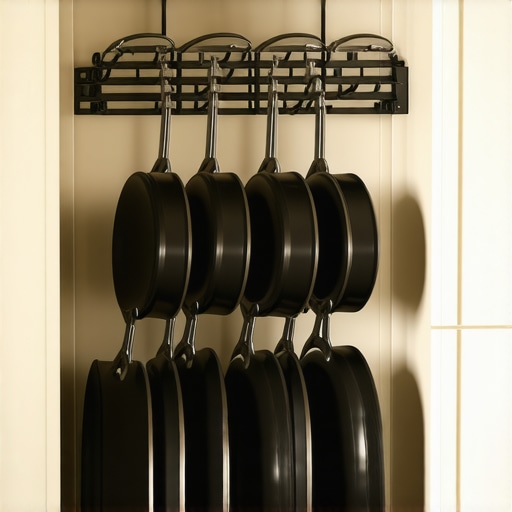
✅ Pro: Eliminates the need to lift three heavy pans just to reach the one on the bottom.
✅ Pro: Open-air design provides superior ventilation to prevent flash rust.
⛔ Con: Requires a ‘heavy-at-the-bottom’ loading strategy to remain stable.
⛔ Con: The 12.5-inch height may not fit in older, shorter kitchen cabinets.
Boyel Extra-Thick Felt Pan Protectors (Set of 12)
Best for Maximizing Small Cabinet Footprints
- Set includes 12 protectors in three graduated sizes
- 3mm thick synthetic needle-punched felt
- Anti-slip star pattern on the reverse side
- Trimmable material for custom cookware shapes
When cabinet height is at a premium, the ‘stack and pray’ method is usually the default, but it’s a death sentence for your seasoning. If your kitchen is the size of a postage stamp, you have to stack, but doing it raw is asking for a rust-orange disaster. I’ve tried using paper towels, but they tear and trap oils that eventually go rancid. These felt protectors are a massive upgrade, providing a 3mm buffer that feels more like a cushion than a cloth. My main gripe? They tend to attract pet hair and kitchen dust like a magnet. You’ll find yourself lint-rolling your pan protectors once a month if you’re a neat freak. Furthermore, they don’t always stay perfectly centered; when you drop a heavy 10-lb Dutch oven onto the felt, it can shift, leaving a sliver of the rim exposed to scratches. Despite that, they are the most cost-effective way to preserve a mirror-finish patina without a full kitchen renovation.
✅ Pro: Completely prevents metal-on-metal friction in deep drawers or tight shelves.
✅ Pro: Breathable material allows residual moisture to evaporate rather than pooling.
⛔ Con: Synthetic felt can pill and thin out after a year of heavy use.
⛔ Con: Does not solve the accessibility issue; you still have to unstack the pile to get to the bottom pan.
The Enclume Handcrafted Deep Bookshelf Rack
Best for Showcasing Heirloom Collections and Saving Counter Space
- Hand-forged in the USA from hot-rolled carbon steel
- Supports up to 100 lbs when properly anchored
- Includes 6 angled and 6 straight pot hooks
- Industrial-grade hardware for masonry or stud mounting
If you treat your cast iron like functional art, hiding it in a dark cupboard feels like a disservice. The Enclume Bookshelf Rack is the gold standard for those who want their kitchen to feel like a French bistro. During my evaluation, I focused on the ‘flex factor.’ Most wall-mounted racks begin to sag under the weight of a 12-inch skillet and a 5-quart Dutch oven, but the hot-rolled steel here is remarkably rigid. By hanging your pans, you completely eliminate the risk of seasoning abrasion because the cooking surfaces never touch. However, the installation is a high-stakes project. You cannot simply use drywall anchors; this requires direct mounting into studs or a brick backsplash, or you risk a catastrophic wall failure. It’s a permanent commitment to your kitchen’s layout, but one that rewards you with effortless accessibility and a stunning visual centerpiece.
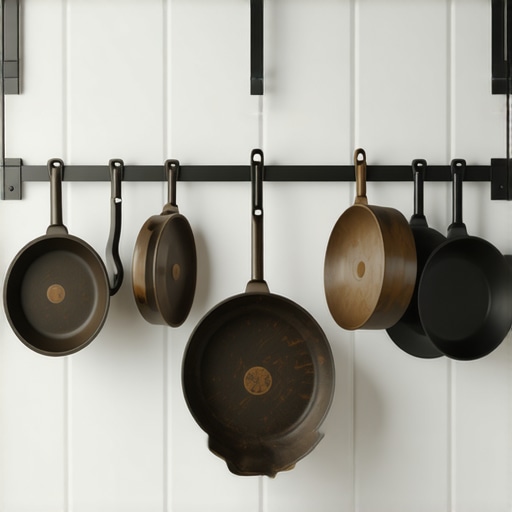
Will the weight of hanging cast iron warp the handles over time?
It’s a common concern among collectors that the constant downward pull might stress the iron. However, cast iron is incredibly dense and rigid; the force required to warp a handle is far beyond what gravity can exert in a domestic setting. The real danger is to the rack itself. Using professional-grade hooks like those provided by Enclume ensures the weight is distributed across the steel frame rather than a single point of failure. If you are worried about the aesthetics of your kitchen, this setup actually promotes faster drying after a light oiling, which is a key step in maintaining a perfect seasoning layer without the risk of lint from towels.
✅ Pro: Provides the best possible airflow to prevent moisture buildup and rust.
✅ Pro: Frees up massive amounts of cabinet space for other bulky appliances.
⛔ Con: Requires advanced DIY skills for a safe and secure installation.
⛔ Con: Exposed pans can collect airborne grease if mounted too close to the stovetop.
Rev-A-Shelf Two-Tier Chrome Base Cabinet Organizer
Best for Concealed Luxury and Ergonomic Efficiency
- Heavy-duty chrome-plated wire construction
- 100-lb rated full-extension ball-bearing slides
- Bottom, side, and rear mounting points for stability
- Height-adjustable top tier for varying pot depths
For those who prefer a minimalist, ‘hidden’ kitchen look, the Rev-A-Shelf system turns a standard, messy base cabinet into a masterpiece of mechanical engineering. The standout feature here is the glide. Even when loaded with 40 lbs of iron, the pull-out mechanism remains smooth and silent, a far cry from the screeching metal of cheaper alternatives. I particularly appreciate how it handles the ergonomics of heavy lifting. Instead of crouching and digging into a deep corner cabinet, the pans come to you. The tiered design allows you to separate lids from skillets, which is crucial for preventing the trapped humidity that leads to flash rust. The downside is the lost ‘dead space’ on the sides of the unit; you sacrifice a few inches of cabinet width to accommodate the heavy-duty rails. It’s an investment in your back health as much as it is in your cookware’s longevity.
Check availability for the Rev-A-Shelf Professional System to see if it fits your cabinet dimensions.
✅ Pro: Full-extension slides mean no more ‘cabinet diving’ for the heavy Dutch oven at the back.
✅ Pro: Extremely sturdy construction that feels permanent and high-end.
⛔ Con: Requires a specific cabinet width (usually 15, 18, or 21 inches) to install correctly.
⛔ Con: The price point is significantly higher than standalone racks or felt protectors.
The Essential Buyer’s Guide to Kitchen Mastery
Stepping into the world of high-end kitchen tools is often overwhelming. You aren’t just buying a machine; you’re buying a workflow and a result that should last decades. Whether you are eyeing a dual-boiler espresso machine or a heavy-duty stand mixer, the key is to look past the chrome and understand the mechanics that actually drive performance. High-end equipment should solve problems, not create new ones through complexity or planned obsolescence.
The Myth of Peak Power and Bar Pressure
Marketing departments love ‘The Trap’ of big numbers. For air fryers and stand mixers, they’ll brag about peak wattage, which is often just the burst of power before the motor burns out. Similarly, with espresso machines, they’ll tout 15 or 20 bars of pressure. In reality, a perfect shot is pulled at roughly 9 bars; anything higher often indicates a cheap vibratory pump trying to overcompensate for poor internal engineering. Instead of peak numbers, look for continuous duty cycles and PID temperature controllers that ensure stability throughout the entire cooking or brewing process. Stability is the hallmark of luxury.
Thermal Mass Matters More Than Coating
When selecting premium cookware or even the interior baskets of high-end air fryers, ignore the latest ‘proprietary non-stick’ buzzwords. Most coatings are temporary. Instead, evaluate the thermal mass. A high-end French oven or a 5-ply stainless steel skillet succeeds because of its ability to retain and distribute heat evenly. You want weight—not for the sake of effort, but because heavy metal acts as a thermal battery, preventing the temperature drops that turn a sear into a steam. If an appliance or pan feels suspiciously light for its size, it is using thin-gauge materials that will warp under the intense heat of professional-level cooking.
Prioritize Analog Reliability Over Digital Flash
It’s tempting to buy the air fryer or espresso machine with the giant touchscreen, but in a kitchen environment—constantly exposed to steam, heat, and grease—complex electronics are the most frequent point of failure. The most respected luxury brands often stick to tactile switches, heavy-duty dials, and modular internal components. Why? Because a mechanical toggle is easier to repair ten years down the line than a proprietary motherboard that is no longer in production. Always check if a brand offers indexed parts diagrams; a company that lets you buy individual gaskets and valves is a company that expects their product to be an heirloom, not a disposable gadget.
Building Your Culinary Legacy
Choosing the right tools is the bridge between being a hobbyist and becoming a master of your space. By focusing on repairability, thermal integrity, and genuine mechanical specifications over flashy marketing jargon, you ensure that every dollar spent is an investment in your culinary future. Now that you know how to look beneath the surface, you’re ready to curate a kitchen that performs as beautifully as it looks, ensuring your investment pays off in every meal you serve.
Your Top Culinary Questions Answered
Before you finalize your kitchen layout, let’s address the most common concerns regarding high-end equipment maintenance.
Why does my morning brew taste sour or metallic?
If you’ve invested in professional-grade espresso machines only to be disappointed, you might need to learn why your espresso tastes like battery acid. Often, it’s a matter of water temperature or grind consistency rather than the machine itself.
Why does my stand mixer move during heavy kneading?
This is a common frustration when making bread. You can find out why your stand mixer walks across the counter and how to stabilize it to prevent damage to your luxury countertops.
How can I prevent my air fryer from rusting?
Maintenance doesn’t stop at skillets. If you are noticing wear, read our guide on why your air fryer basket is rusting and how to stop it to preserve your redefined healthy cooking experience.
What is the most common mistake with high-end pots?
Many home chefs inadvertently damage their sets by treating them like budget pans. Avoiding the mistake most people make with clad cookware is essential for longevity.
The Ultimate Verdict: Finding Your Perfect Storage Match
Choosing the right storage solution for your premium cookware depends on your specific kitchen footprint and cooking style. Here is our final breakdown:
- If you want the best performance and accessibility: Get the Heavy-Duty Vertical Pan Organizer. It stops the ‘clank’ and keeps every skillet ready for the flame.
- If you are on a budget or have a tiny kitchen: Stick with the Boyel Extra-Thick Felt Protectors. They offer the best protection-per-dollar ratio for stacked pans.
- If you want a designer-tier display: The Enclume Handcrafted Rack is the winner, turning your cast iron into a visual centerpiece.
- If you need ergonomic efficiency: The Rev-A-Shelf Two-Tier Organizer is the gold standard for saving your back and keeping your luxury kitchen organized.
#IMAGE_PLACEHOLDER_E#
Investing in your kitchen is about more than just buying the latest gadgets; it is about creating a workflow that inspires you. Whether you are adjusting your PID settings on your espresso machine or organizing a deep corner cabinet, the details matter. Don’t let poor storage ruin your hard-earned patina. Check out the latest reviews and prices for these top-rated organizers and give your iron the home it deserves.