
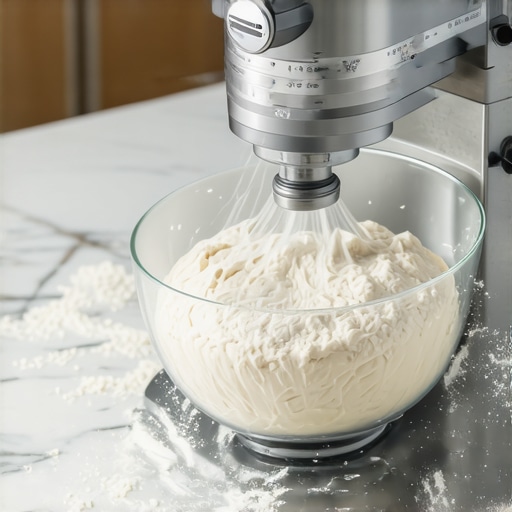
Why Your Stand Mixer Walks Across the Counter During Bread Prep
A stand mixer migrating across a granite slab during a 10-minute knead is not a quirk; it is a mechanical failure of kinetic management. When you are processing high-hydration doughs or heavy whole grains, the machine generates immense centrifugal force. If that energy is not absorbed by the chassis or transferred correctly to the base, the entire unit moves. After 15 years of tearing down transmissions and calibrating high-end culinary hardware, I can tell you that most owners ignore the warning signs until the gears strip or the unit hits the floor. We are dealing with raw physics. Kinetic energy must go somewhere. If your machine lacks the mass or the internal dampening to handle the torque of a bread hook, it will find its own path across your luxury kitchen.
The Engineering Reality of Torque and Planetary Action
Most consumer-grade appliances fail because they prioritize aesthetic over mass. In a high-performance environment, mass is your best friend. The planetary mixing action—where the attachment spins one way while the shaft rotates another—creates a complex oscillation pattern. This is why heavy duty stand mixers use DC motors instead of AC. DC motors provide consistent torque at low speeds without the jerky starts that initiate the ‘walking’ phenomenon. When you use a standard AC motor for bread, the pulse of the knead creates a rhythmic shove. If the base plate does not have enough friction or weight, every rotation of the dough hook acts like a small step forward. It is a fundamental mismatch between motor output and structural weight.
The Stress Test of High-Hydration Sourdough
I remember a service call three years ago for a client with a custom-built pastry station. Their top-tier mixer was literally vibrating the grout out of the tile. The smell of hot ozone filled the room—a clear sign the brushes were fighting a losing battle against a stiff brioche. The machine gave a sudden, violent lurch. That is the moment of failure. When the dough climbs the hook, it shifts the center of gravity. This imbalance causes the head to bounce, breaking the seal between the rubber feet and the counter. Once that suction is lost, you have a 30-pound projectile. You can learn more about how to stop your stand mixer from overheating during sourdough to avoid these mechanical meltdowns. The physical sensation of a vibrating countertop is the machine’s way of telling you its dampening limits are exceeded.
Why Standard Methods Fail the Modern Baker
Generic advice often suggests ‘just holding the mixer’ or ‘reducing the speed.’ That is a band-aid for a surgical problem. Speed is rarely the issue; resistance is. If your mixer is walking, your dough-to-bowl ratio is likely off, or the internal gear clearance has shifted. A common culprit is the worm gear losing its alignment. When the gears don’t mesh with precision, they create micro-impacts inside the housing. These impacts translate into the ‘walking’ motion you see on the surface. If you notice a change in the pitch of the motor, check out why your stand mixer vibrates too much on high speeds before the internal housing cracks. This is an engineering reality: precision prevents movement.
Market Corrections and Future Tech
The industry is shifting toward smart-sensing technology. We are starting to see units that adjust frequency based on the resistance of the dough. In the next 12 months, expect more luxury brands to integrate load cells into the base of the machine. These sensors will kill the power the second a ‘walking’ frequency is detected. This is a response to the rising popularity of high-tension doughs in home baking. For now, the solution remains in the physical build. Heavier die-cast alloys and better foot-pad polymers are the only ways to ground that energy. If you are shopping for a new unit, look at the net weight. A lighter machine is a moving machine. High-end builds like premium stand mixers for luxury kitchens are designed with this ballast in mind.
The Executive Verdict
If your mixer is walking, stop the motor. First, clean the feet and the counter with denatured alcohol to restore suction. Second, check the ‘dime test’ for hook clearance. If the hook is too high, it drags the dough upward, shifting the center of gravity. Third, if the unit is more than five years old, the grease in the transmission may have thinned, leading to internal play. My recommendation? If you bake bread more than twice a week, invest in a machine with a minimum 7-quart capacity and a DC motor. The cost of a mid-prep failure far outweighs the price of a professional-grade upgrade. Use a heavy-duty mat if you must, but understand that you are just masking a mechanical insufficiency. Ground your energy, or your equipment will ground itself on the floor.
Frequently Asked Questions
Can I use a silicone mat to stop the walking? It helps with friction, but it does nothing for the internal strain on the motor. You are treating the symptom, not the cause.
Is it normal for the head to bounce slightly? A small amount of play is designed into tilt-head models to prevent the neck from snapping, but excessive bouncing indicates the dough is too dry or the batch is too large.
Why does my mixer only walk when making pizza dough? Pizza dough typically has lower hydration and higher gluten development. This creates more resistance, forcing the motor to exert more lateral force against the chassis.
Should I ever grease the external parts? No. Most walking issues are internal. If you see oil leaking, your gaskets have failed, which further destabilizes the unit’s balance.