
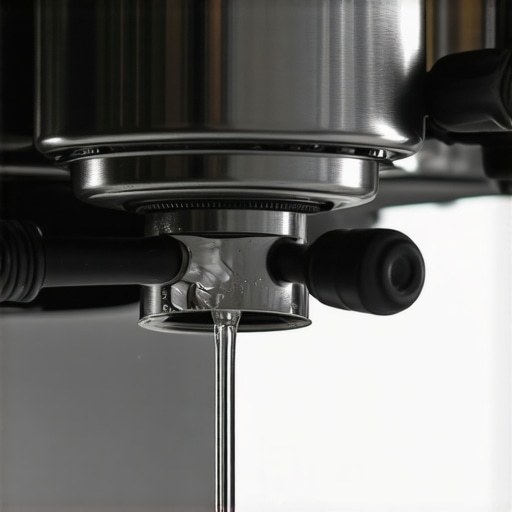
Why Your Espresso Machine Is Leaking From the Group Head
A leaking group head is not a minor inconvenience; it is a catastrophic failure of hydraulic integrity that compromises every variable of the extraction process. When water bypasses the puck, you lose the specific pressure profile required to emulsify oils into crema. After 15 years of diagnosing high-end Italian hardware, I have seen owners ignore a single drip until it warps the chassis or shorts the heating element. This is an engineering reality: heat and pressure are volatile. If they are not contained, they destroy. Precision extraction in a luxury kitchen demands a perfectly sealed environment.
The Physics of Hydraulic Failure
The primary culprit is almost always the group gasket, yet the mechanics of why it fails are often misunderstood. Most prosumer machines utilize an E61 group or a similar saturated design where the gasket is under constant thermal load. Over time, the rubber loses its elasticity—a process called vulcanization—becoming brittle and scorched. When you lock in your portafilter, this hardened material cannot conform to the rim of the filter basket. The result? High-pressure water finds the path of least resistance. You might notice why your espresso portafilter is squirting everywhere during a pull, which is the immediate precursor to a total seal breach. This is not just about a wet counter; it is about the inability to hit the 9 bars of pressure essential for true espresso.
Technical truth: The shore hardness of your gasket matters. Most factory gaskets are 70-80A durometer rubber. If you switch to food-grade silicone, you gain better thermal resistance, but you lose the tactile ‘stop’ that rubber provides. This trade-off affects how you engage the bayonet mount. If you are struggling with the repair, you can learn how to fix a leaky group head gasket in 10 minutes to restore your machine’s baseline performance. Ignoring this leads to pitting in the brass group head itself, a repair that costs ten times the price of a simple seal.
Material Fatigue in Luxury Kitchen Systems
Beyond the seal, we must address the group collar and the portafilter ears. Years of aggressive locking create micro-abrasions on the brass ramps. If you find yourself having to pull the handle further and further to the right to achieve a seal, you are witnessing mechanical wear. This misalignment prevents the basket from sitting flush against the gasket. I once saw a client in a high-end renovation who insisted on using a third-party portafilter that was 0.5mm too thin. The bypass was so severe it sprayed boiling water into the electronic PID controller. This illustrates why professional-grade equipment requires tight tolerances. If you want to verify your seal, the benefit of using a bottomless portafilter for training is that it exposes these leaks instantly before they become hidden internal problems.
The Economics of Maintenance
The cost-benefit analysis of preventative maintenance is clear. A $15 gasket protects a $3,000 investment. However, many luxury kitchen owners treat these machines like standard appliances. They aren’t. They are miniature steam boilers. Constant heat cycles cause metal expansion and contraction. This stress eventually impacts the group head bolts. If these loosen even a fraction of a millimeter, the entire assembly can weep from the top of the group. This is often misdiagnosed as a gasket leak when it is actually a structural torque issue. According to standards from the Specialty Coffee Association (SCA), thermal stability is the cornerstone of quality. A leak is a thermal leak; it robs the group head of the heat it needs to maintain a flat temperature curve.
The Stress Test of Real-World Use
In the field, I’ve seen what happens when these machines are pushed to the limit during a dinner party or a holiday event. The group head reaches peak temperature, the gasket softens, and then someone over-tightens the portafilter in a rush. You hear the ‘clank’ of the manifold—that is the sound of metal-on-metal stress. The smell of scorched rubber soon follows. This is the moment the seal is compromised permanently. You must understand that these machines are designed for a specific rhythm. Disrupt that rhythm with poor technique or cheap parts, and the system fails. We’ve seen similar issues where the voltage mistake that shortens your espresso machines lifespan compounds the heat stress on the internal components, leading to premature gasket failure.
Future of Precision Extraction
The industry is moving toward active-heated groups with sensors that detect pressure drops in real-time. In the next 12-24 months, I expect more prosumer models to include ‘seal integrity’ alerts. This will shift the burden from the user to the machine’s onboard logic. However, no sensor can replace the physical reality of a clean group head. Coffee oils (caffeol) turn into a glue-like resin when heated. If you do not backflush and scrub the group screen, this grit gets embedded in the gasket. It acts like sandpaper every time you lock in. The future of the industry is in predictive maintenance, but the current reality is simpler: cleanliness equals longevity.
The Executive Verdict
My recommendation is decisive: Replace your group gasket every six months, regardless of whether it leaks. If you see a single drop, stop the machine. Clean the group rim with a dedicated brass brush and inspect the portafilter ears for signs of wear. If you are in a high-volume household, move to silicone gaskets immediately. This is about protecting the asset and the quality of the output. Never compromise on the seal. If your machine is leaking, you aren’t making espresso; you’re making a mess.
Frequently Asked Questions
Does a leak affect the temperature of my coffee? Yes. A leak allows heat to escape via steam and hot water bypass, which prevents the group head from reaching its set thermal equilibrium. Your shots will likely be sour and under-extracted.
Can I use a screwdriver to pry out the old gasket? While common, it is risky. One slip and you scratch the soft brass of the group head, creating a permanent channel for water to leak through, even with a new gasket. Use a dental pick or a specialized gasket hook.
Why does my new gasket still leak? You may have coffee grounds trapped in the groove where the gasket sits, or the gasket is upside down. Most gaskets have a chamfered edge or a logo that must face a specific direction to seat correctly.