
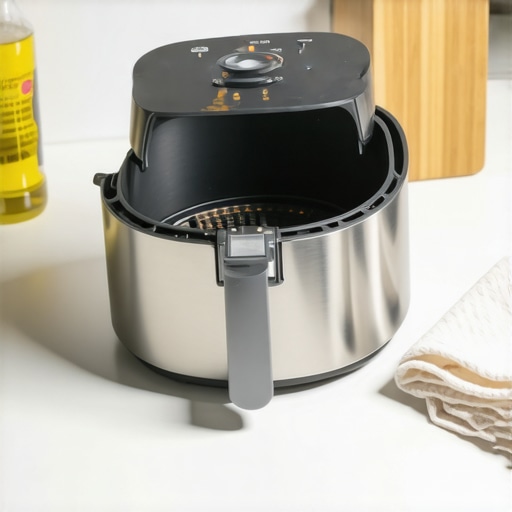
Why Your Air Fryer Basket Is Rusting and How to Stop It
Rust in a luxury kitchen environment is a symptom of either metallurgical inferiority or a failure in thermal maintenance. After fifteen years of diagnosing appliance failures, I can state with certainty that most owners treat their hardware with far too much optimism. If you see orange spots on your basket, the protective integrity of the appliance has already failed. This is not just an aesthetic annoyance. It is a material degradation that compromises the safety and flavor of your meals. The stake here is simple: once the base metal oxidizes, the structural stability of the basket declines and the risk of non-stick particles migrating into your food increases significantly.
The Science of Thermal Expansion and Coating Failure
Most luxury kitchen air fryers utilize a carbon steel or low-grade stainless steel core coated with a PTFE or ceramic layer. The engineering reality is that these materials expand at vastly different rates. When you blast a basket with 400 degrees of heat and then immediately douse it in cold water, you trigger a thermal shock. This creates micro-fissures in the coating. These tiny cracks allow moisture to reach the raw metal underneath. Over time, the moisture stays trapped, and oxidation begins its work unseen until the day the air fryer baskets start to flake off entirely. This process follows the same degradation patterns seen when a non-stick pan starts sticking after just a few uses due to surface compromises. Industry standards from organizations like NACE International confirm that once corrosion pits form, the process accelerates exponentially in high-humidity environments.
The ROI of Precision Maintenance
Investing in high-end appliances requires a commitment to specific operational protocols. If you treat a $300 air fryer like a $20 discount-store toaster, it will fail. Hand-drying is not optional; it is a requirement. The friction of a dishwasher’s high-pressure jets combined with aggressive detergents acts as a sandblaster on your basket’s finish. I have seen countless professional-grade baskets ruined because the owner believed the marketing label instead of the physics. To stop the rust, you must eliminate the moisture-trap. After washing, place the basket back into the air fryer and run it at 350 degrees for three minutes. This evaporative technique ensures every crevice—especially the rivets and mesh joins—is bone dry. Failing to do this is why you might later need to learn how to stop your air fryer from smoking, as rust particles and trapped oils begin to burn off during subsequent cycles.
Market Corrections and Material Shifts
The local market is shifting toward solid 304-grade stainless steel baskets, but these are currently rare and expensive. For the next 12 to 24 months, we expect manufacturers to continue using coated alloys to keep costs manageable while marketing ‘health-conscious’ ceramic finishes. According to ASTM International metallurgical reports, these ceramic layers are often more brittle than PTFE, leading to faster chipping under high-use conditions. The second-order effect of this trend is a rise in the secondary parts market. Consumers are finding that replacing a basket every year is a hidden tax on their ‘luxury’ purchase. Real luxury is durability. If your current manufacturer doesn’t offer a solid stainless replacement, you are essentially renting your appliance one year at a time.
Executive Strategy for Longevity
If you are currently seeing rust, stop using the basket. Minor surface spots can sometimes be neutralized with a paste of baking soda and vinegar, but if the metal is pitted, the game is over. Buy a replacement and commit to the ‘Heat-Dry Protocol.’ Never use metal tongs. Never soak the basket overnight. The result? An appliance that lasts a decade instead of a season. It is about discipline over convenience.
Common Rust Recovery Questions
Can I paint over the rust with high-heat spray? No. Most paints are toxic when heated to air frying temperatures and will not bond correctly to an oxidized surface. Is stainless steel immune to this? Not entirely. Low-quality stainless can still pit if exposed to high salt content and moisture for prolonged periods. Should I use oil to prevent rust? A very light coating of high-smoke-point oil after drying can act as a temporary barrier, similar to seasoning cast iron, but it must be done sparingly.