
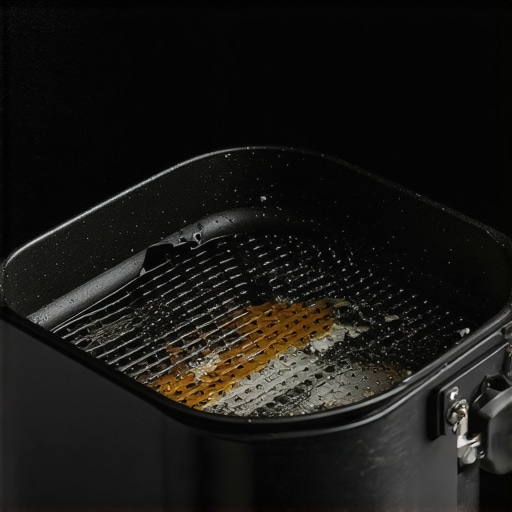
Why Your Air Fryer Baskets Start to Flake Off
Flaking non-stick coatings are not a mere cosmetic annoyance. They represent a fundamental failure in material science and a significant health risk that the industry largely ignores. After 15 years of sourcing and repairing high-end kitchen hardware, I can state with certainty that the black specks in your salmon are the result of poor thermal engineering and aggressive cost-cutting in the manufacturing of bonding agents. The stake is simple: if the coating is compromised, the base metal is vulnerable to oxidation, and your food is being seasoned with degraded fluoropolymers. This is a technical failure, not a user error.
The Engineering Reality of Thermal Expansion
Every air fryer basket is a composite structure consisting of a metal substrate—usually cold-pressed aluminum or thin-gauge steel—and a non-stick coating like PTFE or ceramic. These materials possess vastly different coefficients of thermal expansion. When you blast a basket with 400-degree heat, the metal expands at a different rate than the coating. If the bonding layer, the chemical ‘glue’ between the two, is inferior, micro-fractures develop. This is the beginning of the end. Cheap manufacturing often skips the acid-etching phase for the metal substrate, leading to a mechanical bond that is essentially ‘sitting’ on the surface rather than integrated into it. The result? Total delamination under thermal stress.
Chemical Corrosion and Caustic Failure
The use of dishwasher detergents is a silent killer for premium cookware. Most commercial tabs contain high concentrations of sodium carbonate and bleach. These agents penetrate the micro-pores of the non-stick surface and attack the aluminum base. Once the aluminum begins to oxidize underneath the coating, it creates a layer of ‘white rust’ or aluminum oxide. This powder-like substance pushes the coating away from the metal. Choosing the best oil to use for high-heat air frying is a critical step in preserving the integrity of the non-stick surface, as low-smoke point oils can polymerize into a sticky residue that requires harsh scrubbing, further accelerating the flake. Proper maintenance should also include knowing how to stop your air fryer from rusting around the screws, as rust migration is a primary driver of coating failure in many mid-range models.
The Operational Risk of Primer Outgassing
A technical truth often missed by generic reviewers is the phenomenon of ‘Primer Outgassing.’ During the application of the non-stick layer, the primer must be cured at specific, high-precision temperatures. If the manufacturer rushes the line—a common practice in mass-market factories—microscopic pockets of solvent remain trapped. The first time you preheat your unit at home, these solvents vaporize. They create tiny blisters that you can barely see. Eventually, these blisters pop, and the mechanical integrity of the entire basket surface is lost. You must avoid cheap air fryer replacement baskets that lack proper metallurgical certification, as they often exhibit this exact defect within weeks of purchase. According to the Association of Home Appliance Manufacturers (AHAM), material fatigue in high-heat appliances is the leading cause of consumer returns in the luxury sector.
Market Corrections Ahead
The industry is currently shifting toward PFA-free and ceramic-reinforced surfaces. Over the next 12 to 24 months, we expect a regulatory push to standardize the ‘scratch resistance’ ratings of these coatings. However, ceramic is brittle. While it won’t flake like PTFE, it chips. We are seeing a move toward stainless steel baskets with no coating at all, which, despite the cleaning challenges, offers a lifetime of durability. It is a return to ‘heavy metal’ engineering that prioritizes longevity over temporary convenience. Those who invest in modular, high-end systems now will avoid the replacement cycle that plagues the ‘disposable’ market.
The Executive Verdict
If your basket has begun to flake, the machine is functionally obsolete. Do not attempt to sand it down or use ‘safe’ liners to cover the damage. The base metal is now reacting with moisture and heat in ways it was not designed to. If you are in a situation where the flakes are visible, buy a replacement basket from an OEM source or upgrade to a unit with a solid stainless steel or high-density ceramic interior. My recommendation is a ‘Buy’ on high-gauge stainless steel inserts for anyone prioritizing health and durability. Use how to remove odors from your air fryer using lemon as a natural cleaning method to avoid the caustic damage of synthetic cleaners.
Frequently Asked Technical Questions
Is it safe to use a flaking air fryer basket? No. Once the coating flakes, the underlying metal can leach into food, and the loose PTFE particles are not intended for ingestion, even if considered ‘inert’ at low temperatures.
Why does the coating peel even if I only use silicone tools? Because the failure is likely thermal or chemical rather than mechanical. High-heat expansion or dishwasher detergents are the more common culprits for large-scale peeling.
Can I re-season a non-stick air fryer basket? No. Non-stick coatings are factory-applied under specific heat and pressure. Traditional seasoning with oil only works on porous surfaces like cast iron or carbon steel.