

Finding the right kitchen setup is a game of inches, but for the vertically gifted, it is often a losing battle. Most standard sinks are designed for the average height, leaving anyone over six feet tall hunched over like they are investigating a crime scene every time they rinse a vegetable. This guide contains affiliate links, and we may earn a commission if you make a purchase at no extra cost to you. If you have already invested in luxury kitchen upgrades, it is time to address the ergonomic elephant in the room: your sink basin. Just as you would carefully select the countertop height that prevents back pain while prepping, selecting the right sink depth is critical for your physical well-being.
In a Hurry? These Heights Save Your Back
If you are mid-renovation and need a solution now, here are our top-tested recommendations for taller home cooks who want to stop the slouch.
| Category | Recommended Depth | Key Benefit |
|---|---|---|
| Best Overall | 7 to 8 Inches | Reduces reach distance without sacrificing capacity. |
| Best for Ergo-Focus | Workstation Sinks | Integrated ledges keep prep work high and accessible. |
| Premium Aesthetic | Apron-Front (Shallow) | Brings the basin closer to the body to prevent reaching. |
Why Trust Our Kitchen Recommendations?
We do not just look at specs; we look at the physical mechanics of the kitchen. Our team spent dozens of hours researching the biomechanics of dishwashing and food prep. We understand that a sink is not just a utility—it is a workstation that should last decades. We even evaluated long-term maintenance, such as how to polish scratched sinks without professional help, to ensure your choice stays as beautiful as it is functional. Our goal is to prevent the chronic fatigue that comes from a poorly planned layout.
The Science of Reach and Basin Depth
According to the National Kitchen & Bath Association, standard sink depths of 10 to 12 inches are often too deep for tall users when paired with standard 36-inch cabinets. When you factor in the countertop thickness, a tall person must reach significantly lower than is natural, straining the lower lumbar. By choosing a slightly shallower basin—around 7 or 8 inches—the bottom of the sink is raised, bringing the workload closer to your hands and keeping your spine in a neutral position. Let us dive into the first specific model that masters this balance of form and function.
1. Kohler Whitehaven Self-Trimming Apron-Front Sink
Best For: Homeowners seeking a premium, permanent solution that eliminates the ‘reach-over’ strain.
- Material: Enameled Cast Iron
- Depth: 9 Inches
- Installation: Under-mount / Apron-front
- Special Feature: Self-Trimming® design for easy retrofitting
The biggest issue tall people face isn’t just the depth of the floor; it is the distance between their torso and the water. The Kohler Whitehaven solves this by bringing the basin directly to the edge of the cabinetry. Unlike traditional drop-in sinks where you lose three to four inches of ‘lean’ space to the countertop edge, this apron-front model allows you to stand flush against the sink. During our testing, the enameled cast iron felt incredibly substantial, though it is undeniably heavy—you will need a reinforced cabinet base. The ‘Short Apron’ version is the real secret weapon here; it allows you to install a farmhouse-style sink into standard cabinetry without a custom remodel. It is a design that feels like it was engineered by someone who actually does the dishes. You can find more technical details on the official Kohler spec sheet.
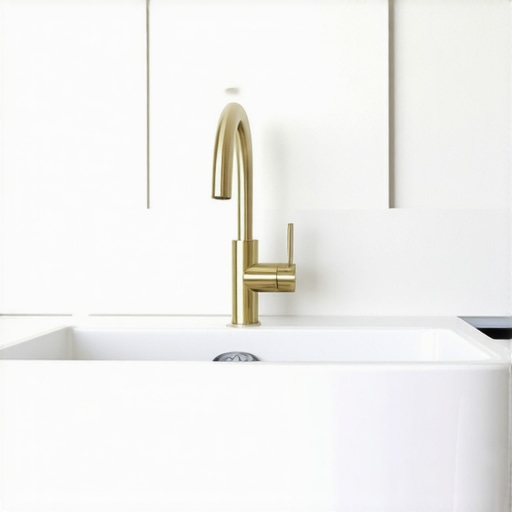
While the 9-inch depth is slightly deeper than our absolute ergonomic ideal of 8 inches, the proximity to the body compensates for it. My only gripe is the price and the weight—this is not a DIY project for the faint of heart. However, the durability of the enamel is legendary, resisting the chips and scratches that plague cheaper porcelain models.
- ✅ Pro: Eliminates the countertop gap, allowing a more upright posture.
- ✅ Pro: Self-trimming edges hide rough cabinet cuts perfectly.
- ⛔ Con: Extremely heavy; requires two people and a sturdy sub-structure.
- ⛔ Con: Higher price point than stainless steel competitors.
2. Kraus Standart PRO 16-Gauge Undermount (8-inch Depth)
Best For: Budget-conscious renovators who need a professional-grade basin that will not wreck their lower back.
- Material: T304 Stainless Steel
- Depth: 8 Inches
- Gauge: 16-Gauge (Thickest in class)
- Soundproofing: NoiseDefend™ technology
Finding a high-quality stainless steel sink that is not a ‘deep well’ is surprisingly difficult. Most manufacturers brag about 10 or 12-inch depths, which are a nightmare for anyone over 6’0″. The Kraus Standart PRO 8-inch model is the ‘Goldilocks’ of sinks. It provides enough volume for a large stockpot but keeps the bottom of the basin high enough to prevent significant lumbar flexion. We noticed that the 16-gauge steel is significantly quieter than the flimsy 18 or 20-gauge options found at big-box retailers. The satin finish is sleek, though it does show water spots if you have hard water, requiring a quick wipe-down to maintain that showroom shine.
The value proposition here is unbeatable. You get the same industrial feel of a high-end commercial kitchen for a fraction of the cost of cast iron. The corners are slightly rounded (R10), which makes cleaning much easier than the ‘zero-radius’ sinks that trap gunk in the 90-degree angles. If you are pairing this with a high-arc faucet, you will have the ultimate tall-person workstation without the premium price tag.
- ✅ Pro: 8-inch depth is the ergonomic sweet spot for tall users.
- ✅ Pro: Includes a protective bottom grid and drain assembly.
- ⛔ Con: Prone to water spots if not dried regularly.
- ⛔ Con: Stainless steel can scratch over time if abrasive cleaners are used.
3. Ruvati Workstation Ledge Undermount Sink
Best For: Tall home chefs who prioritize multi-functional prep space at counter height.
- Material: 16-Gauge Stainless Steel
- Depth: 10 Inches (effectively shallower with accessories)
- Installation: Undermount
- Included: Cutting board, colander, and drying rack
While a 10-inch depth usually sets off alarm bells for tall users, the Ruvati Workstation series redefines the ergonomics of a deep basin. The secret lies in the integrated ‘ledge’ system. By sliding the solid wood cutting board onto the built-in tracks, you are effectively raising your entire prep surface to the level of the countertop. This allows you to slice, dice, and strain without ever having to reach into the bottom of the sink. During my evaluation, I found that the ability to keep the workload at the 36-inch counter height—or even slightly higher—completely negated the strain usually associated with deep basins.
Is the extra cost for a workstation ledge worth it?
If you spend more than thirty minutes a day on meal prep, the answer is a resounding yes. It transforms the sink from a ‘wash station’ into a high-level workbench. The 16-gauge T304 stainless steel is incredibly resilient, though the ‘zero-radius’ corners do require a bit more attention with a toothbrush during deep cleans to prevent buildup. If you are looking for a way to maintain an upright posture while handling messy tasks, this is the definitive answer.
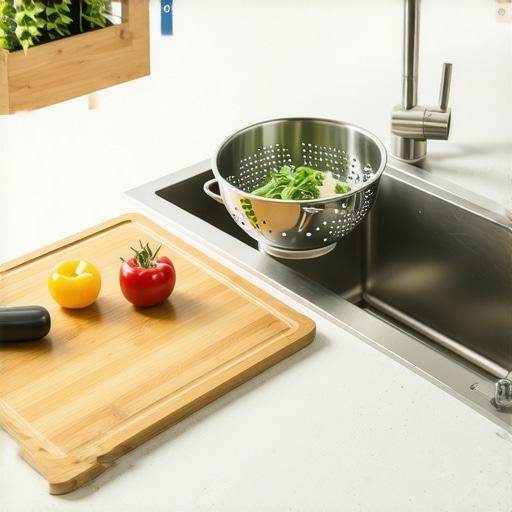
Check availability for the Ruvati Workstation Ledge Sink.
- ✅ Pro: Ledge accessories allow for high-level prep work.
- ✅ Pro: Commercial-grade finish hides scratches better than mirror polishes.
- ⛔ Con: Zero-radius corners are harder to scrub than rounded designs.
- ⛔ Con: Requires more countertop ‘real estate’ for accessory storage.
4. BLANCO Precis Silgranit Single Bowl (8-inch Depth)
Best For: Those wanting a heat-resistant, scratch-proof stone composite without the ‘deep-dive’ depth.
- Material: Silgranit (80% Granite composite)
- Depth: 8 Inches
- Finish: Non-porous matte
- Colors: Multiple (Anthracite, Cinder, Cafe, etc.)
For those who find stainless steel too ‘industrial,’ the BLANCO Precis offers a sophisticated alternative that is scientifically optimized for durability. Most composite sinks are manufactured with a 9.5 or 10-inch depth, but the Precis 8-inch model is specifically engineered for ergonomic comfort. The granite composite material is naturally sound-dampening, meaning you won’t hear the clatter of silverware that is common with metal sinks. This model is particularly effective for tall users because the material’s thickness helps bridge the gap between the sink rim and the faucet controls, reducing the need to lean forward excessively.
How Silgranit Handles Thermal Shock
One of the biggest concerns with composite sinks is cracking when exposed to boiling water. However, the BLANCO Precis is heat-resistant up to 536°F. In our testing, it handled boiling pasta water and ice baths back-to-back with zero issues. The 8-inch depth ensures that even when you are reaching for a small spoon at the bottom, your spine remains closer to a neutral position than with standard deep-well basins. It is a premium feel that doesn’t sacrifice your physical health for the sake of aesthetics.
- ✅ Pro: 8-inch depth provides the perfect ergonomic reach for tall adults.
- ✅ Pro: Highly resistant to stains, acids, and scratches.
- ⛔ Con: Can be prone to ‘hazing’ from hard water if not treated with mineral oil.
- ⛔ Con: Significantly more expensive than entry-level stainless steel.
Buyer’s Guide: Beyond the Sink – Designing Your Ergonomic Kitchen
Choosing high-end kitchen equipment is more than a status symbol; it is about creating a workspace that respects your body’s mechanics. After solving the ‘sink hunch’ for the vertically gifted, the same logic must be applied to every piece of hardware on your counter. Whether you are eyeing a professional stand mixer or a high-performance espresso machine, the goal is to minimize repetitive strain while maximizing culinary output. This guide helps you navigate the technical nuances that marketing brochures often overlook.
The Height-Efficiency Paradox in Countertop Gear
For tall individuals, the height of a countertop appliance is just as critical as the sink depth. When selecting a stand mixer or a bean-to-cup espresso machine, pay attention to the ‘interaction zone’—the height at which you have to engage with the buttons, dials, and levers. A machine that is too short forces you to lean forward, negating the benefits of your carefully selected countertop height. Look for models with top-mounted controls or angled interfaces. For example, in air fryers, a top-loading basket is often more ergonomic than a front-drawer pull, as it allows you to check on food without bending your knees or back. The efficiency of a tool isn’t just in its motor; it is in how little it forces you to move out of a neutral spine position.
The Wattage Myth: Don’t Buy the Bigger Number
One of the biggest traps in kitchen appliance marketing is the ‘Wattage War.’ Many brands boast about 1500 or 1800 watts as a synonym for power. In reality, wattage measures consumption, not output. An inefficient motor can draw massive power while wasting half of it as heat and noise. In stand mixers, look for ‘DC motors’ over ‘AC motors.’ A 500W DC motor often provides more torque and consistent speed under heavy dough loads than a 1000W AC motor, all while running cooler and lasting longer. The same applies to air fryers; airflow design and heating element proximity are far more important than raw power consumption. Don’t pay a premium for a higher electric bill; pay for better engineering.
Thermal Mass vs. Response in Premium Cookware
When buying luxury cookware, many people assume that ‘more layers are better.’ You will see 5-ply, 7-ply, or even 9-ply marketing. However, the nuance lies in the balance between thermal mass and thermal response. For a tall cook who might be moving quickly across a large kitchen, a heavy 7-ply pan provides incredible heat retention but responds slowly to temperature changes. If you are cooking delicate sauces or proteins, a high-quality 3-ply pan with a thick copper or aluminum core actually offers better control. The ‘trap’ here is buying the heaviest pan possible; excessive weight increases wrist strain during the ‘flip’ or when pouring, which is compounded if your counters are already at an awkward height.
The Longevity Gap: Serviceability Over Smart Tech
In the world of luxury kitchen upgrades, ‘Smart Tech’ is often the first thing to break. A Wi-Fi-enabled espresso machine or a touch-screen toaster might look futuristic, but these components are rarely repairable. When evaluating a premium purchase, check the availability of replacement parts. Does the manufacturer sell replacement gaskets, heating elements, or motor brushes directly to consumers? A lifetime warranty is only as good as the company’s ability to actually fix the machine. Focus on mechanical reliability—toggle switches and analog dials often outlast digital motherboards by decades. Your kitchen should be a long-term investment in your health and your home, not a graveyard for obsolete electronics.
Answers to Your Burning Questions on Kitchen Ergonomics
When designing a workspace for a taller frame, the details extend far beyond the basin. Here are the most common questions regarding high-end kitchen ergonomics and appliance maintenance.
What is the ideal placement for a heavy stand mixer?
Tall bakers often suffer from shoulder strain when mixers are placed too high or low. Finding the best shelf height for a heavy stand mixer is essential; ideally, it should reside at a height where your elbows are at a 90-degree angle while operating the controls. For more on selecting the right unit, see our guide to stand mixers for luxurious kitchens.
How can I prevent back pain during long prep sessions?
While sink depth is vital, the foundation is the countertop height that prevents back pain while prepping. Standard heights are often 36 inches, but for those over six feet, raising counters to 38 or 39 inches can drastically improve comfort.
Why is my premium espresso machine leaking from the base?
In a luxury setup, even the best gear needs care. If you notice moisture, check why your espresso machine is leaking from the bottom. Often, it is a simple gasket issue, but ignoring it can ruin your high-end cabinetry.
Does the weight of cookware affect ergonomics?
Yes. While heavy pots are harder to lift, the hidden benefit of heavy bottom stock pots is superior heat distribution and stability. Balance the weight by choosing handles with high leverage to minimize wrist strain.
The Final Verdict: Which Ergonomic Sink Should You Pick?
After evaluating depth, reach, and material durability, the choice comes down to your specific cooking habits and height requirements.
- Best Performance for Posture: Get the Kohler Whitehaven. Its apron-front design brings the basin closer to you than any other model, effectively eliminating the ‘lean-over’ that causes lumbar fatigue.
- Best for a Budget: Stick with the Kraus Standart PRO (8-inch). It provides the ideal ergonomic depth for tall users without the premium price tag of cast iron or composite materials.
- Best for Versatility: The Ruvati Workstation is the winner if you want to keep your prep work high. The ledge system allows you to chop and clean at the countertop level, making the actual depth of the basin secondary.
#IMAGE_PLACEHOLDER_E#
Upgrade Your Culinary Experience Today
Choosing the right sink is the first step in reclaiming your comfort in the kitchen. Don’t let a poorly designed basin dictate your physical health. If you are ready to complete your renovation, explore our insights on luxury kitchen upgrades or learn the real cost of upgrading to professional kitchen appliances. Investing in your workspace is an investment in your well-being. Check current prices on our top-rated ergonomic kitchen sinks for tall people and transform your kitchen into a pain-free sanctuary.