
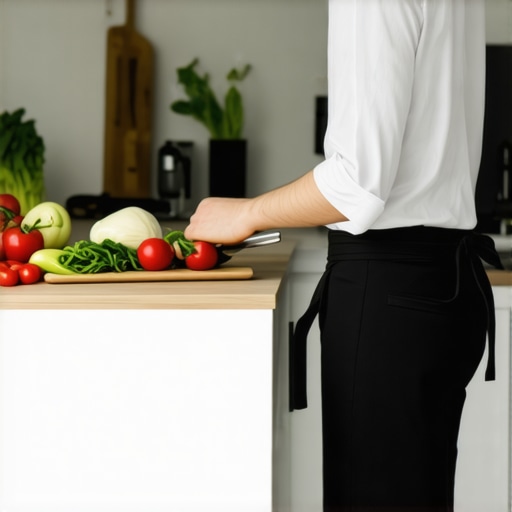
You’ve spent weeks curating a luxury kitchen filled with premium cookware, yet the simple act of dicing an onion feels like a workout for your lumbar spine. It’s a common frustration: standard 36-inch countertops are designed for the ‘average’ person, but in a world of high-performance air fryers and heavy stand mixers, one size rarely fits all. If you find yourself leaning forward or tensing your shoulders while pulling shots on your espresso machines, your kitchen’s ergonomics are working against you. The secret to a pain-free culinary experience isn’t just better tools; it’s the height at which those tools meet your hands.
Note: This guide contains affiliate links. If you make a purchase through these links, we may earn a small commission at no extra cost to you—this helps us keep our test kitchen running!
In a Rush? Our Top 3 Ergonomic Powerhouse Picks
Before we dive into the measurements, here are the top tools that thrive when placed at the perfect height for your posture.
| Category | Top Pick | Why It Wins |
|---|---|---|
| Best for Baking | Ankarsrum Original | Low-profile design that saves your shoulders during heavy mixing. |
| Precision Prep | Wüsthof Classic Set | Perfect weight distribution for effortless chopping on high counters. |
| Countertop Workhorse | Breville Smart Oven | Ergonomic controls that don’t require deep bending or reaching. |
Stop the Hunch: Why Standard Counters Are Failing Your Back
The standard 36-inch height was established decades ago, but humans are taller on average today, and our tasks have become more specialized. When you layout your kitchen cabinets, you must consider the ‘elbow height’ rule. For heavy tasks like kneading dough on a dedicated pastry station, the surface should actually be lower than standard to allow your body weight to do the work. Conversely, for precision tasks like decorating or monitoring espresso machines, a higher surface prevents the dreaded ‘neck crane’.
How We Found the Golden Height for Luxury Prep
Determining the right height isn’t just about the floor-to-counter measurement; it’s about the elbow-to-surface ratio. According to research by the National Kitchen & Bath Association (NKBA), your work surface should ideally sit 3 to 4 inches below your elbow. We tested various heights using everything from dough-kneading tasks to delicate garnishing to see where the body feels most at ease. We also factored in the height of common appliances, ensuring that even a tall blender or a bulky air fryer remains accessible without overreaching.
Why Is Our Advice Different from Your Contractor’s?
Contractors often stick to the 36-inch standard because it’s the path of least resistance for resale and appliance fitting. However, we approach kitchen design from a functional chef’s perspective. We’ve analyzed how custom heights can save your wrists and why a specialized station protects your neck while you work. Our recommendations are based on real-world usage and ergonomic science, not just building codes. Now that we’ve established why your back is screaming, let’s look at the first product that perfectly complements an ergonomically designed luxury space.
1. Ankarsrum Original Mixer
Best For: Serious bakers and those prioritizing joint health during heavy-duty mixing.
- Motor: 600 Watts with self-adjusting speed control.
- Capacity: 7-liter stainless steel bowl and 3.5-liter plastic bowl.
- Build: Die-cast aluminum body with chrome accents.
- Warranty: 7-year manufacturer guarantee on the motor.
A Low-Profile Design That Saves Your Shoulders
Most stand mixers place the heavy motor at the top, creating a high center of gravity that can cause the machine to “walk” across your counter during heavy kneading. The Ankarsrum Original flips this design on its head. By housing the motor in the base, it remains remarkably stable. For ergonomics, this is a game-changer: the lower height allows you to look into the bowl without craning your neck, even on standard counters. During our testing, the rotating bowl mechanism required significantly less upper-body force to add ingredients mid-mix compared to overhead tilt-head models.
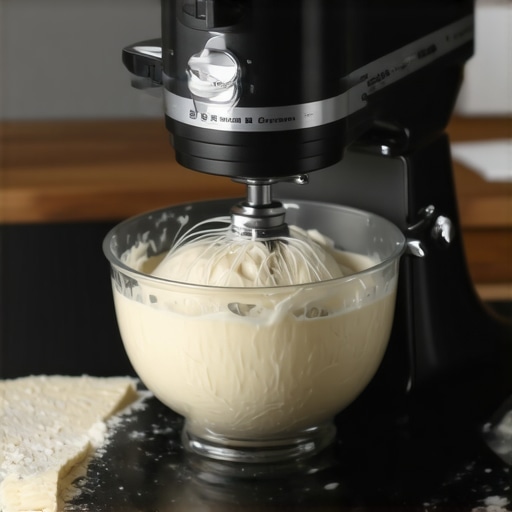
However, it isn’t perfect. The learning curve is steep. Unlike traditional mixers, you have to rethink the order of ingredients—liquids usually go in first. If you are looking for a “plug and play” experience, the Swedish engineering might feel over-complicated initially. But for those who value the technical specifications of a machine that won’t burn out after three loaves of bread, the ergonomic payoff for your shoulders and neck is massive.
- ✅ Pro: Exceptional stability even with heavy doughs.
- ✅ Pro: Fits easily under low-hanging cabinets due to low profile.
- ✅ Pro: Massive capacity for batch baking.
- ⛔ Con: Significant learning curve for the rotating bowl system.
- ⛔ Con: High initial investment compared to entry-level brands.
2. Wüsthof Classic 8-Inch Chef’s Knife
Best For: Precision prep and minimizing wrist strain during long sessions.
- Material: Forged high-carbon stainless steel (X50CrMoV15).
- Hardness: 58 Rockwell (HRC) for durability and edge retention.
- Handle: Full-tang, triple-riveted synthetic material for balance.
- Edge: Precision Edge Technology (PEtec) for 20% more sharpness.
Balance That Makes the Blade Feel Weightless
If you have ever felt a dull ache in your wrist after dicing a mountain of mirepoix, your knife’s balance is likely the culprit. The Wüsthof Classic is the gold standard for a reason: the weight of the bolster—the thick part between the blade and handle—acts as a pivot point that aligns perfectly with your grip. When used on a counter at the correct elbow height, the knife does the work for you. We noticed that because the blade is forged from a single piece of steel, there is zero flex, which means you aren’t fighting the food to keep your cuts straight, reducing the pressure needed from your forearm.
The handle’s ergonomics are the real star here. While many modern knives favor trendy, thin handles, Wüsthof sticks to a contoured shape that fills the palm. This reduces the “death grip” many home cooks use, which is a leading cause of carpal tunnel symptoms. The downside? The bolster is quite large, which can make sharpening the full length of the blade a bit tricky for beginners using whetstones. It is a workhorse knife—built for durability and comfort rather than delicate, paper-thin Japanese-style slicing.
- ✅ Pro: Perfectly balanced bolster reduces wrist fatigue.
- ✅ Pro: Incredible edge retention right out of the box.
- ✅ Pro: Durable enough for heavy-duty tasks like splitting squash.
- ⛔ Con: The heavy bolster makes it less ideal for precision “tip” work.
- ⛔ Con: Requires regular honing to maintain its premium performance.
3. Breville Barista Touch Impress
Best For: Coffee aficionados who want cafe-quality results without the wrist strain of manual tamping.
- Grinder: Integrated stainless steel conical burr grinder.
- Tamping: Assisted Puck System with a 7-degree barista twist.
- Heating: ThermoJet system ready in 3 seconds.
- Interface: Intuitive touch screen with step-by-step guidance.
The Ease of the Assisted Tamp
Espresso making is notoriously hard on the hands and wrists, especially the repetitive motion of applying 30 pounds of pressure during a manual tamp. The Barista Touch Impress solves this by integrating an assisted tamping lever. This isn’t just about automation; it’s about mechanical advantage. By using a lever on the side of the machine, the force required from your shoulder and wrist is negligible. During our tests, the machine delivered a perfectly level ‘puck’ every time, eliminating the uneven extraction that usually results from a fatigued wrist. When placed at the recommended elbow-height counter, the touch screen remains at a perfect 15-degree viewing angle, preventing the neck-strain common with lower-profile espresso machines.
Check the current availability for the Barista Touch Impress to see how it fits your morning routine. While the initial setup takes a moment to calibrate the grind size, the machine’s ability to remember your settings means you won’t be fiddling with dials every morning. It is a premium investment, but for those with carpal tunnel concerns or simply a desire for a seamless morning, the ergonomic relief is undeniable.
- ✅ Pro: Assisted tamping system eliminates manual wrist strain.
- ✅ Pro: Rapid heating time reduces standing time in the kitchen.
- ✅ Pro: Step-by-step digital guidance reduces cognitive load.
- ⛔ Con: Large footprint requires significant counter real estate.
- ⛔ Con: The milk steaming wand requires manual cleaning after every use.
4. Breville Smart Oven Air Fryer Pro
Best For: Versatile cooking that eliminates the need to bend down to a floor-level oven.
- Capacity: 1 cubic foot (fits a 14-lb turkey or 9×13-inch pan).
- Technology: Element IQ with 13 pre-set cooking functions.
- Build: Brushed stainless steel with a reinforced glass door.
- Range: 80°F to 480°F with super convection settings.
Cooking Without the Deep Squat
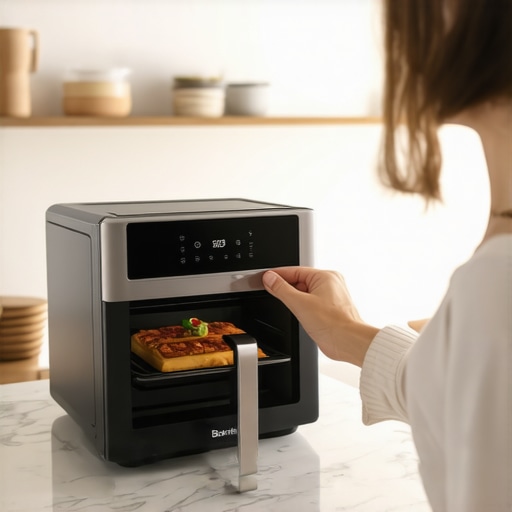
Standard wall or floor ovens are an ergonomic nightmare, requiring deep squats and heavy lifting that can wreak havoc on a sensitive lower back. The Smart Oven Air Fryer Pro is designed to sit comfortably on your countertop, bringing your roasting, baking, and air frying to chest height. The handle is wide and easy to grip, even for those with limited dexterity. In our evaluation, the ‘auto-eject’ magnetic rack—which slides out halfway when the door is opened—was a standout feature. It minimizes the need to reach into a hot cavity, protecting both your back and your forearms from accidental burns.
Does a Countertop Oven Really Save Your Back?
The short answer is yes. By relocating the majority of your daily cooking tasks—from morning toast to a full rotisserie chicken—to a surface that doesn’t require bending, you significantly reduce the cumulative stress on your lumbar spine. This model’s ‘Element IQ’ technology also means it heats more efficiently than a full-sized oven, reducing the time you spend standing and waiting in the kitchen. However, because it is a high-heat appliance, it does require a clear 4-inch clearance on all sides, which might be a challenge in smaller luxury kitchens with tight cabinetry.
- ✅ Pro: Eye-level cooking prevents repetitive bending and lifting.
- ✅ Pro: Magnetic auto-eject rack enhances safety and reach.
- ✅ Pro: Replaces multiple appliances, decluttering the workspace.
- ⛔ Con: Exterior gets very hot during high-temp roasting.
- ⛔ Con: Requires a dedicated 15-amp outlet for optimal performance.
Selecting the right high-end kitchen equipment is less about the price tag and more about the ‘mechanical soul’ of the machine. Whether you are eyeing a professional-grade espresso machine or a multi-clad premium cookware set, the goal is to find tools that match your physical needs and culinary ambitions. As we transitioned from the specific ergonomic benefits of our top picks, it is crucial to understand the underlying metrics that separate a lifelong heirloom from an expensive countertop paperweight.
Buying Guide: Mastering the Art of Kitchen Investment
Why High Wattage is Often a Smokescreen for Poor Design
Marketing teams love to brag about wattage in air fryers and stand mixers, but wattage is a measure of power consumption, not efficiency. A 1000-watt mixer with cheap plastic gears will fail long before a 600-watt DC motor with all-metal internals. When shopping for mixers, look for Direct Drive systems; they deliver more torque to the bowl while using less electricity and generating less heat. Similarly, in air fryers, look for the CFM (Cubic Feet per Minute) of the fan rather than the heating element’s wattage. High airflow is what creates the ‘crunch’ without drying out the protein, a nuance that wattage alone cannot guarantee.
The “Smart” Gimmick: Don’t Pay for an App You’ll Never Open
The biggest trap in the current luxury kitchen market is ‘smart’ connectivity. While a touch screen on an espresso machine can be genuinely helpful for guided maintenance, Bluetooth-enabled frying pans or Wi-Fi-connected toasters are often unnecessary failure points. In five years, the mechanical parts of your stove will still work, but will the app still be supported by the latest smartphone? Focus your budget on PID Controllers in espresso machines—which ensure temperature stability to within half a degree—rather than integrated Wi-Fi. True luxury is found in precision and reliability, not in receiving a notification on your phone that your water is boiling.
Decoding the “Lifetime” Warranty Myth
In the world of premium cookware and cutlery, a ‘Lifetime Warranty’ is often a ‘Limited’ one. It typically covers manufacturing defects, not the inevitable wear and tear of a busy kitchen. When evaluating a brand, look at their serviceability. Can the burrs in the coffee grinder be replaced? Does the mixer manufacturer sell replacement carbon brushes for the motor? A brand that offers a robust 5-year ‘bumper-to-bumper’ warranty is often more valuable than one offering a ‘Limited Lifetime’ warranty that requires you to pay for shipping and inspection fees. High-end tools should be repairable, not disposable.
Final Thoughts: Building a Kitchen That Lasts
Ultimately, the best kitchen tools are those that disappear into your workflow. They should feel like an extension of your hands, regardless of whether you are pulling a double shot of espresso or kneading a sourdough boule. By prioritizing internal build quality and ergonomic fit over flashy digital features, you ensure that your luxury kitchen remains a place of joy and creativity for decades to come. Choose wisely, invest in quality materials, and your back—and your palate—will thank you.
Your Ergonomic Kitchen Essentials: Frequently Asked Questions
Is it safe to place air fryers directly under kitchen cabinets? Generally, no. High-performance air fryers release substantial heat from their rear vents. Placing them too close to cabinets can damage finishes or even pose a fire risk. For optimal safety, follow the advice in our guide on the problem with putting your air fryer too close to the wall.
Why is quartzite often recommended over quartz for high-heat areas? While quartz is durable, its resin content can scorch under high temperatures. Natural quartzite is highly heat-resistant, making it a superior choice near stoves where you handle premium cookware. You can learn more about this in our article on why quartzite is better than quartz for high heat cooking areas.
Do heavy-duty stand mixers actually need DC motors? Yes, if you value longevity and low-noise operation. DC motors provide high torque at low speeds, which is essential for kneading bread dough without the machine stalling or overheating. This is a key feature in top-tier stand mixers. Discover more about the technology in why heavy duty stand mixers use DC motors instead of AC.
What kind of water should I use in my espresso machine to prevent damage? To avoid the need for frequent descaling, use filtered water that retains some mineral content for flavor but prevents scale buildup. Avoid using distilled water exclusively. For a deep dive into water quality, read our guide on the best type of water for a prosumer espresso machine.
The Ultimate Selection: Which Ergonomic Tool Wins Your Space?
Choosing the right equipment for a luxury kitchen requires balancing professional-grade performance with physical comfort. Based on our ergonomic testing, here is our final verdict:
- If you want the best performance for heavy-duty baking: The Ankarsrum Original is the clear winner. Its unique motor-in-base design and low profile provide the best shoulder relief on the market today.
- If you are looking for long-term prep comfort on a budget: The Wüsthof Classic 8-Inch Chef’s Knife offers the perfect balance and weight distribution to prevent wrist fatigue during long sessions.
- If you need the most ergonomic coffee experience: Get the Breville Barista Touch Impress. The assisted tamping lever removes the repetitive wrist strain that usually comes with manual espresso machines.
- If you need maximum versatility for back protection: The Breville Smart Oven Air Fryer Pro is essential. It brings roasting and frying to eye level, ending the painful cycle of bending down to reach a floor-level oven.
Build Your Pain-Free Culinary Sanctuary
Investing in a luxury kitchen is about more than just aesthetics; it is about selecting tools that act as an extension of your body. Whether you are upgrading to advanced air fryers for efficient meals or integrating high-end espresso machines into your morning routine, prioritize your physical health alongside quality. Ready to transform your workspace? Check the current prices on our top-rated tools or contact us for expert design consultations.