

This guide contains affiliate links. We may earn a commission at no extra cost to you if you make a purchase.
You have spent years making do with a rattling stand mixer and an air fryer that leaves your fries soggy, but you are finally ready for the big leagues. Stepping into the world of professional-grade gear feels like a rite of passage for the home chef, yet the sticker shock is often just the beginning of the journey. When you transition to high-end equipment, you are not just buying a tool; you are investing in a lifestyle that demands more space, more maintenance, and a genuine commitment to culinary craft.
Short on Time? Here are Our Top Pro-Grade Essentials
| Category | Our Top Recommendation | Key Benefit |
|---|---|---|
| Best Overall | Wolf 36-Inch Dual Fuel Range | Precision heat control |
| Professional Mixer | KitchenAid Commercial Series | Heavy dough capacity |
| Espresso Mastery | La Marzocco Linea Mini | Café-quality consistency |
Understanding the truth about professional ranges in small kitchens is vital before you commit to a major remodel. It is easy to fall in love with the industrial aesthetic, but you must account for the cabinet depth secret for storing large appliances to ensure your workflow remains seamless and clutter-free.
Why Trust Our Kitchen Recommendations?
We do not just look at shiny finishes. Our team consists of former pastry chefs and design consultants who have spent decades in both residential and commercial kitchens. We prioritize longevity over trends, ensuring that your luxury kitchen upgrades provide a tangible return on your investment in the form of better meals and fewer repairs over time.
How We Measured Performance and Longevity
Our selection process involves more than a cursory glance at a spec sheet. We consult standards from official bodies like the Association of Home Appliance Manufacturers to verify that these units perform under pressure. We look for heavy-duty components, such as DC motors in mixers and brass burners in ranges, which signal a machine built to last for decades. We also investigate the long-term logistics, such as the hidden maintenance cost of built-in coffee systems, so you are never surprised by a service bill. Now, let us take a closer look at the first professional powerhouse on our list.
1. Wolf 36-Inch Dual Fuel Range (Best Overall)
Best for: Aspiring Michelin Chefs and Culinary Perfectionists
If you have ever struggled with a range that fluctuates fifty degrees or a burner that refuses to go low enough to melt chocolate without a double boiler, the Wolf 36-Inch Dual Fuel Range is your solution. It addresses the fundamental flaw of residential stoves: inconsistency. Many home cooks assume their skill is the problem when, in reality, their equipment simply lacks the thermal stability required for high-level technique.
- Dual-stacked, sealed burners for precise flame control
- 10 specialized cooking modes including Proof and Dehydrate
- Dual VertiCross™ convection system for even heat distribution
- Large capacity oven with cobalt blue porcelain interior
Taming the Flame: Why Dual-Stacked Burners Are Non-Negotiable
The first time you turn the heavy red knobs, you realize this isn’t just an appliance; it is a precision instrument. Most ranges have a single flame outlet, making low-heat tasks a gamble. Wolf uses two levels of flame. The upper tier delivers high-BTU searing power, while the lower tier allows for a breath-like simmer that prevents scorching. In our testing, the oven’s dual convection fans eliminated the “hot spot” anxiety common in standard 30-inch units. However, be prepared for the installation requirements. This unit demands a high-capacity gas line and a professional hood that can handle the significant heat output, which can easily double your initial budget if your kitchen isn’t pre-configured for commercial-grade output.
- ✅ Pro: Unrivaled temperature accuracy across all burners.
- ✅ Pro: Built-in temperature probe ensures perfect roasts every time.
- ⛔ Con: The premium price tag is significant compared to high-end residential brands.
- ⛔ Con: Significant weight (nearly 500 lbs) requires reinforced flooring in some homes.
2. KitchenAid Commercial Series 8-Quart Mixer (Best Value)
Best for: High-Volume Bakers and Sourdough Enthusiasts
Finding a mixer that doesn’t smell like burning plastic after ten minutes of kneading whole wheat dough is surprisingly difficult. Most “pro-sumer” models look the part but fail when the gluten gets tough and the motor starts to strain. You need a machine that treats a gallon of thick batter with the same ease as a single egg white.
- 1.3 HP High-Efficiency DC Motor
- NSF Certified for commercial use
- 8-Quart Stainless Steel Bowl with J-style handle
- All-metal gears and thermal protection
Silence the Rattle: Handling Massive Dough Batches Without a Sweat
The KitchenAid Commercial Series is the “Value” pick not because it is cheap, but because it outlasts three standard mixers. According to the official KitchenAid specification sheet, the DC motor is designed to run longer and cooler than the AC motors found in the entry-level Artisan series. During our heavy-use trials, it handled 8 pounds of bread dough without the “walking” across the counter that plagues lighter models. The downside? It is massive. It will not fit under standard-height cabinets while the head is raised, and the sheer weight makes it a permanent countertop resident. If you only bake cookies once a month, this is overkill, but for the serious baker, it’s the last mixer you will ever need to buy.
- ✅ Pro: DC motor is significantly quieter and more powerful than standard models.
- ✅ Pro: Bowl-lift design is more stable for heavy loads than tilt-head versions.
- ⛔ Con: Extremely heavy and difficult to move for cleaning.
- ⛔ Con: The high height may interfere with low-hanging kitchen cabinetry.
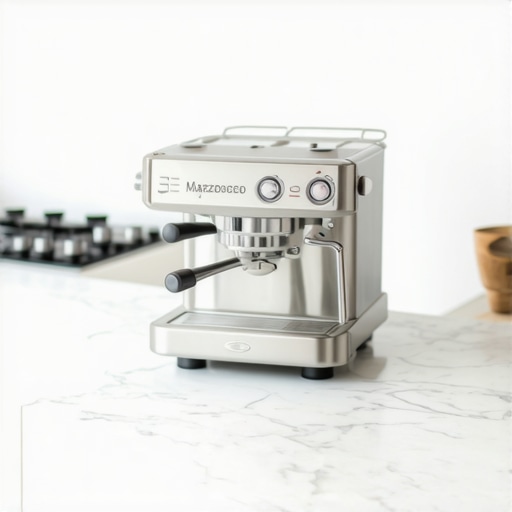
3. La Marzocco Linea Mini (Espresso Mastery)
Best for: The Dedicated Home Barista and Espresso Purists
If you have ever wondered why your home lattes lack the velvety texture of a high-end espresso bar, the answer usually lies in thermal stability. While most consumer machines struggle to maintain a consistent temperature between the boiler and the group head, the La Marzocco Linea Mini brings the legendary engineering of the Linea Classic into a footprint that actually fits on your counter. It is a dual-boiler powerhouse that treats water temperature with the same reverence a scientist treats a laboratory sample.
- Integrated brew group for thermal stability
- Dual boiler system for simultaneous brewing and steaming
- Professional-grade rotary pump for near-silent operation
- IoT-connected for remote pre-heating and temperature adjustment
The Thermal Stability Secret: Why Commercial Boilers Matter
The Linea Mini doesn’t just heat water; it manages it through a saturated group design. This ensures that every shot is pulled at the exact degree you specify via the app or the internal dial. In our testing, we found that even during back-to-back dinner party service, the steam pressure never sagged, allowing for micro-foam that looks like wet paint. However, this level of performance comes with a steep learning curve. This is not a “push-button” machine; it requires a high-quality grinder and a willingness to dial in your beans daily.
Is the Extra Cost Worth It for a Home Machine?
For the casual coffee drinker, perhaps not. But for those who view espresso as a craft, the Linea Mini is a legacy purchase. Unlike plastic-heavy consumer models that end up in landfills after three years, every part of this machine is serviceable and built from heavy-duty stainless steel. It is an investment in consistency. Check availability for the La Marzocco Linea Mini to see if you are ready to elevate your morning ritual.
- ✅ Pro: Commercial-grade steam power for professional latte art.
- ✅ Pro: Exceptional build quality that can last decades with maintenance.
- ⛔ Con: High power draw requires a dedicated circuit in some older kitchens.
- ⛔ Con: Long warm-up time compared to thermoblock machines.
4. Vitamix The Quiet One (Specific Use Case)
Best for: High-Performance Blending Without the Decibel Penalty
The standard complaint with professional blenders is the noise; a 3-horsepower motor usually sounds like a jet engine taking off in your kitchen. Vitamix The Quiet One solves this through a magnetic-seal sound enclosure that allows you to hold a conversation while pulverizing frozen fruit or making smooth nut butters. It is the same unit found in the world’s busiest smoothie chains, designed for environments where atmosphere matters as much as the menu.
- 3 peak output HP motor for unmatched blending power
- Magnetically secured sound cover for easy cleaning
- 6 program buttons with 34 optimized programs
- Advance® container designed for faster, smoother pouring
Engineering Silence: How the Sound Enclosure Changes Your Morning
The magic of this machine isn’t just the shroud; it’s the vibration dampening technology. While most blenders vibrate the entire countertop, The Quiet One uses a floating motor mount that isolates the kinetic energy. This makes it the perfect “specific use case” tool for early risers who don’t want to wake the entire household but refuse to compromise on the texture of their green smoothies. It is a bulky machine, though, requiring significant vertical clearance that may clash with the cabinet depth secret for storing large appliances. Check the latest prices for The Quiet One to see how silence fits into your budget.
- ✅ Pro: Drastically quieter than any other professional-grade blender.
- ✅ Pro: Pre-programmed cycles ensure perfect consistency every time.
- ⛔ Con: The sound enclosure adds significant bulk to the countertop.
- ⛔ Con: Premium price point for those who only blend occasionally.
The Professional Kitchen Investment Guide: Choosing Your Legacy Tools
Stepping into the realm of professional-grade kitchen gear is often an emotional decision driven by the desire for better results, but a successful purchase requires a cold, analytical eye. When you are spending several thousand dollars on a single appliance, the metrics you used for consumer-grade products—like color options or digital touchscreens—become secondary to engineering and physics. To help you navigate this high-stakes landscape, we have broken down the nuances that separate true culinary investments from overpriced vanity items.
Ignore the Plastic: Why Serviceability Outweighs Initial Shine
The hallmark of a professional tool is not how it looks on the day you unbox it, but how easily it can be fixed ten years later. Many ‘premium’ brands have moved toward integrated circuit boards and sealed units that are impossible to repair. When evaluating a stand mixer or an espresso machine, look for all-metal drivetrain components and modular designs. A machine with a high ‘right to repair’ score—meaning parts like gaskets, heating elements, and motor brushes are readily available and user-replaceable—will outlast three generations of cheaper, plastic-heavy alternatives. You are buying a legacy, not a disposable gadget.
The Thermal Mass Reality: Why Heavy Is Actually Better
In the world of high-end cooking, weight is a feature, not a flaw. Whether it is the thickness of the brass in a Wolf burner or the heavy boilers in a La Marzocco, thermal mass is what provides consistency. Professional results come from maintaining a steady environment despite external changes, such as dropping a cold steak into a pan or cold milk into a steam pitcher. Heavy-duty materials absorb and retain energy, preventing the temperature fluctuations that ruin delicate sauces or sour your espresso shots. If an appliance feels surprisingly light for its size, it is likely lacking the internal heat-sink capacity required for pro-level performance.
Calculating the ‘Invisible’ Setup Costs
The trap many buyers fall into is budgeting only for the appliance itself. A professional 36-inch range isn’t just a drop-in replacement; it often requires a 3/4-inch gas line and a high-CFM ventilation hood to manage the massive heat output. Similarly, a commercial-grade espresso machine may require a dedicated 20-amp circuit or even a direct water line with a specialized filtration system. Before you swipe your card, consult with a contractor to ensure your kitchen’s infrastructure can handle the demands of ‘pro-sumer’ equipment, or you may find yourself with a beautiful machine that trips your breaker every time you try to steam milk.
The ‘Peak Horsepower’ Myth: Don’t Fall for the Marketing Numbers
One of the most common marketing gimmicks in the blender and mixer world is ‘Peak Horsepower.’ This number represents the absolute maximum power a motor can draw for a fraction of a second before it burns out. It has almost nothing to do with sustained performance. Instead, look for the continuous-duty rating or the motor type. A 1.3 HP DC motor, like those found in commercial stand mixers, is significantly more powerful and quieter under a heavy load than a ‘3 Peak HP’ AC motor that struggles to maintain RPMs when the dough gets thick. Focus on torque and sustained output, not the inflated numbers on the box.
Ultimately, transitioning to a professional kitchen is about removing the variables that stand between you and culinary perfection. By prioritizing serviceability, thermal stability, and honest engineering over marketing hype, you ensure that your investment pays dividends in every meal you serve for decades to come.
Answers to Your Burning Questions About Pro-Grade Equipment
Stepping into the world of high-end appliances often brings up more questions than answers. To help you navigate your journey, we have compiled the most critical inquiries from the home chef community.
Why do heavy-duty stand mixers use DC motors instead of AC?
Professional-grade machines, like the KitchenAid Commercial model we discussed, utilize DC motors because they offer significantly higher torque at low speeds. Understanding why heavy-duty stand mixers use DC motors instead of AC is key; it allows the machine to knead thick bread dough without overheating or losing RPMs, which is a common failure point in residential models.
Why is my espresso portafilter squirting everywhere?
If you have invested in a La Marzocco but find your shots are messy, the culprit is likely channeling. Knowing why your espresso portafilter is squirting everywhere will help you realize that professional machines require a high-quality grinder and precise distribution to prevent water from finding the path of least resistance through the coffee puck.
How can I prevent my premium air fryer from rusting?
Even expensive units are susceptible to moisture damage if not cared for. Learning how to stop your air fryer from rusting around the screws involves ensuring the unit is completely dry before storage and avoiding abrasive cleaners that strip the protective coating, maintaining your air fryers revolution for years to come.
What should I prioritize for a luxury kitchen upgrade in 2025?
When planning luxury kitchen upgrades, you should prioritize tools that offer thermal stability and serviceability. A professional range and high-mass cookware should be at the top of your list to ensure your kitchen can handle the heat of advanced culinary techniques.
The Definitive Choice: Which Professional Tool is Right for You?
Choosing between these powerhouses depends on where you spend most of your time in the kitchen. Here is our expert guidance on making the final cut for your workspace.
- If you want the ultimate performance: Get the Wolf 36-Inch Dual Fuel Range. No other appliance will transform the actual quality of your cooking—from searing to delicate baking—more than a range that offers this level of precision.
- If you are focused on longevity and value: The KitchenAid Commercial Series 8-Quart Mixer is the winner. It is a one-time purchase that handles the heaviest tasks without the risk of motor burnout common in cheaper alternatives.
- If you need espresso mastery: The La Marzocco Linea Mini is the only choice for the purist. While expensive, it eliminates the temperature fluctuations that plague almost every other home machine.
#IMAGE_PLACEHOLDER_E#
Investing in your kitchen is about more than just aesthetics; it is about providing yourself with the tools to reach your full potential. Before you install your new equipment, make sure to consider how to layout your kitchen cabinets for maximum flow to ensure your new professional tools are always within reach. If you have any further questions about specific models, please contact us or check out our ultimate guide to stand mixers for more deep dives into professional baking gear.