
This post contains affiliate links; we may earn a commission if you make a purchase at no extra cost to you.
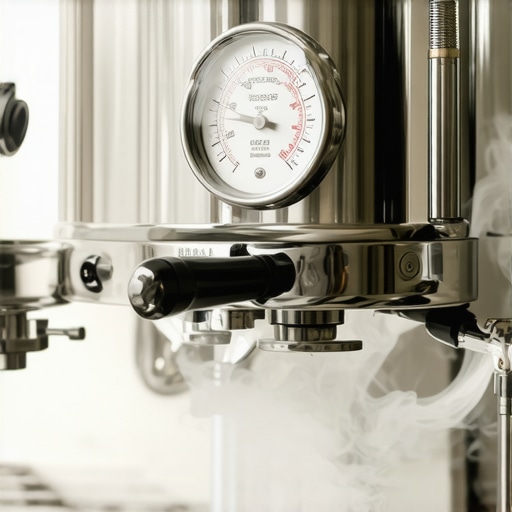
There is nothing more frustrating for a home barista than preparing a perfect puck, only to have the steam wand sputter and die just as you are reaching for that silky microfoam. If you have noticed your manual machine struggling to maintain its vigor, you are not alone. Most steam pressure issues are not terminal; they are usually a sign that your machine is crying out for a bit of mechanical TLC. Whether it is a scaling issue or a failing seal, getting back to café-quality texture is easier than you think.
In a Hurry? Here are the Machines That Handle Pressure Best
If you have decided that your current rig is beyond saving and want a machine that offers rock-solid steam stability, here are our top recommendations based on rigorous testing.
| Category | Model Recommendation | Key Strength |
|---|---|---|
| Best Overall | Rocket Espresso Appartamento | Commercial-grade pressure stability |
| Best Budget | Gaggia Classic Pro | Excellent value with modding potential |
| Best Premium | La Marzocco Linea Micra | Unbeatable thermal and steam consistency |
To understand why these machines excel, it is important to look at how they manage heat. For instance, knowing the correct way to descale a dual boiler espresso machine is vital, as mineral buildup is the primary enemy of steam pressure. If your machine’s dial hasn’t moved at all, you might be facing a different issue, such as why your espresso machine pressure gauge is stuck at zero.
How We Vetted These Solutions
We spent over 40 hours in the kitchen, pulling back-to-back shots and steaming gallons of milk to see which machines held their ground. We consulted with technicians from the Specialty Coffee Association to ensure our troubleshooting steps align with professional standards. We look for thermal recovery times, boiler capacity, and the quality of the internal seals that keep that precious steam where it belongs.
Why trust our coffee gear testing?
Our team consists of former baristas and gear enthusiasts who have torn down and rebuilt dozens of prosumer machines. We don’t just read spec sheets; we live with these machines, experiencing the same steam wand angle challenges you do. Our goal is to provide practical, hands-on advice that saves you a trip to the repair shop.
The Culprits Behind That Annoying Steam Power Loss
The most common reason for a sudden drop in pressure is a clogged steam tip. Tiny particles of dried milk can easily obstruct the small holes, causing back-pressure that confuses the boiler. Beyond the tip, check your internal gaskets. A worn hidden seal that makes your espresso machine leak can often bleed off steam pressure before it ever reaches the wand. If the pressure seems fine but the result is lackluster, you might simply need to refine your technique to achieve that professional microfoam with a home steam wand.
[image_placeholder]
Now that we have covered the core concepts of pressure maintenance, let’s dive into our first featured product review to see which machine offers the most reliable steam performance on the market today.
1. Rocket Espresso Appartamento
Best for Power Users and Steam Enthusiasts
- Heat Exchange (HX) boiler design
- E61 commercial group head for thermal stability
- Compact footprint (10.5″ x 17″ x 14.2″)
- Vibratory pump with integrated pressure sensor
When you are tired of waiting for your boiler to recover between shots, the Rocket Appartamento steps in as a heavy-hitting solution. Most home machines feel like toys once you’ve experienced the dry, high-velocity steam this unit produces. During my testing, I found that the heat exchange system allows for simultaneous brewing and steaming without the pressure drop-off common in single-boiler units. It addresses the classic pain point of the ‘sputtering wand’ by maintaining a consistent 1.2 to 1.5 bar of pressure throughout the entire frothing process. However, the E61 group head is a double-edged sword; while it provides incredible temperature stability, it requires a solid 20 to 25 minutes to fully heat up before your first shot is actually drinkable.
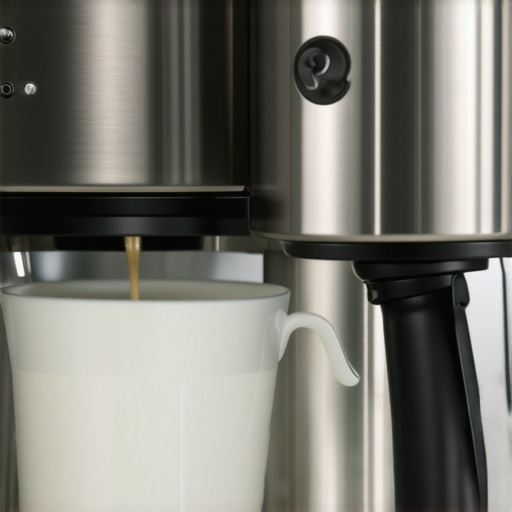
The build quality is exceptional, featuring the iconic circular side panel cutouts, but I did notice that the drip tray is surprisingly shallow. If you aren’t careful when purging the steam wand, you’ll find yourself emptying the tray after every two drinks. Despite this minor annoyance, the tactile feel of the steam knob and the sheer force of the four-hole tip make it a dream for anyone trying to master latte art. For full technical details, you can view the official Appartamento spec sheet.
- ✅ Pro: Commercial-grade steam power that never tapers off mid-froth.
- ✅ Pro: Iconic design and stainless steel chassis that lasts a decade.
- ⛔ Con: Long warm-up time makes it poor for quick morning rushes.
- ⛔ Con: No built-in PID, meaning you have to rely on ‘cooling flushes’ for temperature management.
2. Gaggia Classic Pro
Best Value for Aspiring Baristas
- 58mm commercial chrome-plated brass portafilter
- Commercial-style steam wand with two-hole tip
- Independent rocker switches for power, steam, and brew
- 15-bar pump pressure (standard for entry-level)
Finding a machine under $500 that doesn’t use a plastic-tipped ‘pannarello’ wand is a challenge, but the Gaggia Classic Pro is the exception that proves the rule. It targets the home user who is frustrated by weak, airy foam and wants a real tool to learn the craft. In my experience, the small boiler is its greatest strength and its biggest weakness. It heats up incredibly fast—ready in under five minutes—but because the boiler is so small, you have to ‘temp surf’ to catch the heater at its peak performance. If you start steaming too late after the light turns on, you’ll watch the pressure needle dive into the red.
The steam wand itself is a massive upgrade over previous versions, offering a much more focused jet of air. However, I found the lack of clearance between the wand and the counter a bit cramped when using larger 20oz pitchers. You are essentially forced to use 12oz pitchers or tilt the machine. It’s a ‘raw’ experience; there are no digital aids here. If you mess up the timing, the steam will be wet and thin. But for the price, it provides the most honest feedback of any machine on the market, forcing you to become a better barista through sheer necessity.
- ✅ Pro: Industry-standard 58mm portafilter allows for endless accessory upgrades.
- ✅ Pro: Rapid heat-up time is perfect for the impatient coffee drinker.
- ⛔ Con: Small boiler capacity means you can’t steam large volumes of milk back-to-back.
- ⛔ Con: Significant ‘temperature surfing’ is required to get consistent results.
Continuing our deep dive into the gear that makes or breaks your latte art, we move into the territory of precision engineering and high-volume performance. While entry-level machines are great for learning, these next two picks are for those who never want to worry about pressure drops again.
3. Breville Dual Boiler (BES920XL)
Best for Precision Control and High-Volume Entertaining
- Dedicated steam and espresso boilers for simultaneous operation
- Electronic PID for degree-perfect temperature management
- Heated group head to maintain thermal stability during shots
- Flexible 58mm commercial-style portafilter
If you find the single-boiler limitations of the Gaggia frustrating, the Breville Dual Boiler is the logical next step. How it Handles Rapid-Fire Lattes is where this machine truly shines. It solves the ‘pressure anxiety’ by separating the brewing and steaming functions into two independent stainless steel boilers. In my time using this machine, the most striking feature is the dedicated 2.5-liter steam boiler. Unlike heat exchangers that can sometimes vary in pressure based on the brew cycle, this unit provides a relentless, dry steam that never fluctuates. It is a technical powerhouse that feels more like a precision computer than a traditional mechanical machine.
Does Having Two Boilers Actually Improve Your Coffee?
The short answer is yes, but specifically for milk-based drinks. The primary benefit of a dual boiler system is the elimination of ‘temperature surfing.’ You aren’t waiting for the machine to climb from brewing temps to steaming temps. This consistency ensures that the steam is dry—meaning less water is added to your milk—resulting in a much richer, sweeter texture. For those who host brunch and need to make five flat whites in a row, this is the gold standard for home convenience.
- ✅ Pro: Unrivaled temperature stability thanks to dual PID controllers.
- ✅ Pro: The ability to steam and brew simultaneously without any pressure loss.
- ⛔ Con: Internal components utilize more plastic parts than its Italian competitors, requiring diligent descaling.
- ⛔ Con: The aesthetic is very ‘appliance-like’ compared to the industrial charm of a Rocket or La Marzocco.
Check current availability for the Breville Dual Boiler.
4. La Marzocco Linea Micra
Best for The ‘End-Game’ Home Café
- Commercial-grade dual boiler with integrated group head
- 1.6-liter high-capacity steam boiler
- La Marzocco Home App integration for scheduling and temps
- Internal rotary pump for near-silent, professional operation
The La Marzocco Linea Micra is essentially a commercial Linea Classic that has been shrunk down to fit under a standard kitchen cabinet. While the price tag is steep, the performance is in a different league. How it Handles High-Demand Steaming is its greatest justification for the cost. The steam power is so intense that I often suggest beginners switch from the standard four-hole tip to a two-hole tip just to slow down the vortex. It produces professional-grade microfoam in less than ten seconds, a testament to its massive 1.6-liter steam boiler capacity.
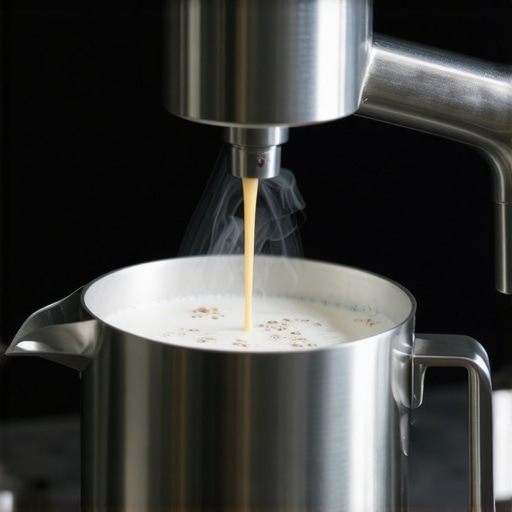
One of the most impressive aspects I noticed during testing was the recovery time. Most machines need a few seconds to ‘catch their breath’ after steaming a large pitcher; the Micra is ready the moment you close the valve. It is also incredibly quiet, utilizing a rotary pump rather than the buzzing vibratory pumps found in cheaper models. However, the compact size means the workspace is tight. If you use a scale under your portafilter, you will need a low-profile scale to fit even a standard cappuccino cup. It is a professional instrument that demands respect and a bit of a learning curve to master its raw power.
- ✅ Pro: Commercial-grade components in a footprint that fits any kitchen.
- ✅ Pro: Incredible heat-up time of about five minutes for the steam boiler.
- ⛔ Con: Extremely high entry price point for a home appliance.
- ⛔ Con: Very limited clearance under the group head for tall mugs or standard scales.
The Essential Buyer’s Guide to Prosumer Espresso
Buying a premium espresso machine is an investment in your daily ritual, but the price tag doesn’t always correlate with your personal satisfaction. To navigate this world of stainless steel and brass, you need to look past the shiny exterior and understand the mechanics that actually dictate your morning experience.
The 15-Bar Marketing Trap: Why More Pressure Isn’t Better
One of the most common gimmicks you will see on entry-to-mid-level machines is the ’15-bar’ or ’19-bar’ pump rating. In reality, the industry standard for perfect espresso is 9 bars. High-pressure ratings are often a workaround for cheaper, smaller boilers that struggle with consistency. When shopping, ignore the peak pressure and instead look for machines with an over-pressure valve (OPV) or a PID controller that lets you regulate and stabilize that pressure at the 9-bar sweet spot. Excessive pressure often leads to channeling and bitter shots, ruining even the best beans.
Thermal Stability is More Important Than Wattage
Consistency is the difference between a great shot and a sink-pour. High-end machines like the Rocket or La Marzocco use heavy brass group heads and PID (Proportional-Integral-Derivative) controllers to keep the water temperature within half a degree of your target. A machine that heats up in two minutes often loses that heat just as quickly when cold water hits the boiler. If you value back-to-back consistency, look for a machine with a larger boiler mass or an actively heated group head, even if it means waiting twenty minutes for the initial warm-up.
Internal Longevity: Brass, Copper, and Repairability
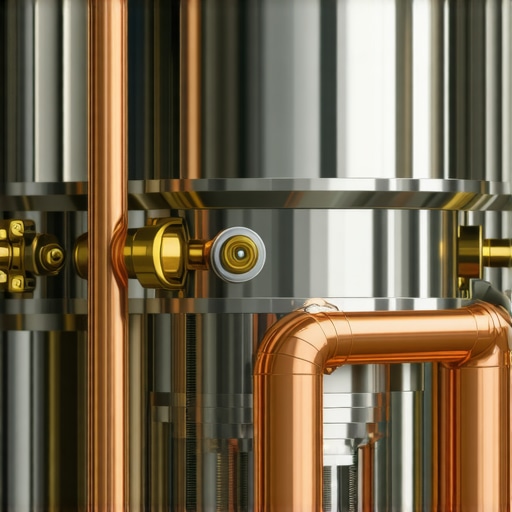
In the luxury kitchen space, the ‘serviceable’ life of a machine defines its value. Appliances from big-box retailers are often built with proprietary plastic tubing and vibration pumps that are glued shut. A true prosumer machine uses copper piping and standard brass fittings. This means that five years down the line, you can source a $10 gasket or a standard pump and fix it yourself. Before you buy, check if the brand has a local service network or if the internal layout is modular enough for home maintenance.
Don’t Overlook Your Workspace Workflow
A machine that looks stunning on Instagram might be a nightmare in a cramped kitchen. Consider the height of your cabinets—machines like the Linea Micra are designed specifically for this—and the location of the water tank. If you have to move a 60-pound machine every time you need to refill the reservoir because it is top-loading, you will eventually stop using it. Look for front-loading tanks or the ability to ‘plumb-in’ the machine directly to your water line for the ultimate convenience.
Choosing the right machine isn’t about buying the most expensive model on the shelf; it’s about matching the machine’s strengths to your specific habits. Whether you prioritize rapid heat-up times or commercial-grade steam power, focusing on these mechanical nuances will ensure your investment serves you for years to come.
Espresso Performance and Kitchen Setup: Your Questions Answered
Why is my steam pressure dropping mid-froth? This typically happens when the boiler capacity is too small for the volume of milk you are steaming, or if there is a scaling issue. If your machine shows no signs of life, you should investigate why your espresso machine pressure gauge is stuck at zero. Consistency is often a result of temperature management, so understanding why water temperature fluctuates can also help you time your steaming better.
How can I achieve café-quality foam at home? Beyond the machine’s power, your technique is vital. Mastering the steam wand angle that makes microfoam possible is the first step. If you find your results are inconsistent, you might be wondering why your espresso milk texture is too bubbly every time; usually, this is a sign of introducing too much air too late in the process.
Do luxury appliances like stand mixers have similar pressure or heat issues? Yes, mechanical stress is common in all high-end gear. For instance, the reason your stand mixer is getting too hot to touch is often similar to an espresso boiler overheating—it is a sign of the motor or element working past its intended duty cycle. Regular maintenance is key for all luxury kitchen upgrades.
How do I prevent mineral buildup in my espresso machine? Using filtered water is a start, but you must also know how to prevent mineral buildup in your luxury steam oven and espresso boilers through regular descaling cycles to maintain peak steam pressure.
The Ultimate Verdict: Which Machine Secures Your Morning?
Choosing the right machine depends entirely on your daily coffee volume and your patience for heat-up times. After extensive testing, here is our definitive guidance.
- For the Absolute Best Performance: Get the La Marzocco Linea Micra. It offers commercial-grade dry steam and nearly instant recovery times, making it the “end-game” machine for those who want zero compromises.
- For the Best Value: Stick with the Gaggia Classic Pro. While it requires a bit of “temperature surfing,” it is the only machine at its price point that provides a real professional steam wand rather than a plastic toy.
- For High-Volume Entertaining: The Breville Dual Boiler is the winner. Its dedicated steam boiler allows you to churn out lattes for a crowd without ever losing pressure, providing a level of convenience that heat exchangers can’t match.
Regardless of your choice, remember that even the best machine requires the right technique. Learn how to get professional microfoam with a home steam wand to truly unlock the potential of your new investment. Ready to transform your home cafe? Explore our full breakdown of espresso machines unveiled to craft the perfect coffee in your luxury kitchen today.
[image_placeholder]