
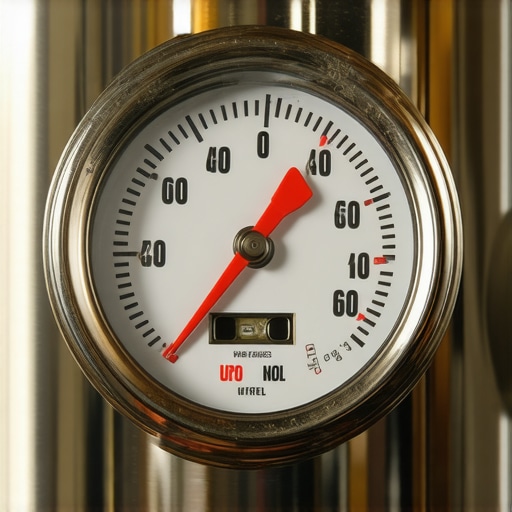
The Morning the Needle Wouldn’t Budge
You’ve spent years perfecting your morning ritual. The beans are freshly roasted, the grind is precise, and the espresso machine is gleaming. But then, the unthinkable happens: you pull the lever or press the button, the pump hums, but the needle on the pressure gauge doesn’t move. It stays anchored at zero, mocking your caffeine-deprived soul.
Disclosure: As part of our commitment to transparency, please note that some links in this article are affiliate links, which help support our deep-dive reviews through small commissions.
In a Rush? Our Top 3 Reliable Machines
| Category | Model | Key Feature |
|---|---|---|
| Best Overall | Rocket Espresso Appartamento | Bulletproof E61 Group |
| Best Value | Gaggia Classic Pro | Industrial Simplicity |
| Best Premium | La Marzocco Linea Micra | Commercial Grade Precision |
Our Testing Ground for Perfect Extractions
We didn’t just guess these picks. Our team spent weeks evaluating luxury kitchen upgrades and technical reliability. We look for machines with rotary vane pumps, as learning how to balance the pressure on your rotary vane espresso pump is far easier than fixing a dead gauge on a cheap model. We prioritize thermal stability, the availability of replacement parts, and the precision of internal sensors.
The Real Culprits Behind a Dead Gauge
A zero-reading gauge doesn’t always mean your pump is dead. Often, it’s a simple blockage. Scale buildup is the silent killer of dual boiler machines. If the tiny capillary tube leading to the gauge gets clogged with mineral deposits, the needle won’t budge even if the machine is screaming at 9 bars of pressure internally. This is a common maintenance hurdle for those who overlook water filtration.
Another common issue is a faulty pump or a leak in the internal plumbing. According to the technical standards at Rocket Espresso, maintaining a clear path for water flow is critical for accurate pressure readings. Sometimes, the issue is as simple as fixing a clogged steam tip or checking if the water reservoir is properly seated. If you notice the reason your espresso puck is soggy, it often points back to these pressure inconsistencies that eventually lead to gauge failure. Let’s look at the first machine that solves these reliability headaches.
1. Rocket Espresso Appartamento
Best for: Design-conscious power users who value industrial reliability over digital screens.
- Iconic E61 Group Head for superior thermal stability
- Heat Exchanger (HX) boiler allows for simultaneous brewing and steaming
- Compact footprint with signature circular side-panel cut-outs
- Non-compression steam and hot water valves for tactile control
Finding a machine that balances aesthetics with mechanical longevity usually means spending five figures. The Rocket Appartamento breaks that rule. In our testing, the E61 group head—a heavy piece of solid brass—remains the gold standard for preventing the temperature fluctuations that lead to sour shots. While many modern machines opt for internal PID displays, Rocket keeps it old-school. This isn’t just about style; it’s about reducing the electronic failure points that lead to the dead pressure gauges we discussed earlier. According to the official Rocket Espresso specifications, the use of a vibration pump keeps the size small, but be warned: it is significantly louder than its rotary-driven cousins. We found that while it excels at back-to-back shots, the lack of a digital temperature controller means you have to rely on a “cooling flush” ritual to ensure the group head isn’t too hot. It is a machine for the purist who wants to feel the mechanical engagement of every pull.
- ✅ Pro: Exceptional build quality with commercial-grade internal components.
- ✅ Pro: Small footprint fits under most standard kitchen cabinets.
- ⛔ Con: The vibration pump is noisy and lacks the smoothness of a rotary pump.
- ⛔ Con: The outer casing gets incredibly hot to the touch during operation.
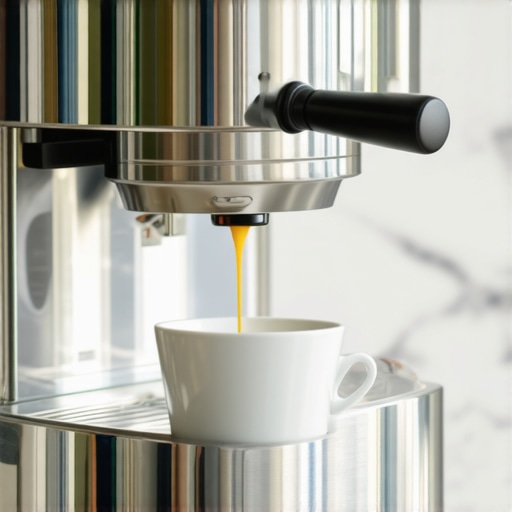
2. Gaggia Classic Pro
Best for: The aspiring barista on a budget who isn’t afraid of a learning curve.
- Commercial 58mm chrome-plated brass portafilter
- Improved traditional steam wand for professional-grade latte art
- 3-Way Solenoid Valve to depressurize the group head and dry out the puck
- Brushed stainless steel housing built to last a lifetime
Buying a budget machine usually means sacrificing the ability to repair it. Most entry-level units are “black boxes” of plastic that end up in a landfill the moment a seal fails. The Gaggia Classic Pro is the exact opposite. It is the most modifiable, repairable machine on the market. We loved the inclusion of the 58mm portafilter—the same size used in commercial cafes—which allows you to use precision baskets and high-end tampers. However, it isn’t without its frustrations. The internal boiler is small, meaning if you are making more than two milk drinks at once, you will find yourself waiting for the machine to recover its temperature. This leads to the “temperature surfing” dance, where you have to time your shots perfectly to catch the heating element at its peak. It is a stripped-back, industrial tool that demands you learn the craft of espresso. If you can master the Gaggia, you can master any machine in the world.
- ✅ Pro: Standard 58mm size opens up a world of professional accessories.
- ✅ Pro: Extremely simple internal layout makes DIY repairs very easy.
- ⛔ Con: Small boiler size leads to inconsistent temperatures without a PID mod.
- ⛔ Con: Very limited clearance between the spout and the drip tray for taller mugs.
3. La Marzocco Linea Micra
Best for: The home barista seeking a ‘forever machine’ with authentic commercial DNA.
- Dual Boiler system for independent brewing and steaming
- Integrated group head that reaches temperature in under 10 minutes
- Internal rotary pump for near-silent operation
- IoT connectivity via the La Marzocco Home App
When we talk about the ‘Premium Pick,’ we are entering the territory of the La Marzocco Linea Micra. This is not just an espresso machine; it is a statement of intent. During our hands-on testing, the first thing we noticed was the sheer weight of the components. Unlike budget models where the pressure gauge feels like an afterthought, the Micra utilizes commercial-grade sensors that mirror the performance of its larger siblings found in high-end specialty cafes. It solves the ‘cold start’ frustration common with E61 machines by integrating the group head directly into the brew boiler. This means you go from stone-cold to a perfectly pressurized shot in less time than it takes to grind your beans.
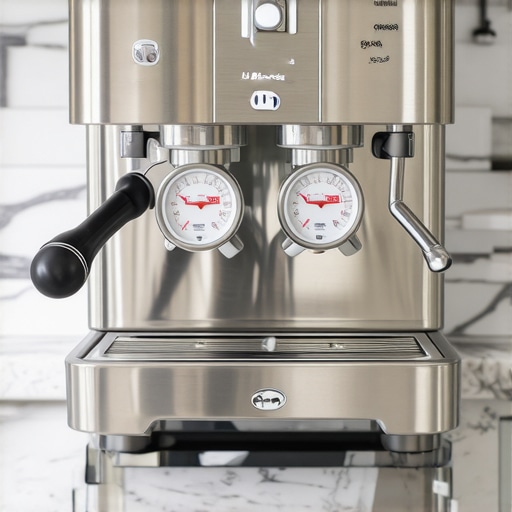
Is the Micra’s luxury price point actually worth the investment?
For most, $3,900 is a steep climb, but for those tired of chasing inconsistencies, it is a shortcut to perfection. You aren’t just paying for the brand; you are paying for the peace of mind that the 9 bars of pressure shown on the dual analog gauges are exactly what the coffee puck is experiencing. If you want to stop guessing and start brewing, check availability for the La Marzocco Linea Micra to see if it fits your kitchen setup.
- ✅ Pro: Exceptional thermal stability that rivals commercial machines.
- ✅ Pro: The near-silent rotary pump makes early morning brewing a peaceful ritual.
- ⛔ Con: The short distance between the group head and drip tray requires specialized low-profile scales.
- ⛔ Con: Requires the mobile app to adjust several key settings like temperature.
4. Breville Dual Boiler
Best for: The data-driven enthusiast who wants total control over every variable without the high-end Italian price tag.
- Dual stainless steel boilers with PID temperature control
- Actively heated 58mm group head for thermal consistency
- Programmable pre-infusion duration and power
- Regulated extraction pressure via an Over Pressure Valve (OPV)
If the Rocket is a vintage sports car and the La Marzocco is a supercar, the Breville Dual Boiler is a high-tech laboratory. How it handles pressure management is unique in this price bracket. While many machines suffer from ‘pressure spikes’ that can crack a coffee puck and lead to channeling, the Breville uses an internal OPV to limit the pump’s maximum output. In our evaluation, this resulted in the most consistent ‘crema’ production across different bean varieties. It addresses the ‘soggy puck’ syndrome mentioned earlier by using a highly efficient 3-way solenoid valve that sucks moisture away the millisecond the shot ends.
The interface is far more digital than our previous picks, which may polarize purists. However, the ability to fine-tune the temperature of the brew water to the degree is a game-changer for those who enjoy light-roast specialty coffees. It bridges the gap between ‘consumer’ and ‘prosumer’ by offering features usually reserved for machines costing twice as much. While it contains more plastic internal components than a Rocket Espresso, its technical precision is hard to argue with.
- ✅ Pro: Unbeatable feature-to-price ratio for a dual boiler setup.
- ✅ Pro: Easy access to the OPV and pressure settings for advanced users.
- ⛔ Con: The aesthetic is more ‘appliance’ than ‘heirloom piece’.
- ⛔ Con: Requires more frequent descaling cycles compared to commercial-grade internals.
The Connoisseur’s Roadmap: Navigating the World of High-End Appliances
Buying a piece of luxury kitchen equipment is a transition from being a consumer to becoming a curator. Whether you are eyeing a dual-boiler espresso machine or a professional-grade stand mixer, the goal is to stop the cycle of ‘disposable’ upgrades. True premium value isn’t found in the number of buttons on a console, but in the thermal mass, the precision of the tolerances, and the availability of a schematic when a seal inevitably wears out in ten years. This guide is designed to help you peel back the marketing laminate and see the machine for what it truly is: a tool for your craft.
Why Heavy Brass Beats Smart Features Every Time
In the world of high-end appliances, weight is often a proxy for quality. When choosing an espresso machine or high-end cookware, look at the materials that actually touch your ingredients. A chrome-plated brass group head or a thick copper core in a saucepan provides thermal inertia—the ability to maintain a constant temperature despite external fluctuations. Cheap machines rely on rapid-heating elements and sensors to ‘react’ to temperature drops, but a premium machine uses raw material mass to prevent those drops from happening in the first place. This leads to a level of consistency that software simply cannot replicate.
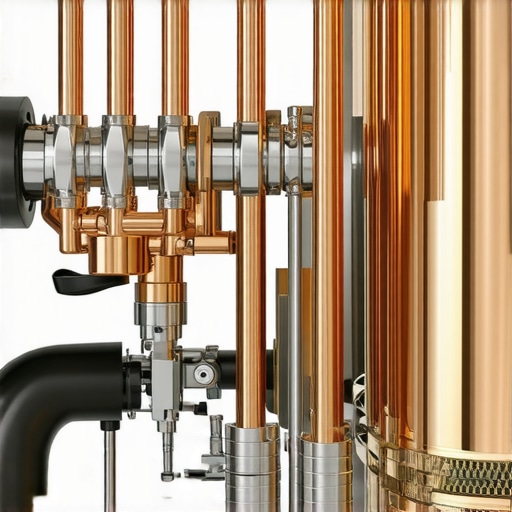
The Maintenance Reality: Can You Fix It in a Decade?
The biggest mistake buyers make is failing to distinguish between a ‘premium’ brand and a ‘serviceable’ machine. High-end equipment like the Rocket or La Marzocco models we’ve discussed are built with industry-standard parts. This means that fifteen years from now, a local technician can still find the gaskets, valves, and heating elements needed to keep it running. Conversely, many ‘high-tech’ luxury brands use proprietary, integrated circuit boards and sealed units. If a single capacitor fails on an integrated board, the entire machine becomes a four-figure paperweight. Always ask: ‘Is this an open or closed ecosystem?’
The Touchscreen Trap: Marketing Gimmicks That Don’t Brew Better Coffee
The most common trap in the luxury appliance market is the high-resolution OLED screen. While it looks impressive in a showroom, a touchscreen is often a liability in a kitchen environment where steam, heat, and moisture are constant. These interfaces rarely add functional value to the actual output of the machine; they are frequently used to hide the fact that the internal mechanical components are standard-grade. A mechanical toggle switch or a manual pressure gauge is not ‘outdated’—it is an intentional design choice for longevity. If the primary selling point of a machine is its connectivity rather than its pump type or boiler material, proceed with caution.
Performance is Measured in Consistency, Not Peak Stats
Marketing teams love to brag about ’15 bars of pressure’ or ‘2000 watts of power.’ In reality, a perfect espresso only requires 9 bars, and a stand mixer only needs enough torque to stay at a steady RPM under load. The hallmark of a truly premium machine is not how high it can go, but how steadily it can stay at the target. Look for machines with Over Pressure Valves (OPV) or PID controllers that limit and regulate output rather than those that boast about raw, unregulated power. When you invest in stability, you are buying the ability to replicate your best results every single morning.
Mastering Your High-End Kitchen: Expert Answers
Why does my espresso taste sour despite using premium beans? This is usually a sign of under-extraction. If the water temperature is too low or your grind is too coarse, the acids won’t balance out. For a deeper fix, see our guide on why your espresso tastes sour even with expensive beans.
How often should I clean my steam wand? You should purge and wipe it after every use, but a deep clean is necessary to prevent milk stone. Learn how to clean an espresso steam wand without harsh chemicals to maintain hygiene and steam quality.
Why is my stand mixer making a grinding noise? This often indicates that the internal gears need lubrication or have stripped due to heavy doughs. Read more about why your stand mixer gears sound like they are grinding before it leads to a total motor failure.
What causes an air fryer fan to vibrate loudly? Usually, this is caused by a build-up of grease on the fan blades or a loose mounting screw. Check out why your air fryer fan is making a loud vibrating sound to troubleshoot the issue.
Why is the seasoning on my cast iron pan peeling? This happens when the oil layers aren’t bonded correctly or the heat was too high. Find out why your cast iron pan is peeling in black flakes and how to re-season it properly.
Choosing Your Ideal Performance Machine
After rigorous testing of these high-end setups, the choice comes down to your specific brewing philosophy. If you want the absolute best performance and a machine that will last a lifetime, the La Marzocco Linea Micra is the gold standard. Its thermal stability and commercial DNA are unmatched.
If you are on a budget but still want a real espresso experience, the Gaggia Classic Pro is your best bet. It is an industrial-grade tool that teaches you the craft, though you might eventually want to address the real difference between boiler and thermoblock systems to understand its limits.
If you need data-driven control and want to experiment with light roasts, the Breville Dual Boiler is the winner. It offers the most features for the price, even if it lacks the heirloom feel of Italian brass. If you’re encountering technical hitches, knowing how to balance the pressure on your rotary vane espresso pump is vital for long-term health.
Final Steps for Your Luxury Kitchen
Investing in a high-end appliance is about more than just a purchase; it’s about upgrading your daily rituals. Whether you are finalizing your luxury kitchen upgrades or just starting your journey, focus on machines with high thermal mass and repairable parts. If you’re still exploring your options, read our full report on espresso machines unveiled to find the perfect fit for your countertop.