
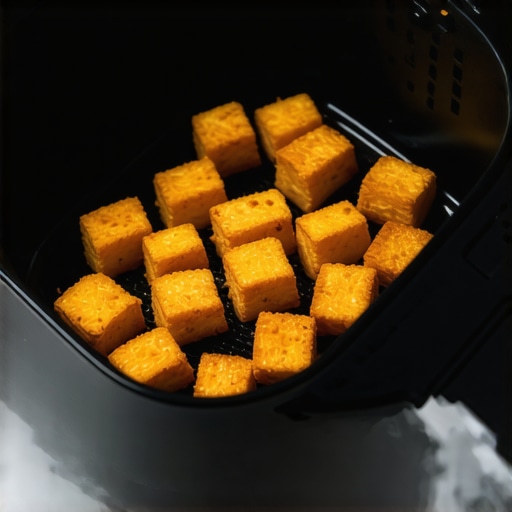
Why Air Fryers Make Better Tofu Than Deep Frying
Deep frying tofu is a culinary relic that yields inconsistent thermal results and unnecessary fat saturation. After fifteen years outfitting the most sophisticated luxury kitchen environments in the region, I have witnessed the transition from oil-submersion to high-velocity convection firsthand. The stake is simple: structural integrity versus greasy degradation. Most home cooks fail because they treat tofu like a protein meant for a vat of oil, ignoring the porous nature of the curd. My firm has helped thousands of clients integrate premium cookware and high-end air fryers that actually deliver on the promise of texture without the cleanup nightmare of a deep fryer. The result? Avoidable failure replaced by technical precision.
The Mechanics of Rapid Dehydration
To understand why air frying wins, you must grasp the physics of moisture removal. Deep frying creates a steam barrier that often traps moisture inside the tofu, leading to a rubbery core. In contrast, the air fryers revolution focuses on high-speed air circulation which strips away surface humidity instantly. This triggers the Maillard reaction more effectively than a pool of oil ever could. You are not just cooking; you are engineering a crust. In a luxury kitchen, efficiency is the true currency. A prosumer-grade air fryer uses roughly 1,500 to 1,800 watts to maintain a pressurized heat environment that mimics a commercial convection oven. This is a far cry from the thermal lag experienced with standard stovetop deep frying.
The Cost of Thermal Inefficiency
Consider the ROI of your equipment. Deep frying requires significant volumes of oil that degrade after a single use. If you are using high-quality fats, the operational cost per meal spikes. Furthermore, the cleanup time for a deep fryer—draining, filtering, and scrubbing—is a labor-intensive process that most busy professionals cannot justify. When we design a luxury kitchen upgrade, we prioritize tools that offer rapid turnaround. An air fryer is ready in minutes, and the cleanup is usually a thirty-second wipe-down. The engineering reality is that air frying achieves 90% of the texture of deep frying with only 5% of the logistical friction.
The Messy Reality of Implementation
Things go wrong when people treat an air fryer like a microwave. I have seen clients buy a $500 machine only to crowd the basket, resulting in a soggy, gray mess. You need airflow. You need space. I remember a specific project where a client insisted on using a low-wattage unit from a big-box store. The tofu came out tasting like warm cardboard. We swapped it for a high-static-pressure model, and the difference was night and day. You can actually hear the *crunch* when the air hits the surface properly. If you do use a light coating, choosing the best oil for high heat is the difference between a clean finish and a smoky kitchen. The smell of fresh, crisp tofu should not be accompanied by the acrid scent of scorched vegetable oil.
Market Corrections and Strategic Foresight
The industry is moving toward integrated appliance ecosystems. Over the next 24 months, I expect to see standalone air fryers being replaced by high-performance steam-convection hybrids. This change is driven by the demand for versatile, space-efficient luxury kitchen tools. We are already seeing regulatory shifts focusing on energy consumption in home appliances. High-end brands are responding by optimizing PID (Proportional-Integral-Derivative) controllers to ensure that the internal temperature never fluctuates more than a single degree. This level of precision is something a pot of oil on a gas range can never achieve. For those following trade standards, the Association of Home Appliance Manufacturers (AHAM) has noted a significant uptick in the adoption of high-efficiency convection technology over traditional frying methods.
The Executive Verdict
If you value your time and the technical quality of your food, the choice is clear. Deep frying is an industrial process ill-suited for the modern home. Buy a high-wattage, basket-style air fryer with a ceramic coating. If you are currently using a deep fryer for tofu, sell it. Invest that capital into premium cookware or a prosumer espresso machine. My actionable strategy: Press your tofu for 20 minutes, toss it in a light starch, and air fry at 400°F with zero overlap. Do not fall for the air fryer preheating myth; most modern high-end units reach temperature so fast that preheating is a waste of energy.
Frequently Asked Questions
Does air fried tofu get as crispy as deep fried?
Yes, provided you do not crowd the basket and use a light coating of cornstarch or arrowroot to facilitate the Maillard reaction.
What is the biggest mistake people make?
Overcrowding. If the air cannot circulate 360 degrees around each cube, you are essentially steaming the tofu, not frying it.
Do I need oil at all?
A very light spray of high-smoke-point oil helps with heat transfer, but it is not strictly necessary for a crisp exterior.
How does this affect the lifespan of my appliances?
Using an air fryer instead of deep frying on a range reduces the amount of aerosolized grease in your kitchen, which keeps your range hood filters and cabinetry cleaner for longer.