
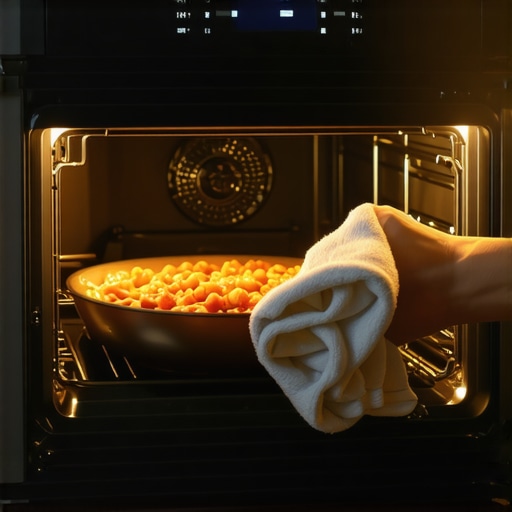
Mineral buildup in a high-end steam oven is more than a nuisance; it is a slow-motion mechanical failure. Most owners of premium kitchen suites treat their appliances as set-and-forget assets, but steam technology operates on the edge of physics where water phase changes leave behind aggressive calcification. After fifteen years of diagnosing hardware failures in luxury kitchens, I have seen five-figure convection-steam ovens (CSOs) reduced to expensive wall ornaments simply because of calcium carbonate accumulation. The stake is clear: either you control the water chemistry, or the water chemistry destroys the appliance.
How to Prevent Mineral Buildup in Your Luxury Steam Oven
The engineering reality of steam generation relies on rapid heating of a small water volume. When water transitions to vapor, it abandons its mineral load—primarily calcium and magnesium—directly onto the heating elements and within the internal plumbing. This process, known as scaling, creates a thermal barrier. Over time, the heating element must work twice as hard to reach the same temperature, eventually leading to a catastrophic burnout. The logic is identical to what we see in high-pressure coffee equipment; choosing the best type of water for a prosumer espresso machine is just as vital for your steam oven. Ignoring this leads to sensor inaccuracies and uneven heat distribution.
The Engineering Reality of Scale Formation
Total Dissolved Solids (TDS) determine the lifespan of your steam generator. In many local municipalities, water hardness exceeds 120 parts per million (PPM), which is the threshold for rapid scale accumulation. A luxury steam oven using hard water is essentially a lime factory. The calcium bonds to the stainless steel or specialized alloy surfaces of the boiler. This isn’t just about the white spots you see on the oven floor; it’s about the microscopic layers inside the solenoid valves. Once these valves fail to seal due to grit, the oven leaks or refuses to fill. It is an avoidable failure. The cost-benefit of installing a dedicated filtration system versus replacing a Miele or Gaggenau boiler assembly is heavily skewed toward prevention. A replacement boiler can cost upwards of $1,500 in parts alone, not including the specialized labor required to deconstruct the cabinetry. Beyond the boiler, you must also consider the hidden filter in your oven that often catches larger sediment before it enters the steam path.
Economic Risks of Ignored Maintenance
Operational risks manifest in the sensory experience of the machine. The first sign is often a change in the ‘hiss’—a muffled, struggling sound during the steam cycle. Then comes the smell: a faint, chalky odor that taints delicate fish or sourdough. I once serviced a kitchen in a high-end zip code where the owner ignored the ‘Descale’ prompt for six months. The result? The scale had petrified into a solid block, cracking the heating manifold as it expanded. We had to pull the entire double-oven stack to reach the components. It was a three-day job that could have been avoided with a twenty-minute maintenance cycle. For those using other high-end gear, understanding the correct way to descale a dual-boiler espresso machine provides a great baseline for the technical discipline required here. The principles of citric acid or specialized descaling agents are the same, but the oven requires a higher volume of solution to flush the larger cavities.
Modern Filtration Strategies
The market is shifting toward point-of-use reverse osmosis (RO) systems with remineralization. Pure RO water can be too aggressive—essentially ‘hungry’ water that can leach metals from the oven’s plumbing. You need a balanced TDS. According to standards set by the Water Quality Association, water for steam applications should be softened but not entirely stripped of its character. Using an ion-exchange filter specifically designed for high-heat appliances is the industry standard. This prevents the ‘clank’ of mineral flakes breaking off and circulating through the pump system. If you already see external signs of hard water, such as those discussed in my guide on how to remove hard water spots from chrome kitchen faucets, your steam oven is likely already suffering internally.
The Executive Verdict
The strategy for 2025 is clear: integrated water treatment is no longer an option; it is a requirement for the modern luxury kitchen. If you are installing a plumbed steam oven, you must install a dedicated phosphate feeder or an ion-exchange system. If your oven is tank-fed, use only filtered water—never raw tap water. My recommendation is a ‘Buy’ on high-quality descaling solutions and a ‘Hold’ on using vinegar, which can damage sensitive gaskets over time. Follow the manufacturer’s prompts immediately. Delay is the primary cause of system death. For those in high-hardness areas, increase the frequency of manual flushes beyond what the software suggests. It is the only way to ensure your investment lasts twenty years instead of five.
Frequently Asked Questions
Can I use distilled water in my steam oven?
Check your manual. Some brands, like Wolf, allow it, but others require a small amount of mineral content for the water sensors to detect the fill level. Totally pure water can sometimes cause ‘no water’ errors.
Why is the descale light still on after I cleaned it?
This often indicates a sensor probe is still coated in scale. You may need a second cycle with a stronger concentration of the manufacturer-approved descaling agent to fully dissolve the heavy buildup on the electrodes.
How often should I realistically descale?
If your water is hard, every 30 to 50 steam cycles is the safety limit. If you use the oven daily, that means once a month. Relying on the machine’s internal counter is often too late for the most sensitive components.
Is vinegar a safe alternative for luxury ovens?
No. The acetic acid in vinegar is often too harsh for the specialty seals and can leave a residual scent that is nearly impossible to purge from the steam lines. Stick to citric acid-based cleaners designed for high-end alloys.