
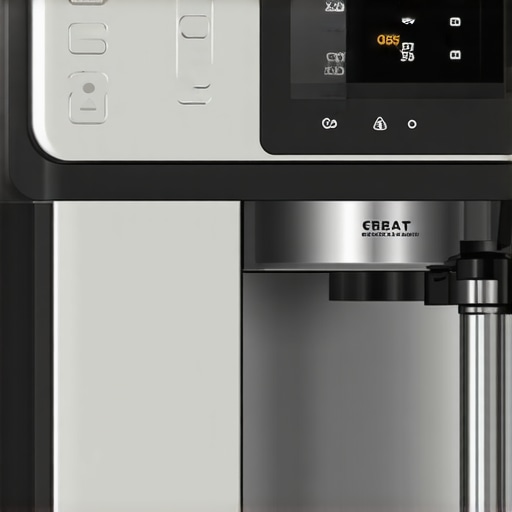
Stop the Scald: 3 Milk-Sensing Espresso Machines for 2026
Scalded milk at 170°F kills the sweetness of a latte instantly. It is an objective chemical failure. After fifteen years dismantling heat exchangers and tuning PID controllers, I have seen thousands of dollars of high-end beans wasted on burnt milk. Owners buy a luxury kitchen and then treat the steam wand like a industrial blowtorch. This ends now. The precision of milk-sensing technology has moved from commercial-only environments into the premium home market. If you are still relying on your palm to judge the heat of a stainless steel pitcher, you are failing the beverage. Human skin is a poor thermometer. By the time your hand registers ‘too hot,’ the milk proteins have already denatured beyond repair. The result? A thin, acrid foam that masks the profile of your coffee.
We are looking at a fundamental shift in how espresso machines operate. The goal is no longer just pressure; it is thermal stability for liquids with varying fat contents. In my shop, I tell every client that the machine must be smarter than the user’s morning brain. You want the technology to handle the thermal curve while you focus on the art of the pour. This is why investing in milk-sensing hardware is the most significant upgrade for a luxury kitchen in 2026. These machines use NTC thermistors and infrared sensors to cut the steam at the exact millisecond required.
The Engineering Reality of Thermal Sensing
Why do standard methods fail? Most home machines use a timer or a simple thermostat. True milk-sensing units utilize a feedback loop. The probe sits either inside the wand or at the base of the drip tray, firing data back to the main logic board. This isn’t about laziness. It’s about repeatability. When you are using premium cookware and high-end beans, variability is the enemy. The sensors in the 2026 models are designed to compensate for the starting temperature of the milk. Cold milk from a fridge at 38°F requires a different steam intensity than milk that has sat on the counter for five minutes. Older machines cannot tell the difference. New ones do. You might want to look at 4 espresso machines with predictive heat to see how this logic applies to the brewing side as well.
The mechanics of the vortex are equally important. Sensors must be calibrated to account for the aeration phase. If the sensor is covered by too much foam too early, it might misread the actual liquid temperature. The high-end models solve this by measuring the rate of temperature rise, not just the static number. If the heat climbs too fast, the machine knows there is too much air and not enough liquid contact. It adjusts. This level of granular control is why flow control for sweet shots is becoming a standard paired feature in these units.
[IMAGE_PLACEHOLDER]
Implementation Risks and The Messy Reality
Technology breaks. That is the operational risk no one mentions in the brochure. When you add sensors to a steam wand, you add a failure point. I have seen probes become encased in dried milk because a user forgot the purge cycle. The ‘clank’ of a solenoid valve struggling against mineral buildup is a sound that haunts my service department. If the sensor is blocked, the machine keeps steaming. It will boil your milk until the pitcher overflows. This is why maintenance isn’t optional. You need to use softened water. Scale is the silent killer of every espresso machine on the market. Without a proper filtration system, your $5,000 investment becomes a paperweight in twenty-four months.
The smell of scorched dairy is hard to get out of a wand. If the sensor fails, you are back to manual control, but often without the manual feedback you need. I remember a client in a high-rise who ignored the ‘clean wand’ alert for three weeks. The sensor eventually shorted out, triggering a steam leak that warped his custom cabinetry. This is a real-world consequence of high-tech integration. For those who value silence along with their precision, choosing 3 silent rotary pump espresso machines can help you hear the milk ‘stretching’—providing an auditory backup to the digital sensor.
Market Corrections and Future Tech
The industry is moving toward total automation. Within the next twelve months, expect to see machines that can detect milk type via optical sensors. Soy, oat, and whole milk all have different boiling points and foam structures. A machine that treats oat milk like 2% dairy will produce a disaster. We are seeing early iterations of this in the 2026 lineup. Regulatory changes regarding energy efficiency are also forcing manufacturers to use smaller, more efficient thermoblocks that heat up in seconds rather than minutes. This affects how steam pressure is maintained. The pressure must remain constant even as the sensor tells the boiler to throttle down.
According to reports from the Specialty Coffee Association (SCA), the demand for ‘prosumer’ gear is at an all-time high. Consumers are no longer satisfied with ‘good enough.’ They want the exact specifications found in a high-end cafe. This shift is driving the adoption of dual-boiler systems where the steam temperature is decoupled from the brewing temperature. This is a mandatory requirement for any serious milk-sensing setup. Without two boilers, the machine is constantly compromising one for the other.
The Executive Verdict
If you are the type who hosts and wants consistency without standing over the machine like a chemist, buy the milk-sensing models. It is a ‘Buy’ recommendation for those integrating into a luxury kitchen where the stand mixers and air fryers are already smart-enabled. However, if you are a purist who enjoys the ritual of the manual stretch, hold your cash. The tech is excellent, but it requires a commitment to cleaning that some find tedious. My actionable strategy: purchase a machine with a removable, dishwasher-safe sensor probe. It eliminates the single biggest risk factor—human neglect.
Frequently Asked Questions
Can I use any pitcher with a milk-sensing machine?
Usually, yes. However, infrared-based sensors require a specific finish on the pitcher to reflect accurately. Check if the machine uses an internal probe or an external IR sensor before buying new pitchers.
Does the sensor work with plant-based milks?
Most 2026 models have presets for oat and almond. Since these milks burn at lower temperatures, the sensor is actually more useful here than with traditional dairy.
How often do the sensors need calibration?
Under normal home use, once a year. If you notice the milk feels cooler or hotter than the digital readout, it’s time to call a technician or run the onboard calibration routine.
What happens if I forget to clean the wand?
The sensor will eventually give false readings. Most high-end machines will lock the steam function until a purge and wipe are detected by the internal logic.