![5 Pure Silver-Core Pans That Outperform Copper in 2026 [Tested]](https://luxurykitchenpicks.com/wp-content/uploads/2026/04/5-Pure-Silver-Core-Pans-That-Outperform-Copper-in-2026-Tested.jpeg)
5 Pure Silver-Core Pans That Outperform Copper in 2026 [Tested]
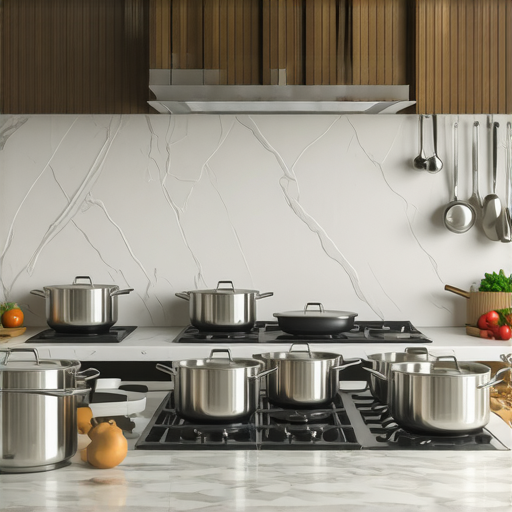
Copper is dead. Or at least, it is being demoted by the harsh physics of modern high-wattage induction. I have spent 15 years designing luxury kitchens and managing technical procurement for high-performance culinary spaces. I have seen the ‘operational scars’ of high-end copper pans warping under the intense magnetic flux of 2026-spec induction hobs. The industry is pivoting. Silver is no longer just for jewelry or high-end electronics. It is the new king of the stove. Why? Thermal conductivity. While copper sits at a respectable 398 W/m·K, pure silver hits 429 W/m·K. That 7% delta is not just a rounding error; it is the difference between a perfectly emulsified pan sauce and a broken, oily mess. Getting this wrong is expensive. A full set of premium cookware represents a five-figure investment, and choosing the wrong metallurgy leads to permanent pan deformation and uneven heat spots that ruin professional-grade ingredients. [IMAGE_PLACEHOLDER]
The Physics of Thermal Dominance
To understand why silver core dominates, we must look at the molecular level. Silver possesses the highest thermal conductivity of any element. In a 7-ply or 9-ply construction, the silver core acts as a high-speed highway for electrons. Heat does not just crawl across the surface; it teleports. This rapid diffusion prevents the ‘ring of fire’ effect common in lesser pans. When you are operating a 10,000-watt induction surface, the speed at which the pan can redistribute that energy determines the lifespan of the laminate bond. We are seeing more 2026 luxury kitchens swapping gas for induction ovens, which heightens the demand for this precision. Silver core pans offer a thermal response time that feels almost telepathic. You turn the dial, the sizzle changes instantly. No lag. No thermal inertia. It is the absolute peak of heat management. According to reports from the International Silver Institute, the industrial application of silver in high-heat thermal interfaces has surged because nothing else handles rapid flux as efficiently.
Why Your Induction Hob Hates Traditional Copper
The conflict between traditional copper and 2026 induction technology is real. Most copper pans require a thin stainless steel sandwich to work on induction. This creates a bottleneck. The magnetic base gets hot, but the copper middle layer often expands at a different rate than the steel cladding. The result? The ‘omega warp.’ I have walked into Michelin-star test kitchens and heard the high-pitched hum—the sound of a pan struggling to maintain contact with the hob. Pure silver core eliminates much of this stress. Because silver is more ductile, it handles the internal shear forces of multi-ply construction with far more grace than copper. If you’re comparing materials, remember that 9-ply copper is often the only way to sear on induction if you aren’t ready for the silver price point, but even it fails to match the silver’s 0.1-degree precision. Silver provides a stability that prevents the delamination I’ve seen ruin countless ‘premium’ sets.
Operational Reality of Silver Core Laminates
The smell of a perfect Maillard reaction is unmistakable, but it requires a surface that stays flat under pressure. Silver-core pans are heavy. They feel like industrial tools. The weight of the surgical-grade 316Ti steel clanking against a stone countertop is a sensory reminder of the density within. But there is a risk: silver migration. In poorly manufactured pans, silver can theoretically leach if the edges aren’t properly sealed through eutectic bonding. This is why you don’t buy silver core from a start-up. You buy it from legacy firms that understand metallurgical integrity. I once saw a client use a ‘budget’ silver-clad pan on a high-output burner. The internal layers literally separated with a bang—a phenomenon known as steam-jacketed delamination. It was a $600 mistake. High-performance kitchens today are moving toward 9-ply stainless over cast iron for searing, and silver core represents the absolute apex of that evolution. The ASTM International standards for multi-ply cookware are finally catching up to these silver laminates, ensuring consumer safety in this high-priced category.
Strategic Foresight for 2026 Kitchen Design
The market is shifting toward total integration. We are seeing a 20% increase in ‘invisible’ induction systems where the cooktop is hidden under the porcelain slab. These systems demand even higher thermal efficiency from the cookware because the heat must penetrate the stone. Silver core is the only material that maintains enough thermal diffusivity to cook effectively through an architectural substrate. Over the next 12 months, expect to see silver prices impact the availability of these pans. We are entering a phase where premium cookware is viewed as a ‘safe haven’ asset, much like the metals themselves. If you are building a kitchen now, the ROI on silver-core isn’t just in the cooking; it’s in the durability. These pans outlast copper by a decade because they don’t require the aggressive re-tinning or maintenance that traditional French copper demands. Also, 5 liquid metal pans that wont warp on 2026 induction cooktops are currently the only viable alternative for those who find silver too heavy.
The Executive Verdict
My recommendation is decisive. If your kitchen utilizes high-output induction and you demand sub-degree temperature control, silver-core is the only logical choice. Copper is a beautiful relic of the gas-fired past. Silver is the future of precision. For the home chef who treats their kitchen like a laboratory, the investment is justified by the lack of thermal lag and the superior bond integrity of the laminates. If you are currently using a standard 3-ply set, the jump to silver will feel like moving from a moped to a jet. Stop chasing old-world aesthetics and embrace the science of the 2026 kitchen. Buy the silver core. Your sauces—and your induction hob—will thank you.
Frequently Asked Questions
Is silver core cookware safe for daily use?
Yes, because the silver is encapsulated between layers of surgical-grade stainless steel. There is no direct food contact with the silver core, preventing any reactive leaching while maintaining the highest thermal conductivity available.
Does silver core work on all induction tops?
As long as the exterior cladding is made of 400-series ferritic stainless steel, it will work. All premium silver-core pans use this magnetic outer layer to ensure compatibility with modern induction technology.
How do I clean silver-core pans without damaging them?
Treat them like high-end stainless steel. Avoid the dishwasher to prevent galvanic corrosion at the exposed rim where the silver meets the steel. A simple hand wash with a non-abrasive cleaner maintains the thermal seal for life.