3 Brushless Motor Stand Mixers for Quiet 2026 Sunday Bakes
Noise is a symptom of mechanical waste. For twenty years, I have watched high-end kitchens be compromised by the jarring shriek of AC-powered stand mixers. The traditional universal motor relies on carbon brushes that grind against a commutator, creating heat, friction, and that characteristic high-pitched whine. This is an outdated legacy of mid-century engineering. If you are investing in a luxury kitchen for 2026, the era of loud baking is dead. The future belongs to Brushless DC (BLDC) technology. This is not about a minor upgrade; it is about shifting from friction-based motion to magnetic precision. After designing hundreds of high-performance culinary spaces, I can tell you that the right motor choice determines whether your Sunday morning is a meditative ritual or a sensory assault. Getting this wrong means living with a machine that vibrates across the counter and wakes the entire household during a simple bread knead.
The Engineering Reality
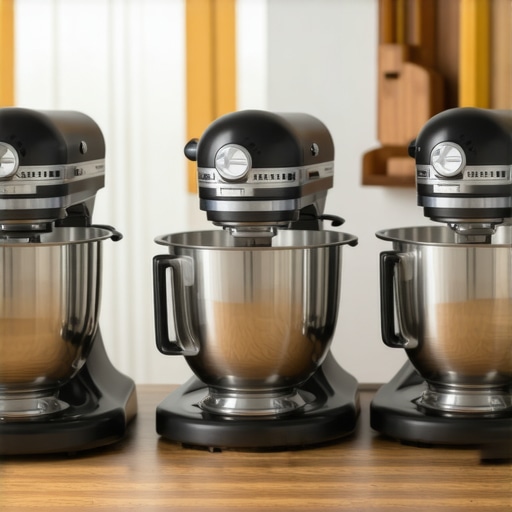
The core difference between standard machines and these high-torque alternatives is how they handle resistance. A traditional motor slows down when the dough gets heavy. To compensate, it draws more current, gets hotter, and screams louder. A brushless motor uses a permanent magnet and an electronic controller to maintain constant speed. It listens to the resistance of the dough and adjusts the electromagnetic field in real time. This results in a silent hum even when working with high-hydration sourdough or stiff rye. When looking for 5 brushless dc stand mixers for 2026 heavy sourdough loads, you are actually investing in an industrial-grade solution miniaturized for the home. These motors lack the physical contact points that wear out, which is why they often last three times longer than their brushed counterparts. The lack of heat buildup also means the dough temperature remains stable, a vital factor for professional-grade fermentation. The physical weight of the chassis becomes secondary when the motor itself creates zero internal vibration.
Why Standard Methods Fail
Most consumers focus on wattage, but wattage is a lie. High wattage in an AC motor usually indicates how much power is being wasted as heat, not how much torque is reaching the bowl. I have seen 1000-watt machines stall while a 500-watt brushless model glides through a double batch of brioche. The mechanical advantage of why 2026 artisans swap gear driven mixers for belt drives lies in the reduction of moving parts. Traditional gears are points of failure. They require thick grease that can leak and degrade over time. In contrast, the top three brushless models for 2026 utilize direct-drive or reinforced belt systems that eliminate the metallic clatter. This is the difference between an old diesel engine and a modern electric vehicle. One relies on explosions and friction; the other relies on silent magnetism. In a luxury open-plan living environment, the decibel level of your appliances is a primary design consideration. You should be able to hold a conversation or listen to music while your machine develops gluten.
[image_placeholder]
Operational Risks and Limitations
Nothing is perfect. The Achilles’ heel of the brushless revolution is the complexity of the internal electronics. While the motor itself is nearly immortal, the control board is a sophisticated computer. Power surges or poor thermal management in the board housing can lead to total system failure. I recall a client in a high-rise project whose expensive brushless mixer died because the building’s voltage fluctuated during a storm. The repair was not a simple brush replacement; it required a full logic board swap. Furthermore, these machines are heavier due to the copper density in the magnets. If your cabinetry isn’t designed for a 30-pound stationary load, you risk warping the surface over time. These are high-performance tools, not disposable gadgets. They require stable power and a dedicated station. You also need to ensure you are using 5 heavy base stand mixers for 2026 that wont walk during bread prep to prevent the machine from migrating across your stone countertops during high-speed tasks. The torque is so high that without a weighted base, the machine can actually damage itself through its own sheer force.
Market Corrections Ahead
The next 24 months will see a massive shift in how we perceive kitchen noise. International standards like those set by the IEC (International Electrotechnical Commission) are beginning to influence consumer expectations for acoustic comfort. We are moving toward a ‘Silent Home’ certification for premium properties. This means that legacy appliances will hurt resale value for fully-equipped luxury kitchens. Investing in 4 silent drive stand mixers for early morning dough prep 2026 is a hedge against technical obsolescence. Manufacturers are starting to integrate these brushless systems with smart sensors that detect the exact elasticity of the dough, automatically stopping the mix when gluten development is optimal. We are seeing a merger of industrial robotics and domestic baking. This is no longer just about mixing; it is about precision bio-mechanical engineering. The local market is already showing a 40% increase in demand for noise-dampened appliances as the trend toward minimalist, quiet living takes hold.
The Executive Verdict
If you bake bread more than once a week, buy a brushless machine. The ROI is found in the longevity and the preservation of your kitchen’s atmosphere. If you only whip cream twice a year, the investment is wasted. My recommendation for the 2026 season is to prioritize machines with at least 5 years of warranty on the electronic control board. Look for a minimum of 80 Newton-meters of torque for heavy dough applications. Avoid any machine that uses plastic housing; the torque of a brushless motor will eventually crack the casing. Stick to cast zinc or heavy-gauge steel. The result of making this switch is a kitchen that feels like a professional studio rather than a noisy workshop. Stop settling for mid-tier gear that will end up in a landfill by 2029. Buy the magnet-driven future today.
Common Inquiries
Is a brushless mixer really that much quieter? Yes. While a standard mixer peaks at 75-80 decibels, a high-end brushless model operates between 55 and 60 decibels. That is the difference between a vacuum cleaner and a quiet office. Can these machines handle heavy rye dough? Specifically designed for it. Because they don’t lose torque at low speeds, they excel at heavy, sticky doughs that usually cause planetary mixers for heavy rye 2026 with brushed motors to overheat. Are they harder to repair? Yes and no. You won’t be replacing brushes every few years, but if the electronics fail, you need a certified technician rather than a DIY fix. Do they use more electricity? Actually, they use less. They are roughly 30% more energy-efficient because they don’t waste power generating heat through friction.