
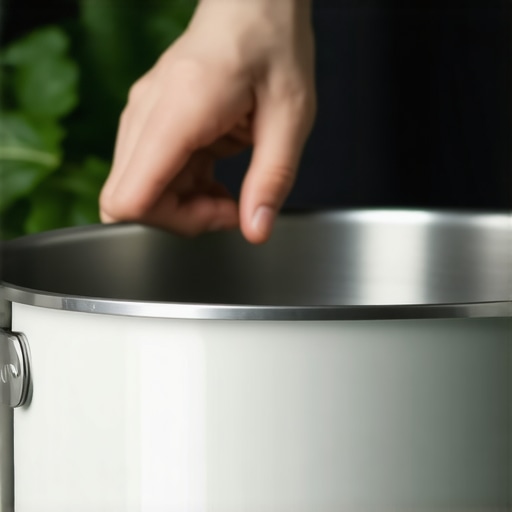
How to Prevent White Spots on Your Enameled Cookware
White spots on a luxury Dutch oven are more than a visual nuisance. They represent a mineral assault on a glass-fused surface. After two decades managing the high-end kitchenware lifecycle, I can tell you that most owners mistake these for permanent damage. They aren’t. Not yet. These opaque clouds are typically calcium carbonate deposits, often called ‘milk spots’ or ‘scaling.’ They occur when hard water evaporates, leaving behind a crystalline structure that bonds with the enamel. If you ignore them, they act as an abrasive during your next braise. The risk? You’re not just looking at a dull pot; you’re looking at the eventual degradation of the smooth finish that makes premium cookware worth the investment in the first place.
The Chemistry of Enamel Scaling
Enamel is technically a form of glass. When you boil water for a long period or reduce a sauce in a heavy-duty vessel, the minerals in your local municipal water supply concentrate. Calcium and magnesium ions find micro-fissures or even just the molecular pores of the enamel. They anchor there. This isn’t unique to pots; it’s the hidden reason your stainless steel cookware has white spots as well, though the reaction with enamel is slightly more stubborn due to the surface tension of the glaze. Many users exacerbate this by using high-heat settings that ‘bake’ these minerals into the surface. The thermal reality? Low and slow isn’t just a cooking tip; it is a maintenance requirement. High heat forces the liquid to evaporate too rapidly, leaving the solid minerals no choice but to settle.
Why Standard Cleaning Methods Fail
I see it every week. A client uses a green abrasive pad because they want the shine back immediately. They end up scratching the glaze. Once the glaze is microscopically compromised, the pot will never release food the same way again. The result? Total failure. You cannot scrub away a mineral bond with brute force. You need a pH-neutralizing agent. A mild acid, like a 1:3 ratio of white vinegar to water, breaks the ionic bond of the calcium. You might hear the faint fizzing of the reaction. That is the sound of your investment being saved. If the spots have already turned into a rough texture, you may need a deeper intervention. Many owners find that how to restore the finish on your dull enameled Dutch oven becomes the next logical step when simple prevention fails.
Operational Risk and Material Science
There is a specific technical truth most manufacturers gloss over: thermal shock isn’t just about cracking the pot; it’s about the expansion rates of the mineral deposits versus the enamel itself. If you have a heavy layer of scale and you subject that pot to a rapid temperature change, the different expansion rates can cause ‘crazing’—those tiny spiderweb cracks. I’ve felt the weight of industrial-grade steel and seen how even the toughest pots succumb to this. It starts with a white spot. It ends with a useless heavy object in your cabinet. If you are dealing with burnt-on remnants alongside the spots, you must learn the only way to clean a burnt bottom on an enameled pot without using caustic chemicals that eat the finish.
The Luxury Kitchen Macro View
As we move into 2025, the trend in luxury kitchens is shifting toward integrated longevity. People are tired of the disposable culture. High-end air fryers and espresso machines require specific water filtration to survive; your cookware is no different. We are seeing a surge in whole-home reverse osmosis systems in luxury developments specifically because mineral buildup destroys $5,000 ranges and $500 pots alike. The second-order effect of hard water is a shorter lifespan for everything it touches. If you are in a hard-water zone, your premium cookware is under constant siege.
The Executive Verdict
Buy a gallon of distilled water. Keep it near your stove. When you deglaze, use that or filtered water. Stop the minerals at the source. If you already have white spots, don’t reach for the steel wool. Soak the vessel in a warm vinegar solution for 20 minutes. Wipe it with a soft cloth. Dry it immediately. If you leave your pot to air-dry on the rack, you are inviting the spots back. It’s a simple protocol: Filtered liquid, low heat, immediate drying. Do this, and your enamel will outlive your kitchen’s current aesthetic.
Frequently Asked Questions
Are white spots permanent damage to the enamel?
No. They are usually surface-level mineral deposits. However, if left unchecked, they can lead to abrasions and microscopic cracking known as crazing.
Can I use baking soda to remove these spots?
Yes, but sparingly. Baking soda is a mild abrasive. It is better to use a liquid acid like vinegar or lemon juice first to dissolve the calcium bond before applying any physical pressure.
Does dishwashing cause white spots?
Absolutely. Dishwasher detergents are often highly alkaline and contain salts that, when combined with the high heat of a drying cycle, create the perfect environment for mineral scaling. Hand washing is the only way to ensure a pristine finish.
Why do some pots get spots more than others?
It comes down to the quality of the glaze and the temperature of use. Darker enamels show the spots more clearly, but all enamel is susceptible if the water quality is poor and the cooking temperatures are excessive.