
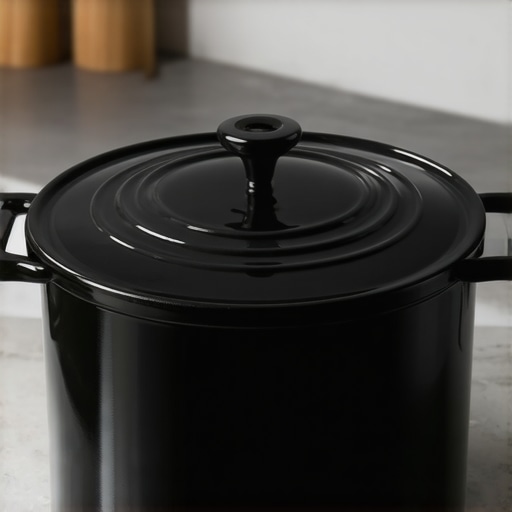
How to Restore the Finish on Your Dull Enameled Dutch Oven
Most luxury kitchen owners mistake a dull Dutch oven for a dead one. They look at that matte, sandpaper-like interior and assume the vitreous coating has simply worn away. This is a costly error. After twenty years of handling premium cookware, I can tell you that 90 percent of ‘worn out’ enamel is just a heavy layer of polymerized protein and mineral scale. You aren’t seeing the end of the tool’s life. You are seeing a failure of maintenance. The stakes are high; discarding a $400 French oven because of a surface film is an economic waste. It is also an engineering misunderstanding. We are dealing with glass, not metal. Treating it like iron is how you destroy it for good.
The Engineering of Vitreous Enamel
Enamel isn’t paint. It is a specialized glass fritted and fused to cast iron at temperatures exceeding 1,400 degrees Fahrenheit. When this surface loses its luster, the culprit is usually micro-pitting or a ‘protein haze.’ This haze occurs when fats and proteins bond to the silica structure of the glass. Over time, these bonds become incredibly stable. If you use abrasive pads, you scratch the glass. Those scratches then hold more food. The result? A cycle of accelerating degradation. You need to understand the difference between a mechanical scratch and a chemical deposit. One is permanent. The other is a thirty-minute fix. If you see white cloudy spots, you are likely looking at mineral accumulation from hard water, which acts as an adhesive for burnt-on fats. This creates a surface friction that ruins the non-stick properties of the pot.
Why Standard Cleaning Methods Fail
The average consumer reaches for steel wool. This is a catastrophic choice. Steel is harder than many glass glazes. You might remove the stain, but you are effectively sandblasting the interior. This leaves the iron vulnerable to thermal shock. When the pot cools, the glass shrinks differently than the metal. Without a smooth surface, the tension is uneven. It cracks. It pops. The industry refers to this as ‘crazing.’ I have seen $500 pots ruined in five minutes by a well-meaning person with a green scouring pad. Instead, we must use the chemical route. High-pH cleaners like sodium bicarbonate or specialized enzymatic detergents are the standard. They break the protein bonds without touching the silica. This preserves the structural integrity of the vessel. For those dealing with more extreme cases, knowing the only way to clean a scorched enamel french oven involves patience and chemical dwell time, not physical force.
The Reality of Surface Restoration
If the pot feels like a chalkboard, the glaze is likely etched. This happens when acidic foods—think tomato sauce or braised wine—sit in the pot too long. Acid eats the lead-free glaze. At this point, you aren’t ‘cleaning.’ You are trying to fill micro-voids. While you can never truly ‘refuse’ enamel at home, you can temporarily restore the hydrophobic properties using food-grade mineral oil or high-smoke-point fats. However, this is a stop-gap. True restoration requires the removal of the dulling layer. I always suggest a paste of baking soda and a few drops of water. Apply it. Let it sit for six hours. The alkalinity slowly softens the carbonized layers. The smell? It’s like wet ash and old grease. That’s the sound of success. Once you have cleaned it, proper storage is vital. Using the best way to organize heavy dutch ovens in a pantry prevents the heavy lids from chipping the delicate rim of the base, which is the most common point of failure for heirloom cookware.
Market Corrections and the Future of Premium Cookware
The cookware industry is shifting toward ‘repairable luxury.’ In the next 18 months, I expect to see more boutique services offering professional re-enameling, though the costs currently remain prohibitive for individuals. Manufacturers like Le Creuset and Staub are also tightening warranty requirements. They are increasingly denying claims for ‘dullness’ because it is classified as improper care, not a manufacturing defect. This makes your ability to maintain the finish yourself a financial necessity. We are seeing a move away from the disposable culture of the early 2000s. The ‘Buy It For Life’ movement is putting pressure on owners to actually understand the materials science of their kitchens. If you fail to maintain the glass transition temperature during cleaning—like throwing a hot pot into cold water—the damage is internal and invisible until it’s too late. The iron expands, the glass doesn’t. Failure is inevitable then.
The Executive Strategy for Finish Longevity
My verdict is simple: Stop scrubbing. If the pot is dull, it is dirty, not broken. Use the alkaline soak method. If that fails, use a diluted bleach solution (one part bleach to three parts water) for no more than two hours. This will oxidize the organic stains and bring back the original cream color of the enamel. If the pot is etched and the surface is physically rough to the touch, demote it to baking bread with parchment paper. Do not use it for delicate sauces. If you are in the market for a new one, ensure the brand uses at least a three-coat application process. This provides the depth of glaze required to withstand years of acid exposure. Strategy? Treat your Dutch oven like a fine wine glass that happens to hold five quarts of beef bourguignon.
Frequently Asked Questions
Can I use oven cleaner on my Dutch oven? Only as a last resort. Sodium hydroxide (lye) will eat through organic buildup quickly, but it can also dim the exterior shine of the colorful enamel. If you use it, keep it away from the outside of the pot.
Is a dull finish dangerous? No, a dull finish is not inherently toxic. However, it becomes more reactive. Food will stick more easily, and you risk carbonizing more fats into the surface, which eventually leads to off-flavors in your cooking.
How often should I deep-clean the enamel? Every 10 to 15 uses. Even if it looks clean, a ‘protein film’ is likely building up. A quick soak with baking soda keeps the surface tension high and the finish glossy.