
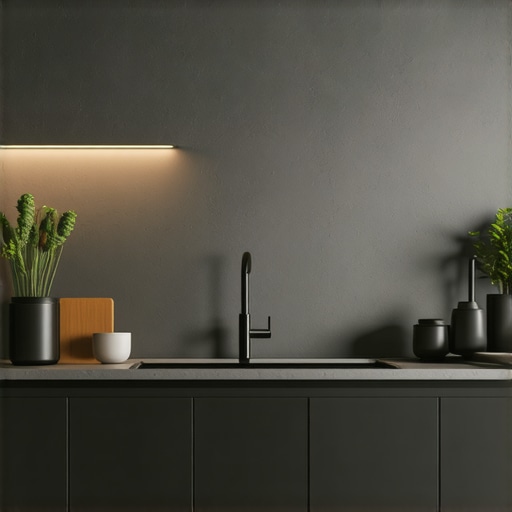
Why Most High-End Kitchens Are Moving Away from Glossy Finishes
The glossy kitchen aesthetic is dying. After twenty years in the high-end renovation space, I’ve seen homeowners drop six figures on reflective cabinetry only to regret the decision within months. The stake isn’t just aesthetic; it’s a matter of functional longevity and property valuation. Glossy surfaces, while striking under showroom LEDs, act as a forensic record of every fingerprint, grease splash, and micro-abrasion. My clients are shift-focusing. They want tactile permanence, not a surface that requires a daily detailing routine. This shift represents a market correction against the ‘Instagrammable’ kitchen that fails the Tuesday night dinner test.
The Engineering Reality of Light Reflectance
High-gloss finishes rely on a specific Specular Reflection Index that is notoriously difficult to maintain. When you place luxury espresso machines next to a high-gloss backsplash, the steam and heat eventually degrade the polymer bonds of the finish. This leads to a phenomenon we call ‘haze’—a permanent clouding that no cleaner can lift. It’s a chemical reality. The kitchen design trend that is already going out of style is precisely this high-maintenance shine because it creates a visual conflict with high-performance tools. Modern luxury is moving toward ‘Matte-Depth’ technology. These finishes utilize nanotech coatings that absorb light rather than bouncing it. The result? A surface that feels like silk but resists the oils that ruin traditional gloss.
The Friction Cost of Premium Equipment
Consider the heat output of modern high-end air fryers or the vibration of industrial-grade stand mixers. Glossy countertops, particularly those made of lower-grade polyester resins, are prone to ‘thermal checking’—tiny cracks that appear when hot air is vented directly onto the surface. I once walked into a penthouse in the city where the owner had spent forty thousand on high-gloss obsidian cabinetry. The afternoon sun hit the panels at a low angle. Every single wipe mark from the morning’s cleaning was visible as a swirling ‘halo’ effect. It looked cheap. It looked exhausted. We are seeing a massive move toward the most durable countertop material for heavy kitchen use, which almost always involves a honed or leathered finish. These textures hide the inevitable battle scars of a kitchen that actually sees use.
Maintenance Overhead and Long Term Failure
The operational risk of gloss is simple: it cannot be repaired in situ. If you scratch a matte or textured surface, a specialist can often blend the repair. If you scratch a high-gloss acrylic or lacquer door? The entire panel usually needs a factory-level respray. It’s an logistical nightmare. I’ve watched homeowners struggle with backsplash materials that are impossible to keep clean, and gloss is the primary offender. The industry is pivoting toward ‘Active Surfaces’ that feature antimicrobial properties and low-sheen finishes. These materials align with the standards set by organizations like the National Kitchen & Bath Association, which emphasizes both ergonomics and durability over fleeting visual high-saturation.
Market Corrections and Future Resale
In the next 18 months, I predict that ‘Ultra-Matte’ will become the baseline for the luxury sector. We are seeing a rise in ‘Tactile Luxury’—where the value is felt in the weight of the handle and the grip of the stone, not the shine of the door. Regulatory changes regarding VOCs in lacquer finishes are also making traditional high-gloss coatings more expensive and less durable. Smart money is moving into porcelain slabs and fumed woods. These materials age with grace. They don’t demand you be a slave to a microfiber cloth. For those investing in premium cookware for 2025, the backdrop should be an understated canvas that lets the equipment shine, not the cabinets.
The Executive Verdict
Hold on the gloss. If you are currently designing a high-traffic luxury space, pivot to a satin or matte finish with a minimum 10% sheen for depth. Buy into materials that offer ‘Self-Healing’ properties. Avoid any surface that shows a ‘halo’ under direct sunlight. This isn’t just about fashion; it’s about avoiding a depreciating asset that looks dated the moment the first scratch occurs. Invest in texture. Invest in durability. Stop chasing reflections and start building a kitchen that survives reality.
Frequently Asked Questions
Does a matte finish make the kitchen look smaller? No. While gloss reflects light, a well-lit matte kitchen uses diffuse reflection to create a sense of ‘Atmospheric Volume’ that feels more expansive and grounded.
Are matte surfaces harder to clean? Generally, no. High-quality modern matte finishes are treated with oleophobic coatings that repel fingerprints, unlike older matte paints which were porous.
Can I mix gloss and matte? It is risky. The contrast often makes the glossy sections look oily and the matte sections look dusty. Stick to a unified texture for cabinetry and use metals or stones for contrast.
What is the best finish for high-end appliances? Brushed or ‘black stainless’ finishes remain the standard because they mitigate the visual clutter of smudges while maintaining a premium metallic feel.