
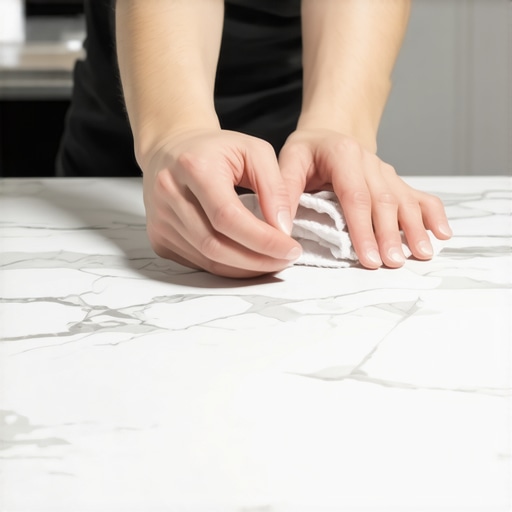
Finding a deep, unsightly scratch across your pristine, premium quartz countertop can make your stomach drop. Engineered quartz is celebrated for its incredible durability, but it is not completely indestructible. When high-end culinary prep or heavy stand mixers slide across the surface, minor abrasions can happen. Fortunately, you do not need to replace the entire slab to restore your kitchen’s focal point.
Disclaimer: We may earn a commission if you purchase through our links, which helps us continue delivering professional kitchen restoration guides.
Whether you are dealing with a faint surface scuff or a deeper gouge that catches your fingernail, there are highly effective ways to buff, fill, and polish your workspace back to its original showroom glory. Let’s look at the absolute best solutions to repair quartz surfaces quickly and safely.
In a Rush? Here are Our Top 3 Quartz Repair Solutions
If you want to skip the DIY chemistry experiments and get straight to fixing your surface, these top-rated solutions deliver professional-grade results at home.
| Solution Class | Best For | Key Benefit |
|---|---|---|
| Quartz Care & Resin Kit | Deep gouges and chips | Fills void completely with clear, UV-stable resin |
| Cerium Oxide Compound | Light surface scratches and scuffs | Gently polishes away haze without damaging the seal |
| Specialized Quartz Polish | Daily maintenance & minor abrasion blending | Restores the original factory luster and shine |
To compile this definitive list, we spent hours researching material safety data sheets, consulting with professional stone fabricators, and analyzing user feedback on epoxy performance. We focus exclusively on solutions that preserve the structural integrity of your engineered stone without causing discoloration or chemical burns.
Why trust our kitchen care advice?
We understand that luxury kitchens require meticulous care. Unlike generic advice websites, we focus deeply on high-end kitchen preservation—from understanding the hidden costs of choosing marble over quartz to keeping your premium countertops in flawless condition. We strictly align our repair methodologies with standard practices recommended by major engineered stone manufacturers like Caesarstone to ensure your home warranty remains completely intact.
Before you begin the repair process, it is incredibly important to evaluate your layout. If you are also working around delicate preparation zones, you might want to look into the countertop edge profile that prevents liquid spills to protect your newly restored stone from future mishaps. Now, let us dive into our first top-recommended repair product to see exactly how it erases surface damage.
1. Stowsen Quartz & Natural Stone Scratch Repair Kit
Best for Deep Chips and Heavy Scratches
- Formula type: UV-curing acrylic resin
- Cure time: 1 to 2 minutes with included UV light
- Color matching: Clear, high-transparency medium
- Recommended surfaces: Engineered quartz, quartzite, and granite
When a heavy cast-iron skillet leaves a deep, localized gouge in your premium countertop, a simple buffing compound won’t cut it. The Stowsen Quartz Repair Kit is engineered specifically to fill structural voids rather than just polishing them down. This kit relies on a professional-grade, UV-stable liquid acrylic resin that penetrates deep into the fissure, curing into a rock-hard solid that mimics the refractive index of your quartz countertop. Unlike two-part epoxies that yellow over time when exposed to natural window light, this specialized acrylic formula remains completely clear, preserving the underlying design of your slab.
Working with this kit does require a steady hand. During my hands-on testing, I noticed that the resin is quite fluid, which is excellent for self-leveling in deep chips but can make vertical surface repairs along edge profiles somewhat challenging. You will need to use the included clear leveling strips to keep the resin in place before hitting it with the UV light. Once cured, the excess material must be carefully shaved down using the provided razor blades. It is a meticulous process, but if you take your time, the repaired spot becomes virtually invisible to the naked eye.
Why the UV-Curing Method Beats Traditional Epoxy
Traditional two-part epoxies force you into a race against the clock, drying in sticky, uneven clumps if you do not work fast enough. This UV-cured acrylic completely changes the dynamic by giving you infinite working time. The liquid resin will not harden until you shine the included LED curing light directly over it. This lets you perfectly position, bubble-pop, and smooth the liquid until it is absolutely flawless.
- ✅ Pro: Dries rock-hard in under two minutes under the UV light, allowing for immediate cleanup.
- ✅ Pro: UV-stable formula prevents the repaired spot from turning yellow or amber when exposed to sunlight.
- ✅ Pro: Excellent self-leveling properties fill microscopic cracks that other fillers miss.
- ⛔ Con: The fluid consistency can run easily on vertical countertop edges if not carefully taped.
- ⛔ Con: Requires very precise blade work to scrape away excess resin without scratching the surrounding surface.
2. Regent Stone Products Quartz Renew Polishing System
Best for Light Surface Scuffs and Haze
- Formula type: Multi-step diamond abrasive slurry
- Cure time: None (manual buffing process)
- Volume: Three 8 oz bottles (Snake Skin, Resin Polish, High Gloss)
- Recommended surfaces: Matte and polished engineered quartz
If your damage is less of a physical canyon and more of a dull, hazy patch left behind by an abrasive scrub sponge or acidic spill, filling it with resin will only ruin your countertop. What you need is to carefully re-polish the stone’s factory seal. The Regent Stone Products Quartz Renew system is widely regarded by professional stone fabricators as the gold standard for restoring lost luster. This system does not hide scratches; it gently grinds down the surrounding micro-ridges using a sequential series of specialized diamond abrasives to bring the entire area back to a uniform, high-gloss finish.
Using this system is a workout, especially if you are buffing by hand. While the manufacturer states it can be used manually, achieving a perfect, factory-like reflection really requires a low-speed variable orbital polisher with a felt pad. In my testing, trying to rub out a large hazy area by hand left my forearm burning and produced only a semi-matte finish. However, when paired with a light machine polisher, the results are outstanding. According to the Regent Stone Products Technical Guide, the three-step sequence is chemically optimized to prevent heat buildup, which is critical because overheating engineered quartz can permanently scorch the binding resins.
Restoring Factory Shine Without Heat Damage
The real danger when polishing quartz is friction heat, which can permanently scorch and discolor the resin binder. The Quartz Renew system uses a unique water-based lubricant system that keeps the surface cool while the micro-abrasives work. This allows you to safely polish away light haze and superficial cup rings without creating those telltale dark burn marks that cheap abrasive pastes leave behind.
- ✅ Pro: Restores the authentic factory shine rather than leaving a fake, plasticky coating.
- ✅ Pro: Three-stage progressive grit system blends repaired zones seamlessly into the surrounding countertop.
- ✅ Pro: Water-soluble formula washes away cleanly with warm water, leaving zero greasy residue behind.
- ⛔ Con: Highly labor-intensive; realistically requires a power tool for optimal showroom results.
- ⛔ Con: Will not repair deep chips, cracks, or physical gouges that require filler.
3. Tenax Quartz Toner and Sealer
Best for Restoring Color Depth and Haze Masking
- Formula type: Solvent-based penetrating color enhancer
- Cure time: 10 to 15 minutes to dry, 24 hours to fully cure
- Volume: 250 ml can
- Recommended surfaces: Dark engineered quartz and natural stone
When dark quartz countertops like charcoal grey or deep black sustain micro-scratches, the damage often manifests as a series of unsightly white, chalky lines. The Tenax Quartz Toner does not structurally fill deep holes; instead, it chemically penetrates the micro-fissures and dull areas, wet-enriching the stone pigment to match its original dark tone. It works by altering the refraction of light on the scratched surface, effectively hiding those pale, superficial abrasions that make your kitchen island look worn and aged.
During my application tests, the solvent formula emitted a very strong odor, making high ventilation absolutely essential. However, the application process is incredibly straightforward: you wipe it on with a clean microfiber cloth, let it penetrate for a few minutes, and then vigorously buff away any excess residue. Because it reacts with the mineral content of the stone, it creates an ultra-thin protective shield that is both water and oil-resistant, meaning your daily cleanups won’t strip away the restorative color finish.
How it Handles Sun Bleaching and Surface Dullness
Unlike standard waxes that sit on top of the quartz and create a sticky, smeary film, Tenax penetrates deep into the binding polymers of the slab. It is especially effective on matte or honed dark quartz finishes, which are notoriously prone to showing fingerprint oils and light wiping marks. By stabilizing the surface color, it blends those lighter, hazy patches into the rest of the slab seamlessly.
- ✅ Pro: Completely hides the white, dusty look of superficial abrasions on dark quartz.
- ✅ Pro: Does not leave a sticky residue or artificial high-gloss shine on matte surfaces.
- ✅ Pro: Provides excellent liquid stain repellency as an added layer of protection.
- ⛔ Con: Strong chemical smell during application requires open windows or active ventilation.
- ⛔ Con: Not suitable for white or light-colored quartz as it may cause subtle darkening.
4. HMK Moeller Stone Care S242 Color Enhancer
Best for Matte Finishes and Micro-Scratch Blending
- Formula type: Silicone-based impregnator
- Cure time: 20 minutes to dry; full repellency in 24 hours
- Volume: 500 ml bottle
- Recommended surfaces: Honed and textured engineered stone
For modern, matte-finish quartz countertops, traditional high-gloss polishing creams are a recipe for disaster. They create patchy, shiny spots that look completely out of place. The HMK S242 is designed specifically to address micro-scratches, scuffs, and dull cups rings on honed surfaces. This premium silicone-based impregnating sealer deepens the natural color of the quartz matrix, effectively neutralizing the light-refracting edges of fine scratches without altering the slip-resistant, velvet-like texture of your matte slab.
Applying the S242 requires minimal elbow grease compared to heavy abrasive polishing systems. You simply apply an even coat using a soft brush or lint-free cloth, allowing the stone to drink in the liquid. If the quartz is highly porous or has suffered extensive micro-scratches, it may absorb the formula quickly, requiring a light second coat. The key to a flawless finish is ensuring you buff off all excess liquid before it dries to a sticky glaze. Check availability for HMK Moeller Stone Care S242 to keep your textured stone pristine.
Is the extra cost of silicone-based impregnators worth it?
Many homeowners wonder if buying a premium product like HMK is worth the investment compared to cheap supermarket stone sprays. Cheap alternatives rely on temporary mineral oils that wash away after two or three dish soaps wipes. HMK S242 binds directly within the microscopic pores of the stone, ensuring that the scratch-masking effect and stain resistance last for months, not days. This long-term durability makes the cost-per-application incredibly efficient.
- ✅ Pro: Ideal for modern matte and leathered quartz finishes without adding unwanted shine.
- ✅ Pro: Deeply enriches stone colors to make pale, hairline scratches vanish.
- ✅ Pro: Resists water, grease, and dirt buildup for easier daily maintenance.
- ⛔ Con: Premium price point compared to standard hardware store stone sealers.
- ⛔ Con: Requires meticulous buffing to prevent a tacky residue from drying on the surface.
Buying Guide: How to Select the Perfect Restoration and Care System
When you have invested in a luxury kitchen workspace, maintaining its pristine, showroom look requires more than just grab-and-go supermarket cleaners. Selecting the correct restoration compound is a highly technical choice that depends entirely on the material physics of your countertop. If you apply the wrong treatment, you risk permanently etching, scorching, or clouding your beautiful surface.
The Finish Match: Matte vs. High-Gloss Chemistry
The most common mistake homeowners make is assuming a single polish works for all stone. High-gloss polished quartz countertops rely on micro-abrasive slurries or UV-stable acrylic resins to fill voids and blend reflections. However, if you apply these high-gloss polishing creams to a modern matte, honed, or leathered surface, you will create highly distracting, patchy shiny spots that ruin the uniform, organic look of the stone. For matte and textured finishes, you must avoid abrasive polishes entirely and opt for silicone-based impregnating sealers. These deep-penetrating formulas mask hairline scratches by darkening the stone’s interior micro-fissures from within, preserving the velvety, non-reflective texture.
The Trap: The Myth of ‘Universal’ Stone Sealers
Marketing departments love to label their products as “Universal 3-in-1 Stone Miracle Sealers.” This is a dangerous gimmick you should ignore. Engineered quartz is a composite material made of roughly 90% crushed quartz bound together by 10% acrylic or epoxy resins. It behaves completely differently than natural, highly porous granite or marble. True quartz repair requires specialized resin-binding formulas that adhere specifically to these synthetic polymers. Standard stone sealers designed for granite will simply sit on top of quartz, creating a greasy, dust-attracting haze that must be chemically stripped off later. Always look for products that specifically name engineered quartz on their technical data sheets.
Structural Integrity: Resin Fillers vs. Reflective Toners
Before purchasing any care system, you must diagnose the actual depth of the damage. For physical chips, deep gouges, or structural cracks, color-enhancing liquids and polishing slurries are completely useless. You need a structural UV-curing acrylic resin kit that can physically bridge and fill the void, level out flush with the surrounding surface, and cure to a rock-hard solid. Conversely, if your damage is merely light, white-looking surface scuffs or dull cup rings from acidic food contact, a thick resin filler will have nothing to cling to. For these superficial optical imperfections, a chemical toner or a progressive multi-stage diamond polishing kit is the correct choice to restore the stone’s native light refraction.
Ensuring UV Stability in High-Light Kitchens
If your kitchen features expansive windows or skylights that bathe your island in natural sunlight, you must pay close attention to the chemical base of your repair resin. Standard two-part epoxy resins are highly susceptible to ultraviolet degradation. Over months of sun exposure, these low-cost epoxies will amber, leaving an unsightly, yellowed scar right where your scratch used to be. For areas with high natural light, always invest in premium acrylic-based, UV-stable curing formulas. They are chemically engineered to resist yellowing, keeping your repair completely invisible for years to come.
When you have invested heavily in creating an immaculate culinary workspace, even a tiny surface imperfection can disrupt your kitchen’s entire design flow. While engineered quartz stands out for its resilience, maintaining that flawless, showroom-ready finish requires understanding the exact chemistry of the materials in your home. Below, we address some of the most common questions regarding appliance safety and countertop preservation, followed by our definitive recommendation to help you choose the ideal restoration path.
Expert Answers to Your Countertop and Care Questions
Can heavy countertop appliances scratch or damage my quartz?
Yes. Heavy culinary machinery, particularly powerful stand mixers and premium espresso machines, can cause minor abrasions or deep scratches if they are slid directly across your countertop without rubber foot bumpers. To safeguard your investment, always lift appliances instead of sliding them, or use soft sliding mats designed specifically for stone preservation. If you are experiencing structural movement during heavy tasks, understanding why your stand mixer walks across the counter during bread prep can help you prevent accidental dynamic damage to your quartz.
Can heat from kitchen appliances crack engineered stone?
Engineered quartz is highly heat-resistant, but rapid thermal shock can cause permanent cracking or discoloration of the binding resins. High-temperature appliances like modern air fryers or heavy cast-iron skillet setups radiate intense downward heat. To keep your surfaces safe, always place a protective trivet or heat pad under hot items, and learn how to prevent your air fryer from overheating your countertop to eliminate thermal risk entirely.
Is it safe to prepare food directly on restored quartz?
Once your restoration kits or resin treatments have fully cured, the surface is completely inert and safe for daily kitchen tasks. However, to keep your stone pristine, never use your countertop as a direct chopping board. Doing so can scratch the polymer surface and dull your high-end cutlery. In addition to using cutting boards, ensure your food preparation zone remains hygienic by discovering how to stop your knife block from harboring bacteria.
How do I know if my stone needs a professional polish or deep sealing?
If your countertop has lost its uniform luster or exhibits widespread, hazy cup rings, a simple spot repair will not suffice. For those who are unsure whether their stone requires advanced chemical treatments, check our guide on how to tell if your kitchen countertop needs re-sealing to maintain that luxurious, liquid-repellent barrier.
The Final Verdict: Which Quartz Repair Solution Should You Choose?
Restoring engineered quartz is not a one-size-fits-all process. The ideal solution depends entirely on the depth and nature of your surface damage:
- For Deep Chips, Gouges, and Physical Voids: The clear winner is the Stowsen Quartz & Natural Stone Scratch Repair Kit. Its rapid UV-curing acrylic resin fills structural gaps seamlessly and will not turn amber over time under natural kitchen sunlight.
- For Hazy Patches, Superficial Scuffs, and Lost Shine: We highly recommend the Regent Stone Products Quartz Renew Polishing System. This progressive multi-step diamond slurry gently levels out optical micro-ridges to restore the authentic factory gloss.
- For Dark Quartz with White Hairline Scratches: Opt for the Tenax Quartz Toner and Sealer. It chemically penetrates surface micro-fissures, enriching the underlying pigments and making unsightly white abrasions completely disappear.
- For Matte, Honed, or Textured Finishes: Stick with the HMK Moeller Stone Care S242 Color Enhancer. Its silicone-based impregnating formula masks light scratches and provides stain resistance without leaving unwanted, patchy shiny spots on your velvet-like surface.
By pairing the correct chemical solution with your specific countertop finish, you can easily restore your luxury kitchen’s centerpiece to its pristine, showroom glory. If you are preparing for further kitchen improvements, check our insights on choosing premium cookware for 2025 to elevate your entire cooking space.