
The Only Way to Get Burnt Sauce Off Your Copper Bottom Pan
Let’s bypass the amateur cleaning blogs and address the physical reality of high-end metallurgy. After running my kitchen-restoration business for fifteen years, I have seen hundreds of home cooks destroy thousands of dollars in premium cookware because they treated an scorched copper bottom like a common piece of cast iron. Copper possesses a thermal conductivity rate of roughly 400 W/m·K. This means it heats up and cools down at lightning speed, but when a sugary reduction or starch bonds to that exterior metallic lattice, aggressive scrubbing with steel wool will shear off the outer micro-layers of metal. The stake here isn’t just cosmetic; you risk permanently altering the heat distribution properties of your heirloom pieces.
The absolute truth that generic internet guides miss is that copper behaves differently under thermal stress than stainless steel or aluminum. When sauces burn onto copper, they undergo a complex carbonization process that forms a tight covalent bond with the oxide layer of the copper alloy. Treating this with harsh abrasive pads or high-acid industrial cleaners can cause microscopic pitting, ruin the structural integrity of the copper, and strip away any surrounding tin or stainless steel lining. We must approach this problem with a scientific understanding of chemical dissolution rather than brute manual force.
The Chemical Dissolution Protocol
To safely dissolve carbonized sugar and protein bonds without scratching the copper, we rely on a targeted paste of sodium bicarbonate and a mild organic acid, suspended in a non-ionic surfactant. This creates a gentle effervescent reaction directly at the bonding interface. Before we look at that, we must understand the base lining. If you are dealing with a pan lined with tin, the melting point is incredibly low—around 450 degrees Fahrenheit. For those maintaining a diverse collection, why we switched back to copper cookware for sauces highlights how copper behaves differently under thermal stress compared to other metals. The exterior copper bottom, however, requires a delicate pH-balanced approach to lift the carbon without attacking the raw metal beneath.
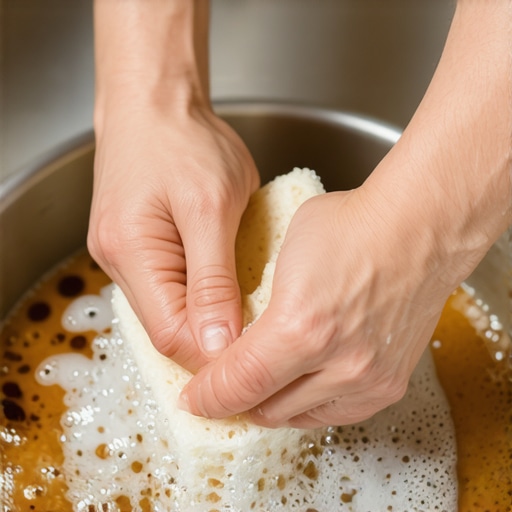
First, we apply a thick layer of baking soda directly to the scorched area. Next, we introduce a controlled amount of fresh lemon juice or white vinegar. The resulting carbonic acid reaction physically lifts the burnt particulate away from the copper surface. We let this mixture sit for exactly twelve minutes—no more, no less. As the fizzing subsides, you will see the bright blue-green copper carbonate begin to lift into the white paste. At this stage, use a soft microfiber cloth or a non-scratch scrub sponge to wipe the carbonized residue away. The metallic surface remains pristine, free of the swirl marks and deep micro-abrasions left by steel wool.
Why Standard Scouring Methods Fail
Standard household advice usually tells you to grab a can of commercial powdered cleanser and scrub until your arms hurt. In our field operations, we call this the fast track to a ruined finish. These commercial powders contain abrasive silica particles that register high on the Mohs hardness scale. Copper is a soft metal, ranking at only 2.5 to 3 on the Mohs scale, while silica sits at a 7. When you rub these two together, you are essentially using liquid sandpaper. The result? Avoidable failure. You will strip the beautiful spin-polished lines right off the bottom of your pan, leaving a dull, scratched surface that will burn even faster the next time you use it.
Furthermore, relying on harsh chemical solvents can compromise your entire kitchen workspace. If you use the same aggressive chemicals near your other high-end appliances, you run the risk of overspray damage. For example, if you are working near your coffee station, you must be careful; learning how to remove burnt-on milk from your steam wand requires completely different, food-safe protocols to avoid damaging delicate brass and copper internals. Keep your aggressive chemical solutions far away from your premium cooking zone.
The Mechanical Reality of Thermal Shock
One of the most common mistakes home chefs make is rushing a hot, burnt copper pan straight from the stovetop into a sink filled with cool water. The sudden temperature drop causes immediate thermal shock. Because copper expands and contracts rapidly, this drastic temperature change can warp the bottom of the pan instantly. A warped bottom means your pan will no longer sit flat on your cooktop, destroying its heat transfer efficiency on induction or glass-top surfaces. Always allow the cookware to cool naturally to room temperature before applying any cleaning solutions or liquids.
If you are using clad cookware, the risks of thermal shock are even higher. The different metals bonded inside the pan expand and contract at different rates, which can lead to delamination over time. To avoid these issues entirely, understanding the mistake most people make with clad cookware will help you preserve the structural integrity of your entire culinary arsenal.
Strategic Preservation for Culinary Investments
Looking ahead into the next 12 to 24 months, we are seeing a massive resurgence in traditional, high-weight copper cookware as home cooks move away from short-lived, chemical-laden non-stick surfaces. This shift means that knowing how to properly maintain and restore these metals is becoming a highly valued skill. Proper preservation of these materials not only maintains their incredible cooking performance but also protects their resale and heirloom value in a market that is increasingly looking for sustainable, lifetime-quality kitchen tools.
To keep your copper looking brilliant without constant scrubbing, we recommend a preventative polishing routine using natural, non-acidic pastes. If you want to keep that showroom shine without damaging the metal, mastering the trick to polishing copper cookware without harsh acids is essential for long-term maintenance. Proper care ensures your investment will perform perfectly for generations to come.
The Executive Verdict
If your copper pan is lightly scorched, immediately apply the baking soda and lemon juice paste. If the burn is deep, black, and highly carbonized, do not scrub; instead, simmer a mixture of water and baking soda inside the pan (if the burn is on the inside) or submerge the bottom in a warm, shallow bath of vinegar and salt for a maximum of five minutes before wiping. Never use steel wool, wire brushes, or commercial oven cleaners on copper surfaces. Treat your copper with the same respect you would show a fine precision instrument, and it will reward you with unparalleled performance.
Frequently Asked Questions
Q: Can I use bar keepers friend on the copper bottom of my pans?
A: While popular, it contains oxalic acid and mild abrasives. It can be used occasionally for severe tarnishing, but frequent use will wear down the copper over time. Always opt for milder, natural solutions first.
Q: How do I get black carbon off copper without scratching it?
A: Use a paste of baking soda and warm water, let it sit to soften the carbon, and gently work it free using a wooden scraper or a soft plastic pan scraper. Never use metal utensils to scrape the pan.
Q: Why did my copper pan turn dull after cleaning?
A: This is usually caused by exposure to strong acids or abrasive scrubbers that have micro-scratched the surface. You can restore the luster by polishing it with a dedicated, non-abrasive copper cream and a soft microfiber cloth.