
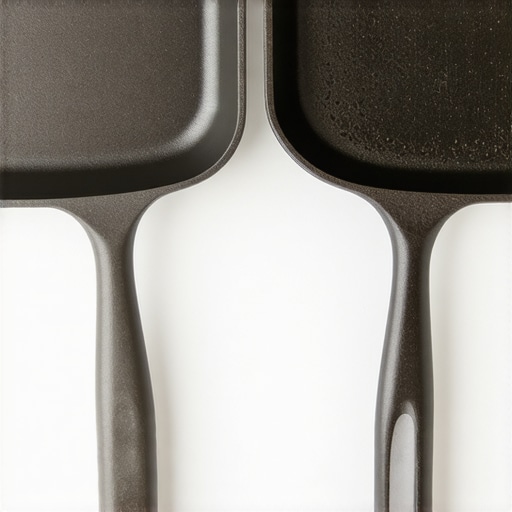
The culinary world is rife with misconceptions about ferrous cookware. Most amateur chefs treat cast iron and carbon steel as interchangeable cousins. They are not. After 15 years designing luxury kitchen spaces and specifying high-performance gear for professional-grade residential builds, I have seen the same mistake repeated: choosing a pan based on aesthetics rather than thermal dynamics. Getting this wrong means uneven searing, ruined proteins, and a drawer full of heavy metal that never gets used. The choice between these two alloys is a choice between raw thermal mass and precision responsiveness. If you are investing in a 48-inch pro-style range, you must understand the metallurgy resting on those burners.
The Real Difference Between Carbon Steel and Cast Iron Skillets
Cast iron is the sledgehammer of the kitchen. It is thick, heavy, and notoriously slow to change temperature. Carbon steel is more like a scalpel. While both are comprised primarily of iron, the carbon content and the manufacturing process create distinct operational profiles. Cast iron typically contains 2% to 4% carbon, which makes it brittle. It must be cast in a mold, resulting in a thick, porous surface. Carbon steel, however, contains about 1% carbon and is rolled into sheets. This allows it to be thinner and smoother while maintaining incredible structural strength. The difference in density and thickness changes everything about how heat moves from your induction hob or gas flame into your food.
Thermal mass is the defining characteristic here. A 12-inch cast iron skillet has massive heat retention. Once it is hot, it stays hot. This is excellent for deep frying or baking cornbread. However, that same retention is a liability when you need to drop the temperature quickly to prevent garlic from burning. Carbon steel reacts. It heats up faster and cools down faster. This responsiveness is why you see carbon steel in professional French kitchens. When the chef turns the dial down, the pan listens. For those interested in the technical nuances of searing, the hidden benefit of carbon steel for high heat searing lies in this very agility.
The Crystalline Reality of Heat Transfer
Let us talk about emissivity and conductivity. Cast iron is a relatively poor conductor of heat. It develops hot spots easily over small burners. Its saving grace is its high emissivity, meaning it radiates a lot of heat. This makes it feel like it is ‘throwing’ heat at the food even before contact. Carbon steel is slightly more conductive but because it is thinner, it relies on the user to manage the flame. If you use a pan that is too thin on a high-BTU burner, you risk warping the base. The molecular structure of carbon steel—specifically its uniform ferrite and pearlite phases—allows for a smoother surface out of the box compared to the craggy landscape of sand-cast iron. This smoothness is a major factor in why the searing difference between cast iron and blue steel is so pronounced for delicate items like scallops or fish skins.
[IMAGE_PLACEHOLDER]
Operational Risks and Material Failure
I have seen $300 carbon steel pans turned into useless bowls because a client put them on a high-output induction burner at ‘Power Boost’ setting while the pan was empty. This is the ‘operational scar’ of the modern kitchen. Carbon steel is prone to thermal shock. The metal expands rapidly, and if that expansion is not uniform, the center of the pan bows upward. Cast iron is too thick to bow, but it is prone to cracking. I remember a service call where a client dropped a cold cast iron skillet onto a hot stone floor. It shattered like glass. This brittleness is a trade-off for its legendary durability in other areas. Many owners also struggle with the initial seasoning. If your surface is tacky or peeling, why your cast iron skillet still sticks after seasoning usually comes down to the polymerization temperature of the fats used during the build-up phase.
The Economic Lifecycle of Ferrous Cookware
From a strategic standpoint, cast iron is a multi-generational asset. It is nearly impossible to kill. Carbon steel is also durable but requires more active maintenance. In a luxury kitchen environment, the ROI is measured in culinary performance. If you do a lot of stir-frying, sauteing, or pan-searing fish, the carbon steel pan will save you time and provide better results. If you are roasting meats or doing long, slow braises, the cast iron wins. You also need to consider storage. Carbon steel is often sold as a ‘crepe pan’ or ‘omelet pan’ with long, angled handles that do not fit well in standard drawers. Knowing the proper way to store a carbon steel crepe pan is essential for maintaining your kitchen’s organization and the pan’s seasoning integrity.
Market Corrections and Future Trends
The next 24 months will see a massive shift toward high-performance carbon steel in residential settings. As more homeowners transition to high-power induction cooktops, the demand for cookware that can handle rapid magnetic agitation without humming or vibrating will grow. Heavy cast iron often stays still, but its slow reaction time frustrates those used to the speed of induction. We are also seeing a move away from ‘disk-bottom’ pans toward fully clad or solid-state ferrous options. Understanding why clad stainless steel is better than disk bottoms provides a useful comparison for those who want the performance of carbon steel with the ease of stainless steel. Local building codes are also starting to require higher ventilation standards for high-heat indoor searing, which may influence how often you actually reach for these heavy hitters.
The Executive Verdict
If you are building a high-end kitchen today, do not buy a 10-piece set of anything. It is a waste of cabinet space. Buy a 12-inch cast iron skillet for the heavy, slow work—steaks, bakes, and roasts. Buy a 10-inch and a 12-inch carbon steel skillet for everything else. The carbon steel will become your workhorse. It is lighter, faster, and develops a non-stick patina that rivals Teflon without the chemical concerns. My firm recommendation: Buy a French-made carbon steel pan (at least 2.5mm thick) and an American-made cast iron pan. This combination covers 95% of all high-heat cooking scenarios. Avoid the ‘pre-seasoned’ hype; do the work yourself to ensure a hard, glass-like finish that lasts decades. This is the strategy of a professional who values performance over marketing fluff.
Frequently Asked Questions
Which is better for induction cooktops?
Carbon steel is generally superior for induction because of its flat base and responsiveness. Cast iron works well but takes much longer to preheat and can scratch the glass surface if dragged.
Can I wash these with soap?
Yes. Modern dish soap is not harsh enough to strip a well-polymerized seasoning. Avoid the dishwasher and the soaking sink, but a little soap is fine for hygiene.
Why is my carbon steel pan turning black?
That is the goal. A black pan is a seasoned pan. It indicates that oils have chemically bonded to the metal, creating a naturally non-stick surface.
Do these pans rust easily?
Only if left wet. Always dry them on a warm burner after washing and apply a microscopic layer of oil before storage.