
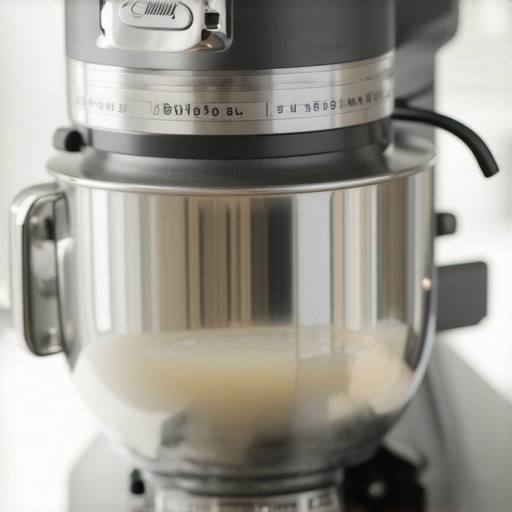
The Weight Test: How to Spot a Cheap Knockoff Stand Mixer
Physics is the ultimate gatekeeper of the luxury kitchen. In 15 years of dismantling high-end appliances, I have learned one technical truth: you cannot fake mass. A stand mixer designed for the rigors of artisan baking requires density to offset the violent oscillations of high-torque mixing. When a manufacturer substitutes die-cast zinc or solid steel with thin aluminum or high-impact plastics, the machine loses its stability. The result? Avoidable failure. If you can lift a 7-quart mixer with one hand without straining, it is not an heirloom; it is a consumable. Cheap knockoffs rely on high-RPM motors that lack the guts to handle low-speed resistance. They over-spin to compensate for a lack of raw power. This design choice leads to rapid heat buildup and internal component warping. High-end stand mixers, conversely, prioritize the weight of the motor windings and the gauge of the housing. These are not mere aesthetic choices. They are engineering requirements for thermal management and vibration damping.
The Engineering Reality of Gear Transmissions
Open up a budget mixer and you will find nylon or polyacetal gears. These plastics have their place, but not in a high-stress transmission environment. Under the load of a 60% hydration dough, these plastic teeth shear. I have seen countless machines from big-box retailers end up in landfills because a single $2 plastic gear stripped under pressure. Premium manufacturers use hardened steel or brass worm gears. This metal-on-metal interface requires precision lubrication and creates significant weight. It is why the planetary action flaw that plagues most entry-level mixers exists; the housing isn’t rigid enough to keep the gears in perfect alignment. When the frame flexes, the gears slip. A heavy-duty machine uses a cast-iron or heavy-gauge steel frame to ensure that the tolerances remain tight, even when the motor is pushing against five pounds of stiff dough. This rigidity is what differentiates a professional tool from a kitchen toy. You can hear the difference. A cheap machine rattles and whines; a premium machine hums with a consistent, low-frequency thrum.
Why High Wattage Is a Marketing Trap
Do not be fooled by the wattage sticker on the side of the box. Marketing teams love to blast ‘1200 Watts’ in bold font, but wattage is a measure of power consumption, not output efficiency. A poorly designed AC motor will pull high wattage while wasting half of it as heat and noise. This is why why high-wattage mixers still stall on pizza dough while lower-wattage DC motors breeze through. Direct Current (DC) motors provide constant torque across the entire speed range. They are inherently heavier because of the permanent magnets and high-density copper coils required. According to the Association of Home Appliance Manufacturers (AHAM), motor efficiency is the primary driver of appliance longevity. If your mixer feels light, it likely utilizes a universal AC motor that relies on high speeds to stay cool. The moment you slow it down to knead bread, it begins to cook itself from the inside out. When the motor starts to groan, you’ll realize why DC motors are saving heavy sourdough batches from overheating in the elite tier of the market.
The Stress Test of Real-World Kneading
The true test happens at the 10-minute mark of a sourdough session. This is the ‘Stress Test’ where the pretenders are unmasked. As the gluten bonds tighten, the resistance against the dough hook increases exponentially. In a light, under-engineered mixer, you will see the ‘head-flip’—a terrifying vertical jump of the motor head. This movement indicates that the locking mechanism and the hinge pin are absorbing forces they weren’t built to handle. Beyond the mechanical strain, there is the issue of migration. Our silent stand mixer test proves that mass is the only thing keeping your appliance on the counter. Without at least 25 pounds of weight, the machine will ‘walk.’ I’ve seen cheap units vibrate themselves right off a granite island, shattering on the floor. Knowing how to stop your stand mixer from walking across the counter during bread kneading usually involves either buying a better machine or literally bolting a cheap one down. Neither is ideal. A heavy machine stays put because its center of gravity is low and its mass is sufficient to absorb the kinetic energy of the planetary rotation.
Strategic Foresight for the Kitchen Market
The industry is currently splitting into two distinct paths. On one side, we see ‘smart’ features—integrated scales and touchscreens—being used to justify the high price tags of otherwise mediocre, lightweight hardware. On the other side, the technical purists are doubling down on brushless motors and carbon-fiber reinforced components. In the next 12 to 24 months, expect a regulatory shift toward repairability indices, similar to what we are seeing in the EU. This will favor heavy, modular machines that can be serviced. The disposable, plastic-geared era is reaching a saturation point. Savvy owners are returning to the ‘Buy Once, Cry Once’ philosophy. If you are serious about your kitchen, ignore the digital bells and whistles. Look for a machine with a high metal-to-plastic ratio. Check the weight. If it weighs less than 20 pounds, leave it on the shelf. For heavy sourdough or large batches of cookies, you need a machine that prioritizes the ASTM International standards for metal fatigue over trendy colors.
Executive Verdict
Buy the weight. If you are a casual baker who makes a batch of cupcakes once a quarter, a mid-range, lighter mixer is acceptable. But if you are working with fermented doughs, high-protein flours, or large volumes, mass is your best friend. A heavy mixer is a sign of a high-torque DC motor and a metal drivetrain. These machines will outlast three of their cheaper counterparts. The economics are clear: paying 2x for a machine that lasts 10x as long is the only logical move for a premium kitchen.
Frequently Asked Questions
Why is my new mixer so much lighter than my grandmother’s?
Modern manufacturers often use plastic housings and smaller, high-speed motors to cut shipping costs and manufacturing overhead. Older machines used heavy cast-iron frames which provided superior vibration damping.
Does a heavier mixer always have more power?
Not necessarily, but it almost always has better stability. While weight doesn’t guarantee a better motor, it is extremely rare to find a high-quality, high-torque motor inside a lightweight, flimsy chassis.
How much should a professional-grade stand mixer weigh?
For a 5 to 7-quart capacity, you should look for a machine that weighs between 25 and 32 pounds. Anything under 20 pounds is likely using significant amounts of plastic in the drivetrain or housing.
Is it normal for a heavy mixer to get warm during use?
Yes, all motors generate heat. However, a heavy mixer with a metal housing acts as a heat sink, drawing warmth away from the motor. If the machine is too hot to touch, the motor is likely undersized for the task.