
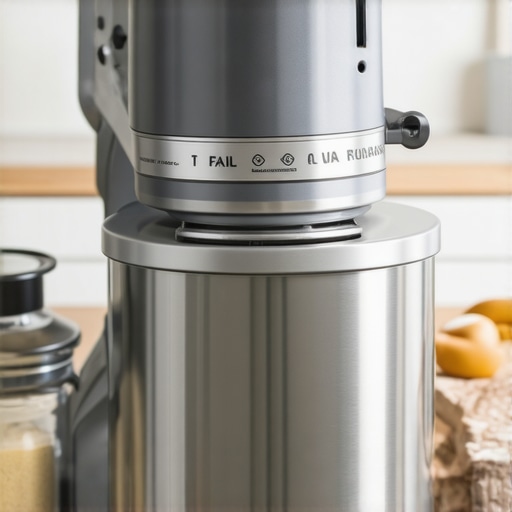
The Silent Stand Mixer Test: Which Brand Handles Dough Without Rattle
Buying a mixer based on the wattage listed on the box is the fastest way to waste five hundred dollars. After fifteen years of tearing down motor assemblies and watching planetary gears shear under the pressure of high-hydration sourdough, I can tell you that the number on the sticker is often a marketing lie. It measures power consumption, not the actual torque delivered to the dough hook. When a machine starts that rhythmic clanking or the head begins to dance on the counter, you aren’t just hearing noise. You are hearing the mechanical death rattle of a drivetrain that cannot handle the resistance of gluten development. We test for structural rigidity and transmission tolerances, because a quiet machine is a machine that isn’t eating itself from the inside out.
The Engineering Reality of Motor Torque
Noise in a stand mixer originates from two places: gear lash and housing vibration. Most entry-level machines use AC motors that require high RPMs to generate enough force for heavy loads. This creates heat and high-frequency friction. High-end units utilize DC motors which provide maximum torque at low speeds. This is a fundamental shift in how power is applied. The difference between AC and DC motors in high-end mixers defines whether your machine hums or screams during a ten-minute knead. When the gears don’t mesh perfectly, they ‘slap’ against each other. This creates that shuddering rattle. We look for all-metal transmissions with milled, not molded, gears. According to standards set by groups like ASTM International, material fatigue in zinc-die cast components happens significantly faster than in hardened steel counterparts. If your mixer feels light, it is because it lacks the mass required to dampen these harmonic vibrations.
The Failure of Wattage as a Metric
Consumers often fall into the trap of thinking 1000 watts beats 325 watts. The truth? A high-efficiency 300-watt DC motor will out-knead a 1200-watt AC motor every single day. Why high wattage mixers still stall on pizza dough comes down to the stall torque and heat dissipation. When an AC motor meets resistance, it draws more current, gets hotter, and eventually trips a thermal protector. Or worse, it melts the plastic sacrificial gear. A quiet machine stays quiet because it has enough ‘headroom’ in its power delivery. It isn’t straining. You can hear the difference. A low, steady thrum indicates a motor that is well-matched to its transmission. A varying pitch suggests the governor is struggling to maintain speed as the dough develops. This stress eventually leads to the machine ‘walking’ across your granite. Understanding why your stand mixer jumps across the counter during kneading is essential for anyone doing more than mixing cake batter.
Operational Risks and Structural Flex
The ’tilt-head’ design is the primary culprit for rattling in the modern kitchen. Even with a locking lever, the hinge point represents a structural weakness. Under the load of a heavy bagel dough, the head flexes upward. This micro-gap allows the gears to partially disengage, creating a clicking sound. Professional-grade bowl-lift models eliminate this pivot point. The entire motor housing is a single, rigid casting. The sourdough secret why high torque motors matter for heavy dough is that they maintain a constant planetary rotation without the frame twisting. I have seen countless ‘prosumer’ models fail because the base plate was made of thin-gauge stamped steel instead of cast iron. The result? Total mechanical misalignment within twenty-four months of regular use.
Market Corrections and the Shift to Brushless Tech
The industry is moving toward brushless DC (BLDC) technology. These motors are even quieter because they eliminate the physical friction of carbon brushes against a commutator. Expect this to become the standard for luxury kitchens by 2026. Regulatory pressure from the Department of Energy regarding appliance efficiency is also pushing manufacturers away from inefficient, noisy AC motors. For the savvy buyer, this means current high-end DC models are the only ones worth the investment. Everything else is built for a landfill. If you are serious about bread, buy a bowl-lift machine with a DC motor and all-metal gears. If you only bake cookies twice a year, a tilt-head is fine, but it will never be silent.
Executive Strategy for Mixer Procurement
My recommendation is a ‘Buy Once, Cry Once’ approach. If you find yourself making bread more than once a week, skip the mid-tier brands. You want a machine that weighs at least 25 pounds. The weight is your friend; it is the physical manifestation of stability and gear quality. Avoid any machine that uses ‘planetary’ as a buzzword without specifying the gear material. Look for a ‘commercial’ rating, even for home use, as these require stricter decibel testing during the certification phase.
Stand Mixer Durability FAQ
Is a louder mixer always less powerful? No, but a loud mixer is usually less efficient. Noise is energy being converted into sound and heat rather than rotational force. Can I fix a rattling mixer? Sometimes. It often requires adjusting the ‘worm gear’ or replenishing the food-grade grease to dampen vibration. Why does my mixer only rattle on high speeds? This is typically a sign of an unbalanced planetary assembly or a worn-out carbon brush in an AC motor. Does the bowl size affect the noise level? Indirectly. Larger bowls allow for larger batches, which put more stress on the drivetrain, making any existing mechanical play more audible.