
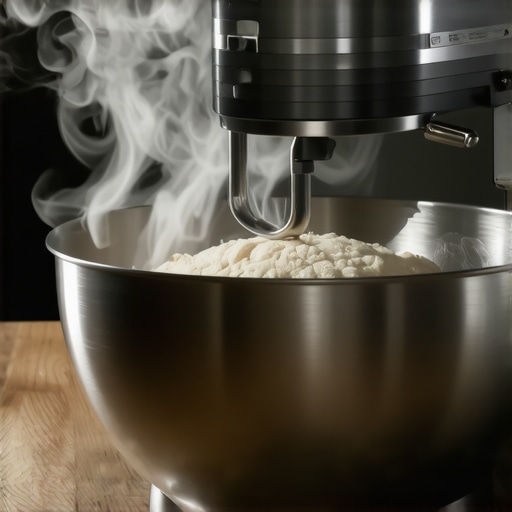
When your high-end appliance begins emitting that unmistakable acrid, electrical odor midway through a kneading cycle, you are not just experiencing a minor culinary inconvenience. You are witnessing the mechanical degradation of an expensive investment. Heavy pizza dough, particularly low-hydration neapolitan style formulations hovering around fifty-five percent water content, represents the ultimate torture test for domestic kitchen machinery. After diagnosing and repairing commercial and premium domestic kitchen gear for over fifteen years, I can tell you that most owners fundamentally misunderstand the physical limits of their machinery. The stake here is not just a ruined dinner; it is a stripped worm gear, a fried speed control board, or a completely seized motor that can cost hundreds of dollars to replace.
Understanding this mechanical stress requires a look under the cast metal housing. When you throw dense flour mixtures into a mixing bowl, the spiral hook does not simply stir; it acts as a mechanical wedge, forcing its way through a highly viscous gluten matrix. This resistance translates directly back up through the planetary gear assembly to the motor shaft. In standard AC motor designs, as the resistance rises, the motor draws more electrical current to maintain its set speed. This surge in amperage generates intense thermal energy. Without adequate dissipation, the internal temperature of the motor winding spikes rapidly, liquefying the protective grease. If you have ever noticed grease pooling in your mixing bowl, this thermal breakdown is precisely the cause, as detailed in our guide on the hidden reason your stand mixer is leaking oil.
The Mechanical Reality of Planetary Transmission
Most premium kitchen stand mixers utilize a planetary gear system where the attachment rotates on its own axis while simultaneously orbiting a central point. While this design ensures exceptional bowl coverage, it introduces multiple points of friction. Under the immense load of kneading heavy pizza dough, these interlocking gears experience extreme axial thrust. If the gears are made of sintered metal or, worse, nylon, the teeth can shear under the pressure. Some manufacturers intentionally design a single nylon “fail-safe” gear into the transmission. This plastic gear is engineered to strip first to protect the more expensive motor from burning out, but it still leaves you with an inoperable machine. To keep your unit running smoothly, knowing how to clean the hidden grease in your stand mixer attachment hub is a vital piece of routine maintenance that prevents debris from migrating into these critical gear teeth.
The physical stress is compounded by the duration of the knead. Many home bakers, following generic online recipes, run their mixers on medium or high speeds for ten to fifteen minutes to develop gluten structure. This is a critical operational error. High speeds cause the planetary head to strike the dense dough mass with high-velocity impacts rather than a steady, controlled push. The sudden deceleration spikes the torque requirements instantly, sending shockwaves through the entire drivetrain. The physical chassis begins to flex, the head joint rattles, and the unit may even begin to migrate across your work surface. To prevent catastrophic drops, you must understand why your stand mixer walks across the counter during bread prep and take active stabilizing measures.
The Thermal Stress Test
I recall a service call last winter from a local boutique caterer who had burnt out three flagship mixers in a single weekend while preparing artisanal flatbreads. The workshop smelled of scorched copper and caramelized gear lubricant. They had ignored the telltale signs of thermal overload: the housing was too hot to touch comfortably, and the motor pitch had dropped from a energetic hum to a low, agonizing growl. They assumed that because the machine was marketed as “professional,” it could handle back-to-back heavy batches without rest. It could not. Every motor has a duty cycle—the ratio of operational time to rest time. Domestic and prosumer mixers typically operate on a 10-minute on, 15-minute off duty cycle when handling dense doughs. Ignoring this threshold guarantees premature component failure.
To mitigate these risks, you must alter your workflow. Start by adjusting the mechanical clearance of your machine. If the dough hook sits too low, it pinches the dough against the bottom of the stainless steel bowl, drastically increasing friction. You can easily resolve this by learning how to adjust the tension on your stand mixer head to ensure the clearance is set to the thickness of a dime. Additionally, lowering your mixing speed to the lowest possible setting—usually designated as “speed 1” or “stir”—is non-negotiable for heavy doughs. While it takes longer to develop the gluten, it keeps the motor within its safe operating amperage, preventing the rapid thermal spikes that lead to system shutdowns.
Future Engineering and Market Directions
Looking ahead into the next 12 to 24 months, we are seeing a significant shift in how premium kitchen brands approach motor technology. The industry is transitioning away from traditional, heavy AC motors toward brushless DC (BLDC) motors. These modern powerplants utilize electronic commutation rather than physical carbon brushes. This design elimination removes a major source of friction and heat generation. BLDC motors deliver incredibly high torque at very low speeds without drawing excessive current, making them the ultimate solution for heavy-duty baking applications. Furthermore, we expect to see integrated smart thermal sensors become standard in high-end appliances, automatically throttling the speed or shutting down the machine before the internal temperature reaches the point of structural damage.
The Professional Recommendation
If you regularly bake high-hydration breads or dense neapolitan pizzas, your strategy should match your production volume. For those making pizza once a week, your existing premium mixer is perfectly adequate, provided you never exceed speed 2, limit kneading sessions to under 8 minutes, and allow the machine to cool completely between batches. If you are baking multiple loaves or pies several times a week, you should actively consider upgrading to a commercial-grade spiral mixer. Unlike planetary mixers, spiral mixers rotate the bowl itself while the spiral hook remains stationary. This highly efficient movement kneads the dough by folding it against itself rather than smashing it against the bowl walls, dramatically reducing the mechanical load on the motor and preventing the machine from working itself to death.
Frequently Asked Questions
How long should I let my stand mixer cool down if it feels hot?
If the metal housing feels hot to the touch (above 130°F or 55°C), you should unplug the machine and let it rest for at least 30 to 45 minutes. Do not attempt to speed up the process by placing ice packs on the housing, as this can cause rapid condensation inside the gear cavity, leading to rusted bearings and electrical shorts.
Can I use a dough hook on high speed to speed up the kneading process?
Absolutely not. You should never exceed speed 2 (or the manufacturer’s designated dough speed) when kneading yeast doughs. High-speed kneading creates excessive torque spikes that can strip gears instantly and will cause the motor to overheat within minutes.
Why does my mixer make a clicking noise when kneading heavy dough?
A persistent clicking or knocking noise usually indicates that the gears are slipping or that the internal locking hinge has worked itself loose. This structural play allows the planetary head to bounce, which misaligns the gears. You should inspect the hinge tension and address any internal gear play immediately to prevent total gear failure.