
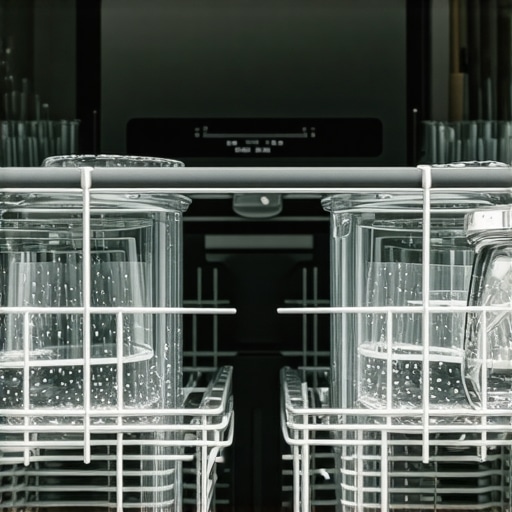
A high-end dishwasher is not merely a convenience; it is a sophisticated closed thermodynamic system designed to balance water pressure, thermal mass, and air movement. When a luxury machine leaves your top rack soaking wet while the lower plates are bone dry, it is not a random failure. It is a system imbalance. For over fifteen years, our team has calibrated premium kitchen environments, and we have learned that modern efficiency mandates often clash directly with physics inside your wash tub. Getting this wrong is expensive. Left unchecked, stagnant moisture destroys delicate glassware, fosters insidious bacteria in hidden spray arm ports, and slowly ruins custom cabinetry through escaped steam. The solution does not lie in running the cycle twice. It lies in understanding how heat transfers inside the stainless steel tub.
Why Your High-End Dishwasher Isn’t Drying the Top Rack
Modern luxury dishwashers do not rely on the raw, brute-force heating elements of the past. Older, entry-level models use an exposed calrod element at the bottom that acts like an oven, baking everything dry. High-end European and domestic prosumer brands use condensation drying. This process relies on a heavy, insulated stainless steel interior tub that retains heat. When the final rinse cycle pumps in boiling water, the dishes become incredibly hot. The metal walls of the dishwasher, cooled from the outside by ambient air or specialized cold-water vapor channels, pull the moisture off the hot dishes and onto the cooler steel surfaces. If your top rack is wet, this thermal siphon has broken down. The upper rack is farther from the primary heat source, holds items with lower thermal mass like plastics or thin-stemmed glasses, and suffers from poor air circulation when overloaded.
The physical geometry of water distribution plays a critical role. If the spray arm under the top rack lacks proper hydrostatic pressure, it cannot clear residual water from the wash cycle, leaving a pool of cold water sitting inside the spray ports. When the drying phase begins, this water evaporates and immediately condenses on the underside of your cups. If you are struggling with other premium appliances in your space, such as finding why your air fryer basket is rusting, you already know that moisture management is the ultimate battle in any high-performance kitchen. In a dishwasher, that moisture must be actively channeled away, not left to pool on delicate surfaces.
The Thermal Dynamics of Condensation Drying
To diagnose the issue, we must look at the energy balance. The lower rack is packed with heavy plates, ceramic bowls, and heavy-duty flatware. These dense materials act as a thermal battery; they absorb immense amounts of heat during the final hot rinse and radiate it back into the tub during the dry cycle. The upper rack, conversely, is home to lightweight wine glasses, small bowls, and plastic storage lids. Plastic has incredibly low thermal mass. It cools down almost instantly once the hot water stops spraying, meaning it lacks the residual heat required to vaporize the water clinging to its surface. The water simply sits there, cold and stagnant.
Furthermore, many luxury homeowners make the mistake of using standard, cheap detergents that lack specialized surfactant agents. Without a high-quality rinse aid, water cannot break its surface tension. Instead of sheeting off the dishes and sliding down the stainless steel walls, it forms large droplets that cling to the undersides of your top-rack items. This is especially true for those who have invested heavily in premium cookware; the same precision engineering that makes high-end pans perform beautifully on an induction cooktop means they require specific chemical environments to dry properly in a automated cycle.
The Mechanical Underpinnings of Airflow and Pressure
Another major culprit is the wax motor actuator on the vent system. Premium dishwashers use a small, silent vent that opens at the end of the cycle to let moist air escape or channel it through a condensing fan assembly. If this vent fails to open, the humid air remains trapped inside, cooling down and raining back down onto the top rack first. We often see this in homes where hard water deposits have scaled up the delicate internal vent flappers. The machine thinks it is drying, but it is actually just stewing your fine china in a high-humidity sauna.
Hydrostatic pressure drops also ruin top-rack performance. If the middle spray arm assembly is not perfectly seated against the manifold on the back wall of the dishwasher, water leaks out of the connection. This pressure loss means the top spray arm spins too slowly or not at all during the final rinse, failing to heat the upper dishes to the critical temperature required for condensation drying to work. This mechanical misalignment is a silent killer of cycle efficiency.
Why Standard Drying Methods Fail
Many homeowners try to resolve top-rack dampness by simply selecting the heated dry button, but this often backfires on high-end appliances. Adding raw heat without active moisture evacuation simply bakes the mineral deposits onto your crystal, leading to permanent etching. Others resort to cracking the door open manually at the end of a cycle. While this lets steam escape, it introduces a severe operational risk: local cabinet damage. Over time, that hot, humid air warping your custom wood panels will cost thousands of dollars in millwork repairs. The engineered drying cycles of a luxury appliance are designed to contain that moisture, condensing it safely down the drain line rather than releasing it into your luxury kitchen environment.
Understanding this balance is much like learning the mistake most people make with clad cookware; you cannot treat a high-performance tool with low-end habits. You must work with the engineering, not against it. If your machine features a Zeolite drying system—a natural mineral compartment that absorbs moisture and releases intense heat—any blockage of the intake vents at the bottom of the tub will completely disable the drying cycle for the entire machine, leaving the top rack especially cold and wet.
The Implementation Risks of DIY Fixes
I remember a frantic call from a client in an upscale historic neighborhood. They had spent hours trying to manually clear the upper spray arm of their imported German dishwasher using a metal coat hanger. The smell of melted plastic and the scraping sound of metal against precision nozzles told the story before I even opened the tub door. They had punctured the delicate internal baffle of the spray arm, destroying the balanced water pressure required to spin the arm. The result? A ruined component and a completely saturated top rack. DIY repairs on these machines require surgical precision, not brute force.
When troubleshooting, there is also the risk of damaging the door seal or the delicate alignment of the upper rack manifold. If you force the upper rack back too hard, you can crack the plastic receiver dock at the rear. This causes a permanent water bypass leak, ensuring the top rack never receives hot water again. The diagnostic path must be methodical: check water temperature, inspect the rinse aid dispenser, verify rack alignment, and test the heating matrix without putting structural components at risk.
Macro Trends in Luxury Appliance Design
The appliance industry is undergoing massive shifts driven by environmental regulations. The Association of Home Appliance Manufacturers (AHAM) and federal energy standards continue to lower the allowable water and energy usage per cycle. This means manufacturers cannot simply run heaters longer or pump more water to guarantee drying. They must rely on smarter thermodynamic engineering. Over the next 12 to 24 months, we will see even more brands adopting closed-loop heat exchangers and automated door-opening mechanisms that activate only after the air has cooled significantly to protect surrounding cabinetry.
This drive toward green luxury means that proper chemical usage and loading patterns are no longer optional. If you load your dishwasher like an old 1990s model, it will fail to perform. Users must adapt to these lower-energy, high-efficiency cycles by ensuring their rinse aid reservoirs are filled and their water softeners are calibrated to local municipal water hardness levels. Those who fail to adapt will find themselves calling service technicians for non-existent mechanical failures.
The Executive Verdict
If your top rack is wet, do not tolerate it, and do not buy a new machine immediately. Run a diagnostic cycle first. Verify that your incoming hot water line is delivering water at a minimum of 120 degrees Fahrenheit to the dishwasher inlet valve. Ensure you are using a premium, surfactant-heavy rinse aid and high-quality detergent tablets rather than cheap liquid gels. Finally, adjust your loading habits: angle cups and bowls at a 45-degree slant to prevent water from pooling on their concave bases, and ensure nothing blocks the middle spray arm from spinning freely. If the issue persists, the thermodynamic system or the venting actuator is likely compromised, requiring professional calibration to restore your kitchen’s peak efficiency.
Frequently Asked Questions
Q: Why does my dishwasher leave water on the tops of my coffee mugs?
A: This is usually due to the concave design of the mug bases. When placed flat, water pools in these recesses. Angle your mugs on the tines at a 45-degree slant to allow the water to naturally run off during the condensation drying phase.
Q: Is rinse aid actually necessary for drying?
A: Yes. In modern condensation-dry luxury dishwashers, rinse aid is not optional. It reduces the surface tension of water, allowing it to sheet off the dishes in thin layers rather than forming droplets that remain trapped on the upper rack.
Q: Why is my plasticware always wet when everything else is dry?
A: Plastic has incredibly low thermal mass compared to glass, ceramic, and metal. It does not retain the heat from the final hot rinse, preventing the water on its surface from evaporating and condensing onto the dishwasher walls.