
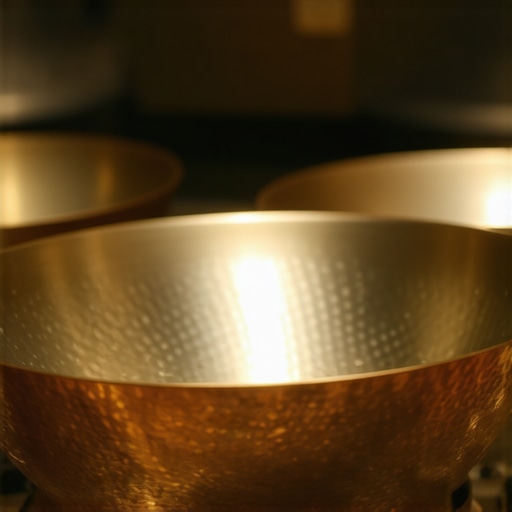
Why Hand-Hammered Woks are Superior to Machine-Pressed
Machine-stamped woks are a failure of metallurgy masquerading as efficiency. In the high-end culinary world, a tool is only as good as its molecular stability. When you buy a machine-pressed pan, you are purchasing steel that has been forced into a shape under massive hydraulic pressure in seconds. This process thins the metal at the curve, creating structural weak points. Hand-hammering is the opposite. It is the intentional cold-working of carbon steel to create a surface that holds oil, resists warping, and distributes heat with a precision that automated factories cannot replicate. After 15 years of curating the finest equipment for the luxury kitchen, I can tell you that the difference isn’t just aesthetic. It is mechanical.
The technical reality is simple: hand-hammering builds density. Every strike of the hammer compresses the carbon steel, a process known as work-hardening. This increases the yield strength of the material. Machine-pressed pans lack this internal tension. They are uniform, but they are also soft. In a kitchen environment where high-BTU gas burners or advanced induction systems are the standard, the thermal shock alone can cause a thin, machine-made wok to buckle. Compare this to the premium cookware found in professional environments. Hand-hammered vessels feature thousands of tiny, microscopic facets. These aren’t just for show. They create a surface area that allows for superior oil retention. This is why checking your carbon steel seasoning is much easier on a hammered surface; the patina has something to grip.
The Engineering Reality
When we look at the material construction in high-end cookware, we examine how heat travels through the lattice of the metal. A machine-pressed wok has a perfectly smooth interior. When oil hits that surface, it tends to pool at the bottom due to gravity. The hammered texture of a traditional Bao Wok creates enough friction to hold a thin film of oil across the sides. This is essential for the ‘toss’—the heart of stir-frying. According to standards set by metallurgical authorities like ASM International, cold-worked carbon steel exhibits higher hardness levels than its annealed or hot-rolled counterparts. The result? A tool that actually improves with age instead of degrading. Unlike why longevity of non-stick coatings is so poor, a hand-hammered wok is a multi-generational asset.
Why Standard Methods Fail
The market is flooded with cheap imitations. You see them in big-box stores next to budget air fryers and plastic stand mixers. These pans are often spray-coated with a chemical film to mimic the look of hand-hammering. They are fake. You can tell by the sound. A true hand-hammered wok has a high-pitched, clear ring when struck. A machine-pressed pan sounds dull. Dead. This lack of resonance indicates a lack of density. In my experience, these mass-produced pans develop hot spots within months. They cannot handle the intense heat required to achieve ‘Wok Hei’—the breath of the wok. If your kitchen setup involves espresso machines and professional-grade appliances, adding a low-quality wok is like putting budget tires on a supercar. It limits the entire system’s performance.
Market Corrections Ahead
We are seeing a shift back to artisanal engineering. The modern consumer is tired of the ‘disposable’ culture that has infected even the luxury kitchen. People are realizing that a machine-stamped pan that warps after six months is more expensive than a hand-hammered one that lasts sixty years. I expect to see a surge in demand for ‘heirloom’ tools as buyers move away from the convenience of automation. This is already happening in other sectors, like the preference for all-metal gears in stand mixers. The second-order effect of this trend will be a scarcity of genuine master smiths. True hand-hammering is a dying skill. If you find an authentic source now, buy it. The value will only increase as the supply of skilled labor diminishes.
The Executive Verdict
If you are cooking on a high-performance range, specifically if you are exploring the induction cooking performance of newer luxury models, you need the mass and stability of a hammered pan. Machine-pressed woks are for the casual hobbyist. Hand-hammered carbon steel is for the serious practitioner. My recommendation: Invest in a 1.2mm to 1.5mm thickness hand-hammered wok. Avoid anything with a non-stick coating. The steel itself is the technology. Treat it with the same respect you give your $3,000 espresso setup, and it will outperform every other piece of kit in your cabinet.
Frequently Asked Questions
Do hand-hammered woks work on induction?
Yes, provided the bottom is flat or you use a specialized induction wok ring. The carbon steel is highly magnetic, making it extremely efficient for induction heating.
How do I identify a fake hammered wok?
Look for a repeating pattern. Real hand-hammering is slightly irregular. If every ‘dimple’ is perfectly spaced and identical, it was made by a machine press using a textured mold.
Is the maintenance harder than a regular pan?
Not if you understand seasoning. It requires a simple oil-and-heat process. Once the patina is established, it is virtually non-stick and requires only a hot water rinse.