
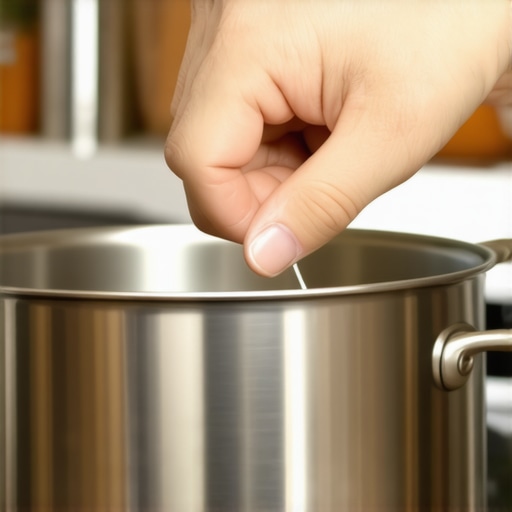
How to Fix a Loose Handle on Your Favorite Saucepan
A wobbly handle is a signal of structural decay. It is a safety hazard that threatens the integrity of your premium cookware. After 15 years in the industry, I have seen home cooks ignore a slight wiggle until three quarts of boiling stock end up on the kitchen floor. This isn’t about tightening a screw; it’s about understanding the physics of the connection. The stake is clear: a handle failure leads to burns, ruined floors, and the loss of expensive equipment. The result? Avoidable failure. My perspective comes from the factory floor and the high-end luxury kitchen environment where equipment must perform under constant thermal stress.
The Engineering Reality of Fastener Fatigue
Saucepan handles usually fail due to differential thermal expansion. Your pan body, often a 5-ply stainless steel construction, expands and contracts at a different rate than the handle material or the rivets. Over hundreds of heat cycles, this movement creates microscopic gaps. In the trade, we call this fastener fatigue. When you feel that first millimeter of play, the mechanical bond has already been compromised. Most consumer-grade pans use aluminum rivets which are soft. Industrial-grade pieces use stainless steel rivets, which are harder but more difficult to reset once they loosen. If you are using 5-ply stainless, the handle is likely riveted. If it is a cheaper disk-bottom pan, it might be spot-welded or screwed. Understanding this distinction determines your repair path.
Identifying the Mechanical Failure Point
Before grabbing tools, diagnose the attachment method. Screwed handles are the easiest but most prone to recurring failure. The threads in the pot body often strip due to the constant leverage. Riveted handles require more finesse. A loose rivet is not fixed by a screwdriver; it requires a ball-peen hammer and a steady hand. Spot-welded handles are a different beast. If a weld fails, the pan is effectively dead. Trying to re-weld stainless steel at home often leads to warping or puncturing the cladding. I’ve seen enthusiasts try to epoxy handles back on. Don’t do it. High heat destroys standard adhesives, releasing toxic fumes and creating a false sense of security. Check the pan searing temperatures you typically reach; most epoxies fail at 400 degrees Fahrenheit, well below a standard sear.
The Repair Protocol for Riveted Cladding
To fix a loose rivet, you need a solid anvil or a heavy iron block. Place the head of the rivet (inside the pan) against the anvil. Use a ball-peen hammer on the outside of the rivet. The goal is to ‘upset’ the rivet—expanding the metal to fill the hole again. Use short, decisive strikes. Do not swing wildly. You want to feel the vibration of the metal seating itself. If you hear a dull thud, the rivet is still loose. If you hear a sharp, metallic ring, the bond is tight. This is the same principle used in aircraft maintenance. For screwed handles, use a high-temperature thread locker. Apply a single drop to the bolt before tightening. This prevents the constant expansion and contraction from backing the screw out again. Avoid over-tightening; you will strip the threads, and then the pan becomes scrap metal.
The Stress Test and Implementation Risks
The messy reality is that not every handle can be saved. If the hole in the pan body has become ‘egged’ out (oval-shaped), a new rivet will eventually fail too. I remember a client with a vintage copper set. The rivets had eaten through the soft copper over thirty years. We had to drill out the holes and install oversized fasteners. It was a technical mess. Sensory anchors tell the story here: the acrid smell of burning food trapped in a loose handle gap is a warning. If you see ‘weeping’—liquid coming out of the handle joint after washing—bacteria is growing in that space. That is a hygiene risk as much as a mechanical one. If the metal around the rivet looks discolored or thin, the structural integrity is gone.
Strategic Foresight for the Modern Kitchen
The industry is moving toward integrated, single-piece casts, but the weight of stand mixers and espresso machines has taught us that modularity is sometimes better for repairability. In the next 24 months, I expect more premium cookware brands to adopt replaceable handle systems as sustainability regulations tighten. People want items they can fix. We are seeing a shift away from the disposable culture that dominated the last decade. Just as air fryers became the new standard for speed, high-longevity, repairable cookware is becoming the new standard for the elite kitchen. Expect to see more ‘bolt-through’ designs that favor user maintenance over sleek, unrepairable aesthetics.
The Executive Verdict
If your handle is screwed on, use thread locker and tighten it today. If it is riveted and you have the mechanical aptitude, reset the rivets using the anvil method. However, if the handle is spot-welded and shows a crack, discard the pan immediately. Safety is non-negotiable. For those investing in new equipment, prioritize heavy-duty riveted handles with at least two or three attachment points. This distributes the torque and reduces the chance of failure. Your actionable strategy: audit your cabinets every six months. A five-second wiggle test can save you a five-hundred-dollar medical bill or a ruined floor.
Frequently Asked Questions
Q: Can I use superglue to fix a loose handle?
A: No. Cyanoacrylate cannot withstand the thermal cycles of a stovetop and will fail almost immediately, potentially causing an accident.
Q: Why do handles on luxury pans loosen at all?
A: Differential thermal expansion. The handle and the pot expand at different rates, which eventually fatigues the metal fasteners regardless of the brand’s quality.
Q: Is a loose handle covered under warranty?
A: Often, yes. High-end brands like All-Clad or Demeyere consider handle integrity a lifetime guarantee issue, provided there is no evidence of abuse like using the pan as a hammer.
Q: How do I know if the rivet is stainless steel or aluminum?
A: Use a magnet. Most stainless steel rivets used in cookware are non-magnetic (300 series), but they will feel much harder if you try to mark them with a fingernail compared to soft aluminum.