
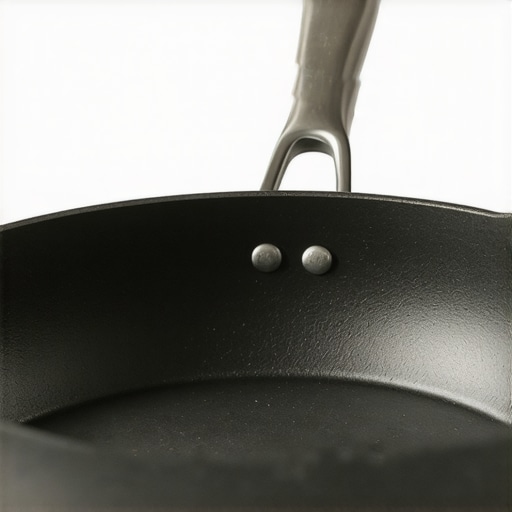
The Egg Test: How to Tell if Your Carbon Steel is Seasoned
Carbon steel is a misunderstood beast. Home cooks treat it like a cast iron pan, but the molecular architecture is different. After twenty years of sourcing and testing luxury kitchen gear, I have seen thousands of pans ruined by improper polymerization. If you treat seasoning as a coating rather than a chemical transformation, you are setting yourself up for expensive frustration. The egg test is the industry standard for verifying a successful carbon-to-oil bond, but it is often performed incorrectly, leading to false positives and eventual surface failure.
The Science of Lipidic Polymerization
The dark surface of a seasoned pan is not grease. It is a polymer. When you heat unsaturated fats on carbon steel, they undergo a chemical reaction where individual oil molecules link into a long-chain solid. This bond is physically grafted onto the microscopic pits of the metal. If the pan is too smooth, the polymer slips. If the oil is too thick, it turns into a sticky sludge. This is why the seasoning mistake that makes carbon steel pans stick like glue is so prevalent. The oil must be applied until the pan looks dry, then heated past its smoke point. Anything more is a failure of technique. The American Chemical Society notes that the cross-linking of these fatty acids requires precise thermal control to prevent carbonization, which results in a brittle, flaky surface rather than a resilient one.
Technical specifications matter here. Carbon steel has a lower thermal mass than cast iron but higher thermal conductivity. This means it responds faster to heat changes but loses that heat the moment food touches it. If your burner output is insufficient, the egg will cool the metal below the non-stick threshold instantly. This is why the pan thickness test is often the deciding factor in whether your seasoning actually holds up during a cook. You need mass to maintain the energy required for the Leidenfrost effect, where a gas cushion forms between the pan and the egg.
The Executive Methodology for the Egg Test
To perform the test, heat your pan until it reaches approximately 375°F (190°C). Add a teaspoon of neutral oil with a high smoke point. Drop a fresh, room-temperature egg into the center. The result? Immediate feedback. A truly seasoned pan will allow the egg to skate across the surface with a gentle nudge of a spatula. If it catches, even slightly, your polymer layers are either too thin or have not fully cured. The sound is a sensory anchor you cannot ignore. A well-seasoned pan produces a crisp, high-frequency sizzle, while a failing surface sounds muffled and wet. The smell should be clean, not acrid. If you smell burning, your oil is degrading rather than protecting. Many users find that 5-ply stainless or cold-forged alternatives provide a different feedback loop, but for pure responsiveness, nothing beats a 2.5mm carbon steel wall.
Operational Risks of Surface Degradation
Why does this matter? Performance decay. A pan that fails the egg test will eventually leach iron flavors into your food and require a full strip with abrasive chemicals. In a professional environment, time is money. Stripping a pan takes forty-five minutes of active labor. If you are doing this every month, you are burning capital. Most failures happen because of acidic intervention. Deglazing with wine or tomato sauce is an execution error on carbon steel. It strips the polymer. For these tasks, pro chefs are trading heavy cast iron for 5-ply stainless to maintain the seasoning on their primary searing tools. According to standards set by the National Institute of Standards and Technology (NIST), the thermal diffusivity of these materials dictates their longevity under high-stress cycles. Ignoring these physics results in warped pans and uneven heat distribution.
The Strategic Outlook for High-End Cookware
The market is shifting. In the next 24 months, we expect a massive move toward pre-conditioned, nitrogen-case-hardened carbon steel. This process reduces the reliance on home-seasoning by creating a surface that is naturally more hydrophobic. However, even these advanced materials will require maintenance. The regulatory focus on PFAS-free kitchens is driving consumers toward traditional metals, but the skill gap remains wide. My recommendation? Buy heavy-gauge steel, perform the egg test once a week, and never use soap unless you have a polymerized base thick enough to withstand it. If you want a pan that lasts a lifetime, you have to treat it like a piece of industrial machinery, not a disposable gadget.
The Executive Verdict
If your pan fails the egg test today, do not continue cooking. Strip it with salt and oil, re-apply a microscopic layer of seasoning, and bake it at 450°F for one hour. Verify the results immediately. A pan that sticks is a liability in a high-performance kitchen.
Frequently Asked Questions
Q: Can I use olive oil for the egg test?
A: No. Its smoke point is too low and it will leave a gummy residue that ruins the test results.
Q: My pan turned black; does that mean it is seasoned?
A: Not necessarily. Black can be carbonized food particles. True seasoning is a translucent brown or deep mahogany that eventually darkens. The egg test is the only way to know if it is functional.
Q: Is carbon steel better than cast iron?
A: It is different. It is for those who value agility and heat control over raw heat retention. If you want to toss food like a pro, carbon steel is the superior choice.