
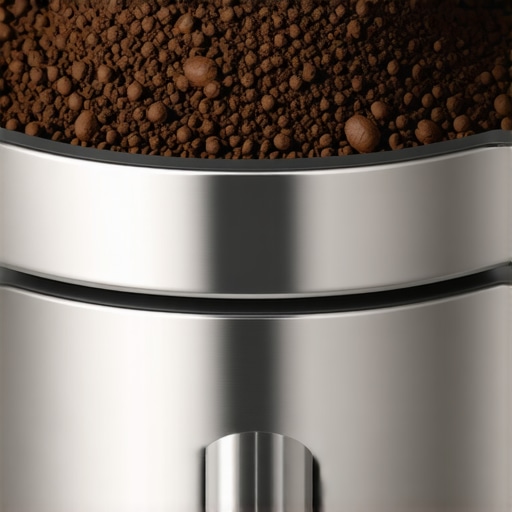
Why Expensive Grinders Still Clump and How to Stop It
Price tags do not defy physics. You can drop three thousand dollars on a prosumer grinder, but the laws governing triboelectrification remain unchanged. The industry likes to sell the dream of fluffy, cloud-like grounds as a byproduct of a heavy motor and a shiny casing. It is a lie of omission. Clumping is a mechanical failure in the exit path, a byproduct of heat, and a symptom of static charge that treats high-end espresso machines like a secondary concern. After fifteen years of tearing down these machines, I can tell you that the most expensive gear often suffers the worst from clumping because of high-speed burr rotation and tight tolerances that leave no room for error.
The Engineering Reality of Particle Migration
Clumping happens when the friction of the burrs stripping the bean apart generates a massive static charge. This is physics, specifically the exchange of electrons between the coffee and the metal. When you use premium cookware or high-end tools, you expect precision, but with grinders, that precision creates a bottleneck. Small particles find each other. They bond. The result? A puck that resists water flow in some areas and channels in others. If you want to understand the scale of this, look at the the only way to stop your grinder from creating static. It is not about the brand; it is about the path the coffee takes from the burr chamber to your portafilter. The exit chute is the primary culprit. Many manufacturers use a ‘clump crusher’—a small wire screen or plastic flap—to break up these masses. Over time, these flaps collect oils, become sticky, and actually cause the very problem they were designed to solve.
[IMAGE_PLACEHOLDER]
Heat and Oil Release in High-Volume Grinding
Heat is the silent killer of consistency. When those 83mm flat burrs spin at 1400 RPM, they generate thermal energy. This heat draws oils to the surface of the coffee particles. These oils act as a biological adhesive. This is why your first shot of the morning might be perfect, but by the fifth shot, the grounds look like pebbles. It is a thermal runaway. The luxury kitchen market focuses on aesthetics, but the technical purist looks at the cooling system. If your grinder lacks active ventilation, the friction heat will continue to bake the residual grounds in the chute. This creates a dense, oily plug that forces the motor to work harder. The smell of scorched coffee beans and the heavy vibration of a struggling motor are sensory warnings of an impending failure. To mitigate this, some users find that the 5-minute grinder hack for better espresso body can help, but it requires a fundamental change in how you treat your bean hopper.
The Messy Reality of Humidity and Static
I have seen it a hundred times in local cafes and high-end home setups. A customer complains that their grinder is ‘broken’ because the grounds are spraying everywhere or coming out in chunks. Then I look at the hygrometer. High humidity makes the oils stickier; low humidity turns the grinder into a static lightning storm. There is a technical truth that most manufacturers won’t tell you: the Ross Droplet Technique (RDT) is your best friend. A single spritz of water on the beans before grinding neutralizes the charge. It feels wrong to put water near a thousand-dollar motor, but it works. Without this, the fine particles will cling to the walls of the chute, creating a snowball effect. This is especially true for zero retention grinders, where every milligram counts. If the chute isn’t cleaned, you are just grinding fresh beans into old, stale debris. I recommend checking out the correct way to clean burrs to prevent this buildup without ruining your calibration.
The Industrial Shift Toward Plasma Generators
Looking at the next 12 to 24 months, we are seeing a shift. The industry is moving away from physical clump crushers and toward active ionizers. High-end brands are beginning to integrate plasma generators at the exit chute to neutralize static in real-time. This is the same tech used in cleanrooms. It is an admission that mechanical design alone cannot beat physics. We are also seeing a move toward lower RPM motors. By slowing down the grind, we reduce heat and static. It takes longer to fill a basket, but the quality is night and day. This mirrors the trend in air fryers and stand mixers, where ‘faster’ is being replaced by ‘smarter’ and more controlled. If you are shopping for a new setup, look for DC motors that allow for variable speed control.
The Executive Verdict
If your grinder is clumping, do not buy a new one yet. First, implement RDT—one drop of water. Second, purge your grinder. Third, clean the exit chute with a vacuum, not just a brush. If you are buying new, avoid anything that uses a plastic flap to ‘crush’ clumps. Look for vertical paths and high-torque, low-RPM motors. The goal is to minimize the time the coffee spends touching metal after it leaves the burrs. Buy for the engineering of the exit path, not the finish of the chrome. FAQs Why does my grinder clump more with dark roasts? Dark roasts are more brittle and oily. The oils act as glue, and the increased fines from the brittle structure provide more surface area for static to cling to. Will larger burrs stop clumping? Not necessarily. Larger burrs grind cooler because they don’t have to spin as many times, but if the chute design is poor, you will still see clumps. Does RDT damage the burrs? In moderation, no. You are using a microscopic amount of water that evaporates almost instantly due to the heat of the grind. How often should I clean my grinder’s chute? For a home user, every two weeks. For a commercial setting, every three days. Accumulation of oils is the primary non-static cause of clumping.