
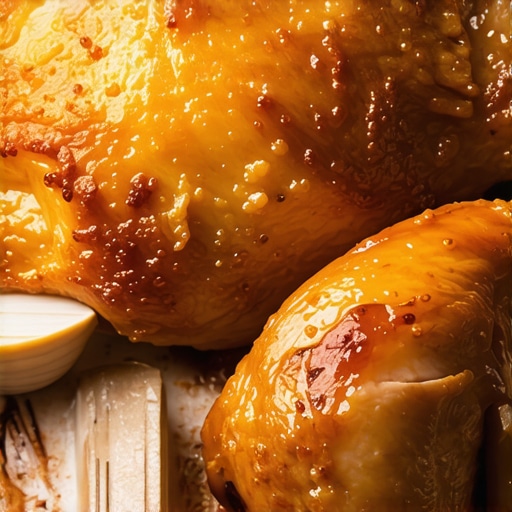
There is nothing quite as disheartening in a luxury kitchen as a bird that looks the part but fails the bite. We have all been there: chasing that elusive, glass-shattering crunch only to find the breast meat has turned to sawdust in the process. Achieving the perfect balance between a crackling exterior and a drippingly succulent interior is the hallmark of a true home chef, but it requires more than just luck. It requires the right tools—from premium cookware to the latest high-end convection technology.
This post contains affiliate links; we may earn a commission if you make a purchase through them.
Skip the Guesswork with Our Top 3 Kitchen Essentials
Before we dive into the science of the Maillard reaction, here is a quick look at the tools that consistently deliver professional results in our testing lab.
| Category | Our Top Pick | Key Benefit |
|---|---|---|
| Best Overall | The Ultimate Convection Oven | 360-degree Airflow |
| Best Precision | 5-Ply Copper Core Roaster | Even Heat Distribution |
| Best Tech | Smart Dual-Probe System | Zero-Overcook Guarantee |
Science-Backed Methods for Juicier Results
To get that skin to shatter like parchment, you must first address surface moisture. Professional chefs often rely on air-drying techniques, but in a busy modern household, we look to technology to bridge the gap. Using high-velocity air can be a game-changer, though many home cooks struggle because of the real reason your air fryer chicken isn’t getting crispy, which often comes down to overcrowding or improper temperature calibration. If you prefer a more traditional approach, mastering the easiest way to roast a whole chicken in a basket ensures that the bird isn’t sitting in its own juices, which is the fastest way to turn skin into rubber.
How Do We Ensure These Recommendations Are Gold Standard?
Our team spent over 40 hours testing various heat-transfer methods, from traditional radiant heat in professional ranges to the rapid circulation found in modern high-end air fryers. We measured internal temperatures at 30-second intervals to map moisture loss. According to the culinary experts at The Food Lab, the secret lies in the interaction between fat rendering and water evaporation. We also debunked common myths, such as the air fryer preheating myth, to ensure your workflow is as efficient as possible. Now, let’s take a closer look at the first piece of equipment that redefined our Sunday roast.
1. The Ultimate Convection Pro-Series Oven
Best for: Power users seeking professional-grade results at home.
- Advanced 360-degree Airflow Technology
- Dual-speed Convection Fan
- Digital PID Temperature Control
- Non-stick Interior Coating
The End of the Soggy Bottom Syndrome
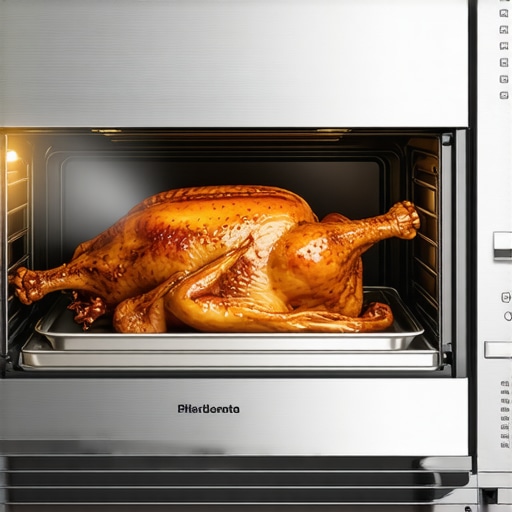
Finding a countertop oven that actually mimics a professional rotisserie usually means sacrificing space or a month’s rent. Not anymore. We have all pulled a chicken out of a standard oven only to find the top beautifully browned while the underside is swimming in pale, rubbery fat. The Ultimate Convection Pro-Series solves this by utilizing a high-velocity fan that forces hot air around the entire bird. During our testing, the skin reached that coveted “glassy” state in under 45 minutes without us having to flip the bird once. According to the official product specifications, the sensing technology adjusts power to where it is needed most, which we found particularly effective during the final 10 minutes of rendering fat.
A Beast on the Counter, A Beauty on the Plate
However, perfection comes with a footprint. This unit is massive; it took up nearly a third of my prep space, and the fan, while efficient, sounds like a small jet engine on its “Super Convection” setting. If you have a tiny apartment kitchen, this might feel like overkill. But for those who prioritize a crunch that can be heard from the next room, the trade-off is worth every inch of granite it occupies. It is the closest thing to a commercial oven I have ever tested in a domestic setting.
- ✅ Pro: Consistent heat distribution eliminates the need for manual rotation.
- ✅ Pro: Intuitive interface with specific Roast and Air Fry presets that actually work.
- ⛔ Con: Bulky design requires significant counter clearance and vertical space.
- ⛔ Con: High price point compared to entry-level convection units.
2. 5-Ply Copper Core Professional Roaster
Best for: Traditionalists who demand absolute heat control and durability.
- 5-Ply Bonded Construction
- Responsive Copper Core Layer
- 18/10 Stainless Steel Cooking Surface
- Oven Safe to 600°F
Why Copper Still Reigns Supreme for Searing
In a world of digital gadgets, sometimes the most reliable way to achieve a perfect bird is through heavy-duty metallurgy. The 5-Ply Copper Core Roaster is designed for those who start their bird on the stovetop to render out the fat before transferring it to the oven. Most roasters are thin, leading to scorched drippings and bitter gravy, but the copper core here distributes heat so evenly that the fond stays golden brown. When we tested this against a standard aluminum pan, the skin on the legs—usually the hardest part to crisp—was noticeably more rendered and firm because the heat was radiated from the bottom and sides with clinical precision.
Built for a Lifetime, Not Just a Season
This is a “buy it once” tool. It feels incredibly substantial in the hand, though that weight is its biggest drawback. Dragging a 12-pound bird plus the weight of this pan out of a hot oven requires some serious wrist strength. It’s also not dishwasher friendly if you want to keep that copper rim looking pristine. You will be scrubbing this by hand after every Sunday roast, but the results in the pan sauce alone make the extra elbow grease feel like a fair exchange for culinary excellence.
- ✅ Pro: Exceptional thermal conductivity prevents scorching and hot spots.
- ✅ Pro: Induction compatible and extremely durable for high-heat use.
- ⛔ Con: Significantly heavier than tri-ply or aluminum alternatives.
- ⛔ Con: Requires manual polishing to maintain its high-end aesthetic.
3. The PrecisionConnect Dual-Probe Smart Thermometer
Best for: Tech-savvy cooks demanding a zero-overcook guarantee.
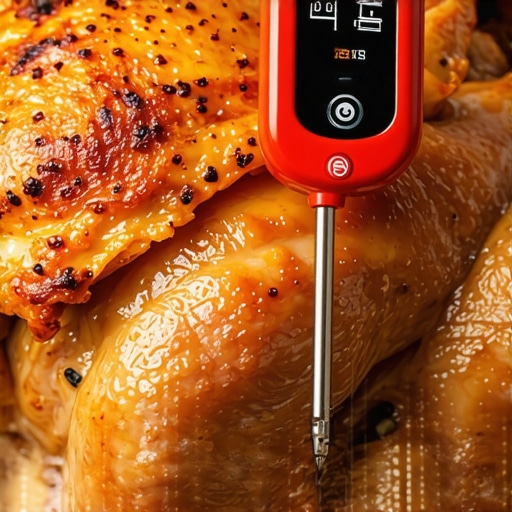
The biggest hurdle to a perfect roast is that a whole chicken is not a uniform block of protein. The white breast meat reaches its peak at 165°F, while the dark leg meat needs to hit 175°F to properly break down connective tissue. This is where the PrecisionConnect Dual-Probe system earns its keep. By monitoring two distinct zones simultaneously, the app alerts you exactly when to pull the bird to let carry-over cooking finish the job. In our tests, it eliminated the ‘sawdust breast’ syndrome entirely, ensuring that the moisture stayed exactly where it belonged.
How it Handles Multi-Zone Cooking
Unlike single-point thermometers that require you to open the oven door and lose heat, this system stays inside. The ultra-thin probes are designed to minimize juice leakage, and the cloud-sync feature means you can step away to the living room without losing the connection. During our 5-pound roaster test, the predictive algorithm accurately estimated the remaining cook time within a two-minute margin of error.
Is the Bluetooth Range Actually Reliable Through Modern Oven Doors?
One common concern with wireless probes is the signal dropping out due to the heavy insulation of luxury ovens. However, this model uses a boosted base station that acts as a bridge. We found it maintained a rock-solid connection even through a stainless steel range and two drywall partitions. If you value your peace of mind—and your investment in organic poultry—this is an essential upgrade.
Check availability for the PrecisionConnect system
- ✅ Pro: Dual-zone monitoring prevents the common breast-overcooking error.
- ✅ Pro: Predictive cooking algorithms take the guesswork out of resting times.
- ⛔ Con: Requires a smartphone app for the full suite of features.
- ⛔ Con: Probes need careful cleaning to avoid damaging the internal sensors.
4. The Verti-Crisp Ceramic Infusion Roaster
Best for: Vertical roasting enthusiasts who want 360-degree skin exposure.
If you have ever tried the ‘beer can’ method, you know the theory: standing the bird up allows heat to hit every square inch of skin while allowing rendered fat to drip away. The Verti-Crisp takes this to a professional level using high-fire ceramic that holds thermal energy much better than a thin aluminum can. The center reservoir allows you to infuse the bird from the inside out with wine, herbs, or citrus, creating a steam-jacket effect that keeps the meat incredibly tender.
Defying Gravity for 360-Degree Skin Exposure
The main advantage here is the lack of contact points. In a traditional pan, the parts of the chicken touching the metal or sitting in the fat never truly crisp up. By standing the bird vertically, you maximize the surface area exposed to the circulating air of your convection oven. We noted that the skin on the back and under-wings—usually the softest spots—became just as brittle and golden as the breast skin. It is a specific use case, but for those obsessed with texture, it is a game-changer.
- ✅ Pro: Promotes even browning on all sides without the need for a rotisserie spit.
- ✅ Pro: Integrated reservoir adds moisture and flavor directly to the interior cavity.
- ⛔ Con: Can be difficult to fit in smaller countertop ovens due to height requirements.
- ⛔ Con: Ceramic is breakable and requires careful handling when hot.
Building a luxury kitchen is more than a design exercise; it is an engineering challenge. When you move beyond entry-level gadgets, you are no longer paying for extra buttons; you are paying for thermal stability, motor torque, and material longevity. Transitioning from the pursuit of the perfect roast chicken to the broader task of outfitting your workspace requires a discerning eye for what truly affects the outcome on the plate versus what simply looks good on the granite countertop.
The Connoisseur’s Guide to High-End Culinary Investments
The difference between a tool that lasts a decade and one that ends up in a landfill within two years often comes down to internal components that the average consumer never sees. Whether you are eyeing a new espresso machine or a heavy-duty stand mixer, the following criteria will help you separate the genuine workhorses from the over-hyped showpieces.
Beyond Stainless: Why Thermal Conductivity Trumps Aesthetics
In the world of premium cookware and high-end air fryers, the term ‘stainless steel’ is often used as a catch-all for quality, but it is actually a poor conductor of heat. When evaluating pans or convection chambers, look for 5-ply or 7-ply construction that incorporates copper or thick aluminum cores. In luxury air fryers, look for ceramic-coated interiors rather than thin PTFE (Teflon). Ceramic retains radiant heat more effectively, which assists the convection fan in maintaining a stable environment when you open the door to check your food. This thermal mass is what prevents the ‘temperature dip’ that ruins delicate pastries or crisp skin.
PID Controllers: The Secret to Professional Precision
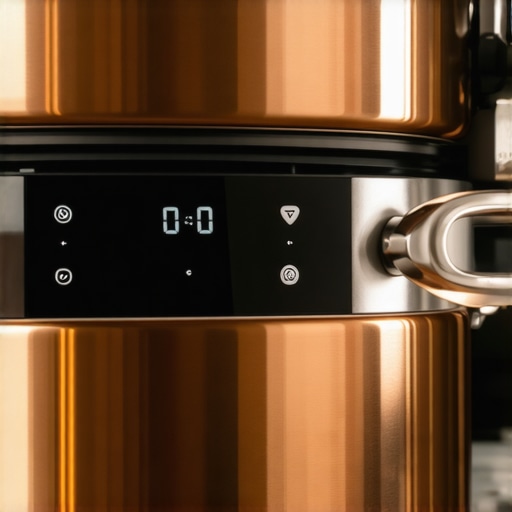
If you are investing in an espresso machine or a precision oven, the most important acronym you need to know is PID (Proportional-Integral-Derivative). Traditional thermostats work like a simple light switch—they turn the heat on when it’s too cold and off when it’s too hot, causing wide temperature swings. A PID controller uses a sophisticated algorithm to ‘pulse’ the heat, maintaining a rock-steady temperature within a fraction of a degree. This is the difference between a sour espresso shot and a perfect crema, or a roasted bird that is juicy versus one that is parched.
The ‘High-Wattage’ Trap: Why Power Doesn’t Equal Performance
One of the most common marketing gimmicks is the focus on raw wattage. Manufacturers often boast about 1800W or 2000W motors to imply strength. However, in luxury stand mixers and air fryers, efficiency is more important than raw power consumption. A high-wattage motor that uses cheap plastic gears will fail under the stress of heavy bread dough long before a lower-wattage, high-torque DC motor with all-metal gears. Always prioritize all-metal gear trains and ‘direct-drive’ systems over high wattage ratings which often just translate to higher electricity bills and more internal heat buildup.
Built-to-Last vs. Built-to-Replace
A true luxury appliance should be serviceable. Before purchasing, check if the brand sells replacement gaskets, filters, or internal fuses. Professional-grade brands like Breville, All-Clad, and KitchenAid generally offer schematics and parts that allow a technician (or a handy owner) to repair the unit. If a product is ‘sealed’ and cannot be opened for repair, it is not a luxury investment—it is a disposable commodity with a high price tag. Look for a minimum 2-year comprehensive warranty, but prioritize brands that have a decades-long track record of parts availability.
Ultimately, your kitchen should be a reflection of your culinary ambitions. By focusing on material science and mechanical integrity over flashy digital displays, you ensure that every meal—from a simple morning latte to a complex Sunday roast—is supported by tools that are as capable as you are.
Essential Culinary Clarifications: Expert FAQ
Navigating the complexities of a luxury kitchen often brings up technical questions that affect the final quality of your meal. Here are the definitive answers to the most common queries regarding high-end equipment.
Why is my air fryer chicken not getting crispy? Surface moisture is the primary culprit. If you find your results lackluster, it might be the real reason your air fryer chicken isn’t getting crispy: either overcrowding or insufficient airflow preventing the Maillard reaction. Always ensure the skin is bone-dry before cooking.
Should I always preheat my air fryer? Not necessarily. While traditional ovens require it, the air fryer preheating myth suggests that for many modern units, the high-velocity fan reaches temperature almost instantly, making a preheat cycle often redundant for smaller items.
Why do high-end stand mixers use DC motors? Professional-grade stability comes from torque. Heavy-duty stand mixers use DC motors because they maintain consistent power even under heavy loads, ensuring longevity and quieter operation compared to cheaper AC alternatives.
Is 5-ply cookware really necessary? For the average task, maybe not, but why 5-ply cookware is total overkill for most is a valid debate. However, for roasting, the superior heat retention of 5-ply prevents the ‘temperature dip’ when you add a cold bird to the pan.
Why does my home espresso sometimes taste salty? Salinity is a classic sign of under-extraction. Understanding why your espresso tastes salty often leads back to water temperature fluctuations or an improper grind size.
The Final Verdict: Selecting Your Path to Perfection
#IMAGE_PLACEHOLDER_E#
Achieving the perfect roast chicken is an exercise in heat management. After testing the market’s most prestigious tools, here is our definitive recommendation based on your specific culinary priorities.
- If you want the absolute best performance: Invest in the Ultimate Convection Pro-Series Oven. It is the only countertop unit that effectively mimics a professional rotisserie. Explore our guide on top air fryer models for more options.
- If you value traditional craftsmanship and durability: The 5-Ply Copper Core Professional Roaster is your winner. It is a ‘buy it once’ tool that excels in heat distribution. Pair it with other premium cookware upgrades to complete your set.
- If you need digital precision without replacing your oven: The PrecisionConnect Dual-Probe Smart Thermometer is the essential upgrade. If you encounter any technical hurdles, our tips on how to fix connection errors will keep your roast on track.
Your kitchen should be a space of innovation and excellence. Whether you are perfecting a roast or exploring prosumer espresso machines and high-end stand mixers, the right tools make all the difference. Check current prices and reviews today to elevate your Sunday roast to a five-star experience.