
Why Your Espresso Tastes Salty Instead of Sweet or Bitter
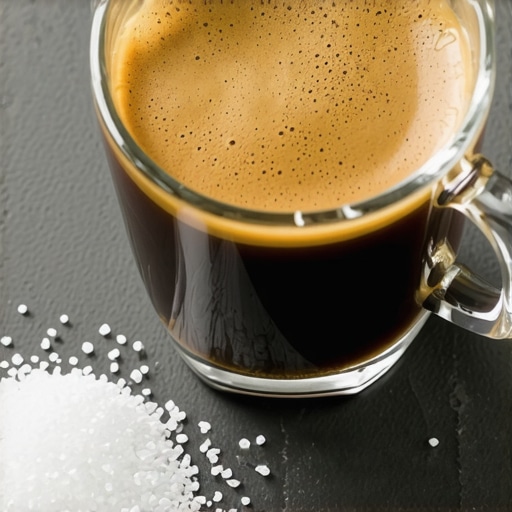
Salty espresso is not a subjective preference; it is a clinical symptom of hydraulic and thermal failure within your brewing cycle. After fifteen years of diagnosing high-end kitchen systems and servicing dual-boiler machines that cost more than some used cars, I can tell you the coffee bean is rarely the primary culprit. When you taste salinity, you are tasting the literal first phase of extraction—where organic acids and mineral salts dissolve—and your machine has failed to progress into the carbohydrates and sugars. This is a technical deficit in your workflow. If you ignore this, you are effectively drinking an unfinished chemical reaction. It is expensive waste. The result? A sharp, brine-like liquid that coats the tongue in a way that no amount of milk can mask.
[IMAGE_PLACEHOLDER_1]
The chemistry of extraction follows a rigid, linear sequence that does not care about your morning schedule. First come the acids and lipids, then the sugars (carbohydrates), and finally the plant fibers and bittering agents. A salty shot is an under-extracted shot that stopped before the water could pull the balancing sweetness from the cellulose structure of the coffee ground. In my experience, the engineering cause is usually a lack of thermal equilibrium. If your brew water hits the puck at 185°F instead of the required 198-202°F, the sugars simply remain locked inside the grinds. You get the salts because they are highly soluble even at lower temperatures. You need to ensure your machine’s PID is calibrated correctly. We often see thermal drift in dual-boiler machines that haven’t been descaled, leading to erratic temperature readings that ruin your shot profile.
The Engineering Reality of Pressure and Flow
Hydraulic resistance is the second pillar of this failure. If your grind is too coarse, the water rushes through the puck too fast. It doesn’t have the contact time required to dissolve the complex sugars that provide that syrupy mouthfeel. This leads to a high flow rate and a watery, salty mess. Conversely, you might see erratic spraying from the portafilter, which indicates channeling. Channeling is the ultimate enemy of the technical purist. When water finds a path of least resistance, it over-extracts that single ‘tunnel’ (making it bitter) while the rest of the puck remains under-extracted (making it salty). The combination is a confused, unpleasant cup. You must use a high-quality burr grinder to ensure particle uniformity. Inconsistent grinds are the fastest way to turn a $20 bag of specialty beans into salt water.
Implementation Risks and The Messy Reality
I have seen owners attempt to fix saltiness by simply grinding finer, only to run into the ‘puck compression’ wall. If your pump is set to a static 9 bars but your puck is too dense, the machine chokes. You end up with a soupy, wet espresso puck that smells like charcoal but tastes like brine. I remember a client in a high-rise downtown who couldn’t understand why his $8,000 Italian machine produced salt. The problem? His water filtration system was stripping too many minerals. Without a specific mineral buffer, the water becomes aggressive and fails to extract the sweetness properly. Pure RO (Reverse Osmosis) water is actually a detriment to espresso extraction. According to the Specialty Coffee Association (SCA) water standards, you need a certain level of calcium and magnesium to act as ‘magnets’ for the flavor compounds. If your water is too soft, you are fighting a losing battle regardless of your grind size.
The Macro View of Home Barista Tech
The industry is moving toward ‘pressure profiling’ and ‘flow control’ as standard features. In the next 12 months, expect more consumer-grade machines to include real-time telemetry. This shift is a response to the very problem of saltiness. By slowing the flow at the beginning (pre-infusion), we allow the puck to saturate and swell, which creates the necessary resistance for a sweet, balanced extraction. If your machine is older, you are operating with a blunt instrument in a world that demands precision. We are seeing a massive uptick in the use of refractometers by home enthusiasts to measure Total Dissolved Solids (TDS). This isn’t just for ‘coffee geeks’; it’s for anyone who wants to stop guessing why their morning drink tastes like a salt lick. The World Coffee Research reports indicate that as climate change affects bean density, the old ’25-second shot’ rule is becoming obsolete. You have to adapt to the density of the bean.
The Executive Verdict
If your espresso is salty, do not change your beans yet. First, check your temperature. If you can’t verify the brew temp, you are flying blind. Second, weigh your dose and your yield. If you put 18g of coffee in, you should get roughly 36g of liquid out in about 27-30 seconds. If it’s coming out in 15 seconds, it will be salty. If you’ve already tried these steps and still get that sharp tang, you are likely dealing with under-extraction due to water chemistry or a failing heating element. My recommendation: buy a precision scale and a thermometer. Stop guessing. Fix the hydraulics, and the sweetness will follow. The equipment is a tool, but your metrics are the strategy.
Salty Espresso Troubleshooting FAQ
Is salty espresso the same as sour espresso?
No, though they are often confused. Sourness is a sharp acidity caused by the acids in the bean. Saltiness is a literal saline taste that occurs during the very earliest stage of extraction. If it’s salty, you are significantly under-extracting.
Can the roast level cause saltiness?
Light roasts are more prone to saltiness because they are denser and harder to extract. They require higher temperatures and finer grinds compared to dark roasts. If you are using a light roast and it tastes like salt, increase your brew temperature by 2-4 degrees.
Does the age of the beans matter?
Freshly roasted beans (less than 5 days old) contain high levels of CO2, which can interfere with water contact and lead to uneven, salty extractions. Wait at least 7-10 days after the roast date for the best results.
Why does my second shot taste better than the first?
This is usually due to ‘thermal lag.’ Your first shot likely lost heat to a cold portafilter or group head, leading to a lower-temp salty extraction. Always pull a ‘blank’ shot of hot water through the portafilter to pre-heat the metal before your actual brew.