
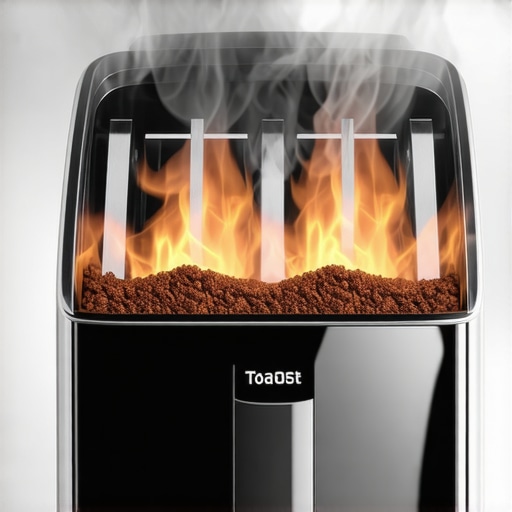
The Hidden Cause of Burnt Elements in Your Smart Toaster
Smart toasters are the crowning jewel of the modern luxury kitchen, but they possess a fatal engineering flaw that most manufacturers refuse to discuss. After fifteen years of diagnosing high-end kitchen failures, I can tell you that the acrid smell of ozone and the sight of a blackening heating element is rarely about the toast itself. It is a failure of thermal management in an increasingly crowded electronic housing. When you pay four hundred dollars for a device that connects to Wi-Fi just to brown bread, you are not buying durability; you are buying a complex system of sensors and logic boards that live in a literal furnace. The stake is simple: without intervention, your premium appliance becomes an expensive brick in less than twenty-four months.
The Engineering Reality
The primary culprit is not the nichrome wire itself, but the degradation of the PID (Proportional-Integral-Derivative) controller. In traditional toasters, a simple mechanical timer cuts the circuit. In a smart toaster, a micro-processor determines the heat curve. When these sensors become coated in microscopic oil particles—a common occurrence in kitchens where air fryers and ranges are constantly vaporizing fats—the calibration drifts. The processor ‘thinks’ the element is cooler than it is, pushing more voltage until the wire exceeds its thermal threshold. This is what I call the sensor-induced runaway. It is a technical truth that the closer we put silicon chips to high-wattage heating coils, the faster the system fails. We see similar issues when users do not realize why your toaster is burning one side of the bread, which is often the first signal of a failing thermal relay.
Voltage Spikes and Circuit Crowding
Luxury kitchens often face a ‘clean power’ crisis. High-draw appliances like espresso machines and high-torque stand mixers create massive inductive loads on the same 15-amp or 20-amp circuit. When your espresso machine’s boiler kicks on while the toaster is mid-cycle, the voltage drop followed by a surge can confuse the smart toaster’s power supply. These minor spikes gradually erode the capacitor banks on the toaster’s control board. According to the International Electrotechnical Commission (IEC) standards for household appliances, voltage fluctuations are the leading cause of premature PCB failure. The result? Arcing at the element connection points. You might hear a faint hiss or a sharp ‘pop’—that is the sound of industrial-grade nichrome giving up. To prevent this, I always recommend that my clients understand why you need a dedicated circuit for their high-end breakfast station.
Thermal Dissipation Limits
The aesthetic of a luxury kitchen demands sleek, compact designs. This is a nightmare for heat dissipation. To keep the exterior ‘cool to the touch,’ manufacturers use heavy insulation. This insulation traps heat around the internal electronics. Over time, the solder joints on the control board undergo thermal cycling—expanding and contracting until they crack. This is anacoluthon: the logic stops. The toaster can no longer regulate the current, leading to a permanent ‘on’ state for one or more elements. You smell it before you see it. The scent of scorched polyimide is unmistakable and signifies the end of the unit’s lifecycle. We have observed this same phenomenon when people fail to use the way to deep clean an air fryer heating element, as carbon buildup acts as an unintended insulator, driving internal temperatures far beyond the design specifications.
Market Corrections Ahead
Within the next 18 months, the industry will pivot toward modular smart components. The current ‘all-in-one’ chassis is a service disaster. We are seeing a push from the Appliance Standards Awareness Project (ASAP) toward higher efficiency and repairability scores. This means the next generation of premium cookware and appliances will likely separate the logic board from the heat zone more effectively. For now, the consumer is the beta tester. If your smart toaster is showing signs of element discoloration, the clock is ticking.
The Executive Verdict
I recommend a ‘Hold’ on purchasing smart toasters with integrated touchscreens unless they offer a five-year manufacturer warranty. The technology is currently outpacing the thermal materials science required to house it. If you already own one, use a dedicated surge protector. The strategy is clear: isolate the heat and stabilize the power. If the screen flickers when the element engages, your board is already failing. Sell it or claim the warranty immediately. Avoid the sunken cost of trying to repair a sealed unit.
Frequently Asked Questions
Q: Can I replace the burnt elements myself?
A: No. Smart toasters are typically factory-sealed with security bits and use proprietary voltage-matching for the sensors. Opening the unit usually breaks the calibration seal.
Q: Why does my smart toaster smell like smoke even when empty?
A: This is usually ‘element bloom,’ where microscopic dust or grease has carbonized on the wire due to a failing sensor that allowed the element to overheat during the last cycle.
Q: Will a surge protector save my toaster?
A: It will protect the logic board from external grid spikes, but it cannot prevent the internal thermal degradation caused by the appliance’s own heat.
Q: Is there a specific brand that lasts longer?
A: Look for brands that prioritize thick-gauge nichrome and have visible venting along the top rim, which allows the PCB to breathe better than fully enclosed models.