
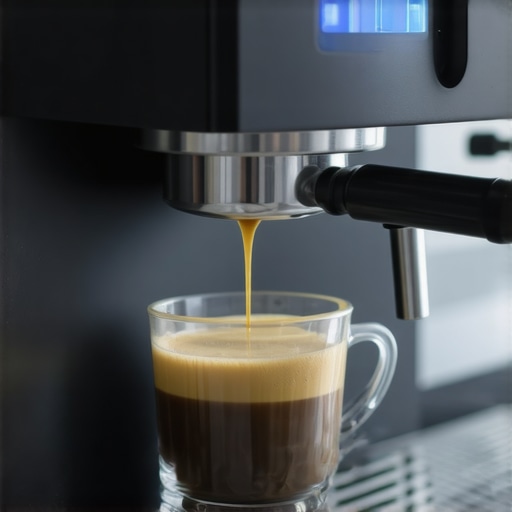
The Proper Way to Descale a High-End Automatic Coffee Center
Owners of a five-thousand-dollar built-in Miele or Wolf often treat descaling like a software update—something to be deferred until the last possible second. This is a gamble with expensive mechanical consequences. Mineral accumulation isn’t just a flavor issue; it is a fundamental thermodynamics problem. Calcium carbonate builds a hard, insulating crust around the heating element, forcing the system to work harder to hit extraction temperatures. This unnecessary heat soak kills electronic control boards and warps silicon seals. After fifteen years in the high-end appliance sector, I have seen enough ruined thermoblocks to know that relying on internal softeners alone is a fantasy. The result? Avoidable failure. Whether you are managing a fleet of espresso machines,air fryers,stand mixers,premium cookware,luxury kitchen setups, or a single high-end unit, the chemistry of water remains your primary adversary.
The Engineering Reality of Calcification
When water reaches 200 degrees Fahrenheit, minerals precipitate. These ions bond to the copper or stainless steel walls of your boiler. This isn’t a theory; it’s a chemical certainty verified by standards from the Specialty Coffee Association. The thicker the scale, the higher the pressure required to move water through the system. Eventually, the pump vibrates with a hollow, metallic rattle—the sound of a component being asked to perform beyond its engineering specs. You might notice why your espresso pressure gauge is giving you false readings as the internal blockage creates artificial back-pressure. The energy cost of heating through scale is an economic drain, but the real stake is the longevity of the manifold. Engineering dictates reality: heat must transfer efficiently, or the metal eventually fatigues.
The Chemical Solution Path
Stop using white vinegar immediately. Its acetic acid is far too aggressive for specific O-rings and leaves a lingering ghost flavor that ruins the profile of high-end beans. Instead, utilize sulfamic acid-based agents or citric acid powders specifically formulated for the benefits of a built-in bean-to-cup coffee station. The concentration level is mandatory for success. Too weak, and you leave mineral deposits behind. Too strong, and you strip the protective oxide layer from the metal internals. A proper solution should feel slightly viscous and have a sharp, metallic scent as it reacts with the lime. If you are also maintaining how to properly descale a high-end dual-boiler espresso machine, you know that timing the contact window is everything to prevent pitting corrosion.
The Operational Risk of the Descale Cycle
The process itself carries risks that generic manuals ignore. Large flakes of scale can break loose during the chemical flush. These pieces act like shrapnel, heading straight for the 0.5mm orifice of the solenoid valve. If that happens, the machine stops flowing entirely. This is the moment of truth where you’ll need to know how to diagnose a clogged solenoid valve in your espresso machine. I recall a client in a local high-rise whose machine hissed and spat steam before the pump simply quit; the culprit was a piece of scale the size of a peppercorn wedged in the group head. It required a full teardown. To avoid this, perform frequent, shorter cycles rather than one massive, aggressive cleaning once a year.
Market Trends and Water Science
The industry is shifting toward magnesium-exchange filtration. Companies are realizing that the old carbon-block filters are insufficient for the mineral density found in many municipal water supplies. According to reports from NACE International regarding corrosion, the interaction between water hardness and high-temp alloys is the leading cause of appliance mortality. In the next 24 months, I expect integrated reverse osmosis systems with remineralization bypasses to become the standard for any luxury kitchen build. This removes the variable of local water quality entirely, ensuring that your espresso machines,air fryers,stand mixers,premium cookware,luxury kitchen tools all operate in a controlled environment.
The Executive Verdict
My recommendation is a hard “Buy” on professional-grade descaling agents and a “Sell” on natural hacks like lemon juice or vinegar. If your machine is over three years old and has never been descaled, do not run a full-strength cycle today. You will likely dislodge a mountain of debris that will brick the unit. Instead, start with a half-strength solution and increase frequency over three weeks. This gradual erosion is safer for the internal plumbing. Strategy beats brute force every time.
Frequently Asked Questions
Will descaling void my warranty? No, provided you use the manufacturer-approved chemicals. Using unapproved acids can lead to catastrophic seal failure which is not covered.
How do I know if my descaling worked? Watch the flow rate. A clean machine has a steady, quiet stream. If it still pulses or makes a high-pitched whine, scale remains in the heat exchanger.
Can I use the same descaler for my air fryer or steamer? Generally yes, if the materials are similar (stainless steel), but always check for aluminum components which can be dissolved by certain acids.
What is the smell during the process? That is the chemical reaction between the acid and the calcium carbonate releasing carbon dioxide and mineral salts. It is a sign the solution is working.