
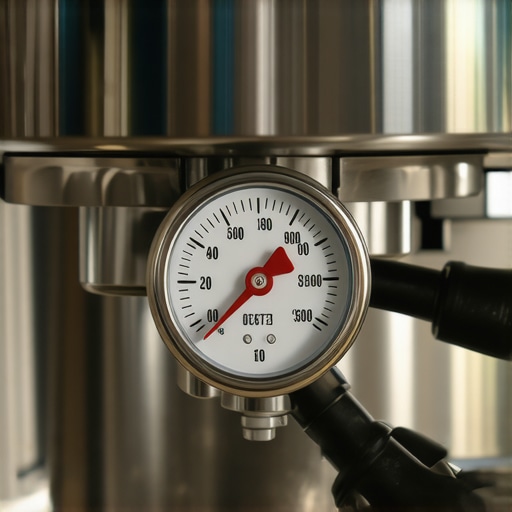
Why Your Espresso Pressure Gauge is Giving You False Readings
Blindly trusting the needle on your machine dashboard is a recipe for expensive frustration. After fifteen years of diagnosing high-end espresso machines and luxury kitchen installs, I can tell you that the pressure gauge is the most misunderstood component on your counter. Most owners treat it as an absolute truth, a digital-style readout of reality. It isn’t. It is a mechanical approximation often hampered by physics, scale, and cheap internals. If you are chasing the perfect shot based solely on that flickering needle, you are likely misdiagnosing your extractions and wasting premium beans. The result? Inconsistent coffee and a failing pump.
The Engineering Reality
Pressure in a coffee machine is not a static number generated in a vacuum. It is the result of resistance. In most luxury espresso machines, the gauge measures pressure at the pump or the boiler, not at the puck where the actual extraction happens. This is a critical distinction. A vibratory pump might show eleven bars on the dial, but due to the distance and the expansion valve settings, the group head might only see eight. This discrepancy is why understanding 4 reasons to choose a rotary pump over a vibratory pump for espresso becomes vital for those seeking actual precision. Rotary pumps offer a more linear, stable output that translates more accurately to the face of the gauge. When the needle jumps or oscillates wildly, it is usually a sign of air trapped in the system or a failing capacitor in the pump motor. The physics of fluid dynamics dictates that any air pocket will compress, acting as a shock absorber that prevents the gauge from reflecting the true hydraulic pressure against the coffee bed.
Scale Buildup in the Capillary
The most common technical truth ignored by casual users is the size of the copper tubing feeding the gauge. These capillary tubes are incredibly narrow. It takes a microscopic amount of calcium carbonate to create a partial blockage. When this happens, the gauge becomes sluggish. It might take five seconds for the needle to move even after the pump is fully engaged. You might assume your grind is too fine, but the reality is a restricted flow to the manometer itself. This is why how water hardness quietly destroys your espresso flavor is a lesson every owner must learn early. Once that tube is scaled over, no amount of backflushing will fix the reading. You are looking at a mechanical teardown. I have seen gauges that remained stuck at four bars even when the machine was off, simply because scale had locked the internal bourdon tube in place. It is a slow, silent killer of accuracy.
False Readings from Overpressure Valves
The Overpressure Valve, or OPV, is the gatekeeper of your machine’s safety and extraction quality. Its job is to bleed off excess pressure to maintain a steady flow. However, if the OPV seat is pitted or the spring has lost its tension, it will oscillate. This causes the gauge needle to vibrate so fast it looks like a blur. You might think the machine is working hard; in reality, it is failing to hold a seal. This is frequently why how to diagnose a clogged solenoid valve in your espresso machine is a necessary skill, as these components work in tandem to manage the internal hydraulic environment. If the solenoid isn’t seating perfectly, the pressure path is compromised, and your gauge becomes a random number generator. According to the Specialty Coffee Association (SCA) standards, even a one-bar deviation can significantly alter the solubility of the coffee oils, turning a sweet shot into a bitter mess.
The Messy Reality of Gauge Failure
I remember a client in a high-rise luxury kitchen who couldn’t understand why his twenty-thousand-dollar setup was pulling sour shots despite the gauge showing a perfect nine bars. The smell of scorched insulation was the first clue. We pulled the casing and found a pinhole leak in the manifold spraying a fine mist directly onto the back of the manometer. The moisture had corroded the internal gears. The needle was physically stuck against the glass, giving a false sense of security while the pump was actually cavitating. This is the operational risk of relying on visual cues over sensory ones. You must listen to the pump. A healthy pump has a deep, consistent thrum. A struggling one has a high-pitched, metallic whine that no gauge can properly illustrate. Furthermore, you should verify what you see. Using a bottomless portafilter provides a visual confirmation of the flow that a gauge simply cannot match. If the gauge says nine bars but the coffee is gushing, the gauge is lying.
Market Corrections and Future Tech
The industry is moving away from analog manometers. In the next 12 to 24 months, expect to see a surge in digital transducers mounted directly at the group head. These sensors bypass the lag of copper capillary tubes and provide real-time data to a PID controller. This eliminates the mechanical error inherent in spring-and-gear gauges. We are also seeing stricter regulations regarding lead content in brass components, which is forcing manufacturers to use stainless steel internals that are less prone to the pitting that causes needle drift. If you are planning a dedicated circuit for your espresso setup, ensure you are also looking at machines that offer digital pressure profiling. The mechanical gauge is becoming a heritage aesthetic rather than a professional tool.
Executive Verdict
If your pressure gauge is erratic, do not immediately change your grind settings. First, perform a static pressure test with a blind filter. If the needle doesn’t hit your target and stay there without vibrating, your problem is mechanical. My recommendation? Treat the gauge as a secondary reference. Trust your scales and your timer first. If the flow rate is correct and the taste is balanced, the needle position is irrelevant. If the gauge is dead or stuck, replace it with a liquid-filled manometer which dampens vibration and lasts significantly longer in high-heat environments. For those in a luxury kitchen environment, maintenance isn’t a suggestion; it’s a requirement for precision.
FAQ
Why does my needle vibrate during the shot?
This is usually due to the rapid pulses of a vibratory pump or a slightly loose Overpressure Valve spring. It does not always mean the pressure is fluctuating, just that the gauge isn’t dampened.
Can I calibrate my own pressure gauge?
Most analog gauges on home machines are not adjustable. Calibration is usually done by adjusting the OPV on the pump, not the gauge itself.
Why does the pressure drop suddenly at the end of a shot?
As the coffee puck erodes, resistance decreases. A drop of 0.5 to 1 bar is normal. A total collapse indicates channeling.
Is a liquid-filled gauge better?
Yes. The glycerin inside the gauge dampens the needle’s movement, protecting the internal gears from vibration and making the reading much easier to see accurately.