
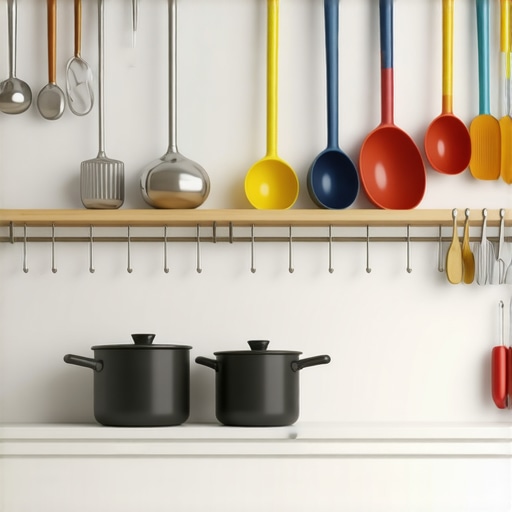
The Best Way to Store Large Pasta Pots in Small Kitchens
Buying a 12-quart premium cookware set is a milestone for any home chef, but it immediately creates a spatial crisis. Most small kitchen designs fail because they treat every pot as a uniform object. They aren’t. Large stockpots are structural anomalies that consume high-value volume while remaining underutilized for 90% of the week. After twenty years of designing high-end culinary spaces, I have seen homeowners resort to storing these beasts in the oven or, worse, on top of the refrigerator. Both are tactical errors. Oven storage creates a preheating friction that discourages cooking. Refrigerator storage exposes fine metals to grease and dust. The stake here is simple: if you cannot access your equipment without a logistical battle, you will not use it. My firm has salvaged hundreds of square feet in compact floor plans by treating the pasta pot as a primary engineering constraint rather than an afterthought.
The Mechanical Failure of Standard Cabinetry
Standard base cabinets are 24 inches deep with a single half-shelf. This is the ‘Dead Zone.’ When you shove a heavy pasta pot into that abyss, you are essentially burying it. The cost-benefit analysis of standard cabinets reveals a massive deficit in accessible cubic inches. To fix this, we look at the load-bearing capacity of the hardware. A high-quality stainless steel pot has significant mass. Standard drawer slides will bow and eventually seize under this weight. We utilize heavy-duty, full-extension glides rated for 100 pounds or more. This allows the pot to come to you. No kneeling. No digging. The clank of the manifold against a flimsy cabinet side is a sound of the past. If you are dealing with a poorly planned under-counter setup, the heat from nearby dishwashers can even warp low-grade melamine shelving. The technical truth? You need moisture-resistant, high-density plywood with vertical dividers.
The Vertical Integration Strategy
Stop thinking about horizontal shelf space. Start thinking about the ‘Lid Problem.’ A lid adds three inches of height and makes stacking impossible. The solution? Vertical lid slots installed on the interior of a deep drawer face or a dedicated narrow pull-out. This separates the volume of the pot from the surface area of the lid. By nesting smaller pans inside the large pasta pot—protected by felt liners—you reclaim the center of the pot as storage. This is a recursive use of space. In my experience, the most efficient small kitchens utilize a ‘Deep Drawer’ system located directly beneath the primary cooktop. This minimizes the ‘Work Triangle’ distance. We often find that the difference between bonded and layered metals affects the weight distribution in these drawers, so we calibrate the soft-close tension accordingly.
The Scullery and Modern Renovations
We are seeing a shift in the local market. Homeowners are moving away from having everything on display. The trend for the next 24 months is the ‘Hidden Kitchen’ or the ‘Working Scullery.’ If your main kitchen is small, the strategy is to offload the bulky items to a peripheral zone. Integrating a scullery into your renovation allows you to keep your pasta pots, heavy stand mixers, and large air fryers out of the primary sightline. This is not just an aesthetic choice; it is a regulatory one in some high-end condo developments where ‘open-concept’ rules require a clutter-free visual. According to reports from the National Kitchen & Bath Association (NKBA), ergonomic storage solutions are the number one requested feature in urban remodels. Following architectural standards for ‘Universal Design’ ensures that as you age, you aren’t lifting a 15-pound pot from a floor-level cabinet.
The Executive Verdict
If you are in a small kitchen, stop trying to fit a professional kitchen’s worth of gear into 1950s-era cabinets. Sell the items you don’t use. For the pasta pot, invest in a heavy-duty deep drawer with a 110-degree opening radius. If you cannot modify the cabinetry, use a heavy-duty ceiling rack. Ceiling racks are the ‘Modern Disruptor’s’ way of utilizing the most underused real estate in the room: the air. My recommendation? Buy the highest-rated pull-out hardware you can afford. Your back and your cookware will thank you. The result? Avoidable failure bypassed through smart engineering.
Common Storage Questions
Is it safe to stack cast iron inside my pasta pot? Only if you use a protective barrier like silicone mats. Without it, the abrasive texture of the iron will micro-scratch the stainless steel or copper lining, leading to hot spots and eventual degradation.
How do I stop my deep drawers from sagging? You must verify the weight rating of your slides. Most ‘builder-grade’ slides are rated for 35 lbs. Luxury kitchen pots often exceed this when stacked. Upgrade to 100-lb rated tandem-box systems.
Should I store my pot with the lid on or off? Off. Storing with the lid on can trap residual moisture if the pot isn’t 100% dry, leading to a stale smell or even oxidation. Use a vertical lid organizer for better airflow and space management.