
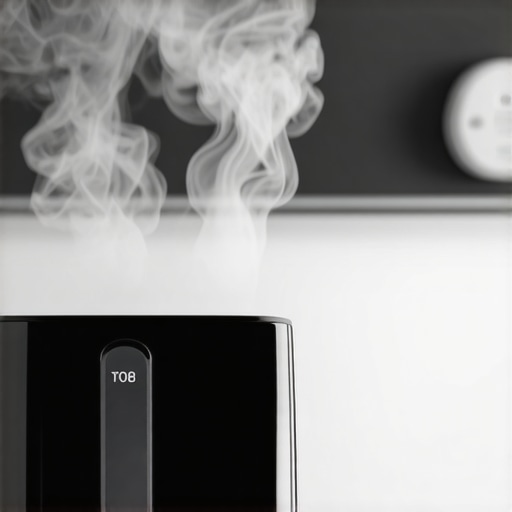
How to Stop Your Air Fryer from Setting Off the Smoke Alarm
The air fryer is a miniature convection powerhouse, yet it remains the most common culprit for unannounced fire drills in high-end kitchens. This is not a failure of the technology. It is a failure of thermal management. When you push a high-velocity fan to circulate air at 400 degrees Fahrenheit within a confined cubic foot of space, you aren’t just cooking; you are creating a high-pressure environment for aerosolized lipids. After fifteen years of optimizing luxury kitchen workflows, I have seen $50,000 range hoods beaten by a single basket of greasy chicken wings. The stake is higher than a loud noise. It is about preventing the long-term degradation of your kitchen’s air quality and the oily residue that settles on custom cabinetry. The result? Avoidable failure.
Thermal Flash Points and Lipid Shearing
To solve the smoke problem, we must look at the engineering of heat transfer. Most users treat the air fryer like a standard oven, but the physics differ. In a standard oven, the air is relatively stagnant. In an air fryer, the rapid airflow shears microscopic particles of oil and moisture off the food surface. These particles are then sucked upward, directly into the red-hot heating element. If the oil you used has a smoke point lower than your cooking temperature, it will atomize and ignite on contact with the coil. This is why choosing the right oil for high-heat air frying is the difference between a perfect sear and a kitchen full of blue haze. Avocado oil, with its 520-degree flash point, remains stable. Extra virgin olive oil? It breaks down at 375, turning into an acrid, visible gas the moment it hits the fan.
The Hidden Reservoir of Scorched Carbon
The mess is often where you cannot see it. I recently inspected a professional-grade unit that consistently triggered alarms despite using no oil at all. The culprit was the heating element guard. Over months of use, tiny droplets of rendered fat from bacon and ribeyes had splattered upward and carbonized against the heating coil. When the unit reached operating temperature, that old carbon ignited. This is the reality of ‘self-cleaning’ myths. You must physically inspect the ceiling of the air fryer chamber. If you smell the sharp, metallic tang of burning grease before the food is even hot, your machine is holding onto a history of past meals. Using specialized cleaning methods for air fryers to remove this build-up is the only way to reset the thermal baseline of the appliance.
Operational Risks of the Parchment Trap
Many home chefs attempt to mitigate the mess by using parchment paper or silicone liners. This is a strategic error if executed poorly. If the paper is not weighted down perfectly by the food, the high-speed intake will suck the paper into the heating element. I have seen this lead to literal internal fires. The sensory anchor here is unmistakable—the smell of burning wood pulp and the sudden cessation of the fan’s hum. Beyond the fire risk, these liners block the very airflow that makes the machine effective. You end up with soggy results, which often leads to the user increasing the cook time, further overheating the residual oil in the tray. If you are struggling with texture, remember that perfect crispy skin requires unobstructed air movement, not more heat.
Macro Trends in Indoor Air Quality
The industry is shifting. We are seeing a move toward integrated filtration systems within the appliances themselves, but for now, the burden remains on the kitchen’s ventilation. Current 2025 building standards are increasingly focused on PM2.5 particulates—the tiny soot particles released during high-heat cooking. Most ‘recirculating’ microwave vents are useless against the output of a high-performance air fryer. You need a solution that actually moves air. Understanding how to select a range hood that actually vents is becoming a requirement for modern homeowners who value respiratory health as much as aesthetics. Expect future air fryers to include HEPA-grade exhaust filters as standard equipment within the next 24 months.
The Executive Verdict
My recommendation is a hard ‘Sell’ on the use of aerosolized ‘non-stick’ sprays, which contain lecithin that gums up the fan blades and heating elements. Instead, ‘Buy’ into a high-quality oil mister filled with avocado or grapeseed oil. If you are in a situation where the alarm triggers every time you cook protein, your maintenance debt has come due. Clean the heating element with a non-abrasive degreaser and only cook at temperatures 25 degrees below the smoke point of your fat. This is the only way to maintain the integrity of a luxury kitchen environment.
FAQ
Why does my air fryer smoke even when I use no oil?
Residual grease from previous sessions has likely coated the heating element or the ceiling of the cooking chamber. As the unit heats, this old fat carbonizes and smokes.Can I put water in the bottom of the air fryer to stop smoke?
A tablespoon of water can help catch dripping fat and prevent it from smoking in the bottom tray, but do not exceed this amount or you will steam your food instead of frying it.Does the brand of air fryer matter for smoke production?
Units with exposed heating elements are more prone to smoking than those with shielded coils. Engineering quality matters, but user maintenance is the primary factor.