
How to Choose a Range Hood That Actually Vents Smoke
Performance ventilation is not an accessory; it is the respiratory system of your kitchen. If you walk into your home twelve hours after searing a steak and still smell the rendered fat, your ventilation system has failed. Most luxury kitchen designs prioritize the aesthetic of the hood shell over the physics of the blower. After fifteen years of diagnosing grease-saturated cabinetry and failed motor bearings, I can tell you that a pretty hood is often a useless one. The stake is clear: poor ventilation leads to particulate matter buildup on your premium cookware, respiratory irritation, and permanent damage to your home’s finish. Design must follow the laws of fluid dynamics, or it is merely expensive decoration.
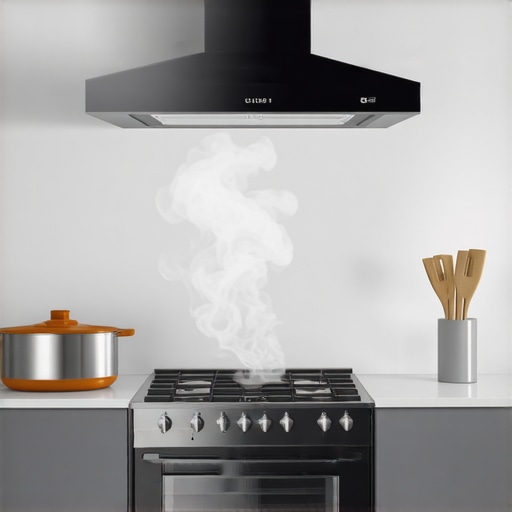
The engineering reality starts with Cubic Feet per Minute (CFM), but that is only half the story. Most people buy a high-CFM blower and assume the problem is solved. It isn’t. Without a proper capture area and managed static pressure, that air moves nowhere. A shallow hood—the kind that looks sleek and flush—cannot physically contain the plume of smoke produced by a high-heat sear. [IMAGE_PLACEHOLDER] The smoke hits the flat surface, spills out the sides, and enters your living space before the fan can even react. You need a hood with a reservoir, a deep recess that holds the smoke until the blower can evacuate it. This is why why your kitchen hood doesn’t actually clear out any smoke despite having a high power rating. It lacks the volume to trap the initial surge.
The Physics of Static Pressure and Ducting
Ducting is the silent killer of performance. I have seen 1,200 CFM blowers choked down to 400 CFM because the installer used six-inch flexible ducting. Flex duct is a disaster. The ridges create turbulence, and the grease traps in the valleys, creating a fire hazard. Use rigid galvanized steel. Keep the runs short. Minimize elbows. Every 90-degree turn in your ducting is equivalent to adding ten feet of pipe length in terms of resistance. If you are using air fryers or heavy-duty stand mixers that generate steam, the humidity alone can cause issues if the ducting isn’t sealed with high-temp foil tape. In many cases, people wonder why your multi-clad stainless steel pans are warping on induction, and while heat is the culprit, the lack of cooling airflow from a functional hood often accelerates the thermal stress on the surrounding environment.
Static pressure is the resistance the blower must overcome. The smaller the pipe, the higher the pressure. If the blower isn’t rated for high static pressure, it will spin but won’t move air. It’s like trying to breathe through a cocktail straw while sprinting. This technical mismatch is why commercial kitchens use massive, deep hoods and 10-inch or 12-inch ducts. If you are serious about your kitchen, stop looking at the exterior finish and start asking for the blower’s performance curve. The Home Ventilating Institute (HVI) provides standardized ratings that you should verify before purchase. A professional installation should always include a calculation of the total equivalent duct length to ensure the motor can actually perform as advertised.
The Messy Reality of Make-up Air
Modern homes are built airtight. This is great for your energy bill but terrible for your range hood. When you turn on a 1,000 CFM fan, it tries to pull 1,000 cubic feet of air out of your house every minute. If your house is sealed, that air has to come from somewhere. Often, it gets pulled down your water heater vent or fireplace chimney—a process called backdrafting. This brings carbon monoxide into your home. The result? A silent, lethal failure. In many jurisdictions, building codes now require a Make-up Air (MUA) system for anything over 400 CFM. This is an automated damper that opens to let fresh air in when the hood is on. Skip this, and your expensive hood will struggle to clear a simple pan-sear. You might as well be using a damp towel to wave the smoke away. This also impacts other high-end appliances; for instance, the ambient temperature and air quality can even affect the performance of espresso machines, as dust and grease particles can clog delicate sensors over time.
Sensory anchors tell the story best. Imagine the clank of the heavy-gauge baffle filters as you slide them into place. Baffles are superior to mesh filters because they force the air to change direction rapidly. The heavier grease particles can’t make the turn and get trapped in the channels. Mesh filters, conversely, clog instantly and restrict airflow within weeks. If you aren’t cleaning your filters, your hood is useless. You wouldn’t think of why you should stop putting your best chefs knife in the dishwasher without understanding the damage to the steel; apply that same logic to your ventilation. Neglect the filters, and you’re just recirculating grease-laden air back into your face. I have seen kitchens where the owner spent fifty thousand on cabinets, only to have them coated in a tacky, yellow film because they didn’t want to hear the noise of a proper blower.
Strategic Foresight: The Future of Kitchen Air
Over the next 24 months, I expect to see massive regulatory shifts toward indoor air quality (IAQ) monitoring. We are already seeing