
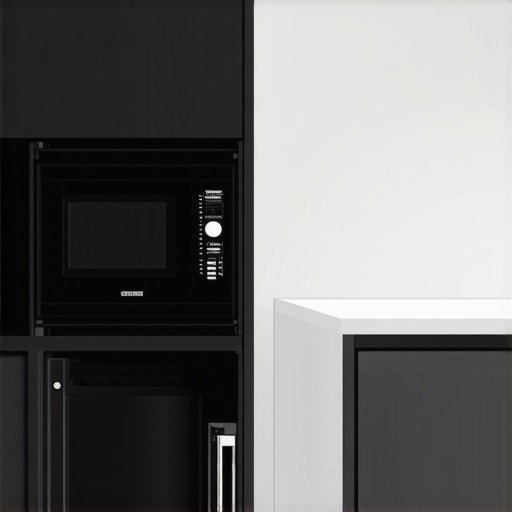
How to hide your microwave without losing counter space
Counter space is the most valuable real estate in a luxury kitchen. After fifteen years of designing and installing high-end kitchen layouts, I have witnessed homeowners sacrifice thousands of dollars in premium granite or quartz to a bulky, plastic-faced microwave. It is a design failure. The microwave is a functional necessity for most, but its presence on a countertop is an aesthetic intrusion that disrupts the visual flow of a professional-grade workspace. To hide this appliance effectively, you must think beyond merely shoving it into a cupboard. You must account for thermal management, ergonomic heights, and the structural integrity of your cabinetry.
The cost of getting this wrong is steep. A poorly ventilated microwave trapped inside a tight cabinet will eventually cook its own magnetron. The repair bill for a scorched custom cabinet face often exceeds the price of the appliance itself. My firm has replaced dozens of warped cabinet doors because a DIY enthusiast ignored the basic laws of thermodynamics. High-end kitchens deserve better. We approach this as an engineering challenge: how do we maintain the utility of rapid heating while preserving the clean lines of a luxury environment?
The Engineering Reality of Recessed Appliance Design
True integration requires a deep understanding of clearance requirements. Most standard microwaves require at least two inches of breathing room on all sides to prevent overheating. When we design a built-in cavity, we prioritize airflow. One of the most effective methods involves the appliance garage—a dedicated station with a lift-up or pocket door. This allows the microwave to remain at eye level for safety while vanishing behind a matched wood panel when dormant. However, the depth of the cabinet is the critical variable. Avoiding the countertop depth mistake that makes your kitchen feel tight is essential here; if your cabinets are too shallow, the microwave won’t sit flush, creating a clunky protrusion that ruins the sleek aesthetic.
Another technical solution gaining traction is the microwave drawer. Unlike traditional swing-door models, drawers are engineered to be installed under the counter, often within a kitchen island. This placement saves upper cabinet space for glassware and keeps the primary work surfaces clear. By positioning the unit in the island, you also solve power supply issues. I always advocate for why your kitchen island should have outlets on both ends to ensure that heavy-draw appliances like microwave drawers don’t overload a single circuit or require messy extension cords. The weight of industrial-grade steel in these drawer units provides a tactile sense of quality that a countertop unit lacks.
The Risks of Poor Implementation
Implementation is where the vision often meets a messy reality. I recall a project where a client insisted on hiding a standard countertop microwave inside a deep pantry without adding a dedicated vent. Within three months, the smell of scorched oak filled the kitchen. The steam from a simple bowl of soup had nowhere to go, saturating the cabinet interior and causing the finish to peel. This is why professional installers look for the kitchen cabinet gap that makes your space look unfinished and use it as an opportunity for discreet ventilation. If you are not venting the heat, you are building a slow-motion fire hazard.
Furthermore, the physical height of the hidden unit matters. Placing a microwave too high—such as above a wall oven—creates a safety risk when handling hot liquids. Placing it too low without a drawer mechanism forces the user into an awkward crouch. According to the National Kitchen & Bath Association (NKBA) standards, the bottom of the microwave should be no more than 54 inches above the floor to ensure ergonomic safety for the average user. Ignoring these measurements results in a kitchen that looks beautiful but functions poorly.
The Evolution of Kitchen Integration
The market is shifting. Over the next 24 months, I expect a total departure from the standalone microwave in luxury builds. We are seeing a move toward speed ovens—units that combine convection, broiling, and microwave technology into one sleek, wall-mounted package. These units are designed to be seen, but they are integrated so tightly that they appear as part of the architecture rather than an after-thought. We are also seeing a rise in “hidden kitchens” where entire appliance banks are concealed behind motorized pocket doors. While impressive, these systems require precise hardware that won’t sag under the weight of the panels. If your ventilation isn’t perfect, you will find why your kitchen hood doesn’t actually clear smoke or steam effectively when the doors are closed, leading to moisture buildup.
The Executive Verdict
If you are currently renovating, my recommendation is to invest in a microwave drawer. It is the only solution that truly solves the counter space problem while maintaining high-end ergonomic standards. If a drawer isn’t in the budget, the next best option is a custom-built cubby with a trim kit. A trim kit provides the necessary venting gaps while masking them with a stainless steel frame that matches your other appliances. This creates a cohesive look without the risk of heat damage. Avoid the urge to just put a door in front of a standard microwave unless you are prepared to leave that door open every time the unit is in use.
Common Questions Regarding Hidden Microwaves
Can I put a regular microwave in a closed cabinet?
Only if the cabinet is specifically designed for it with adequate ventilation and the door remains open during operation. Without a trim kit or active cooling, the heat buildup will shorten the lifespan of the appliance and potentially damage your cabinetry.
What is the best height for a hidden microwave?
For a microwave drawer, under-counter height (about 30-36 inches) is ideal. For a wall-integrated unit, keep the base between 48 and 54 inches from the floor to avoid reaching over your head with hot items.
Do microwave drawers require special electrical work?
Yes. Most require a dedicated 120V, 15-amp or 20-amp circuit. You should never run a high-draw appliance like a microwave on the same circuit as your refrigerator or dishwasher to avoid tripping breakers during peak meal prep times.