
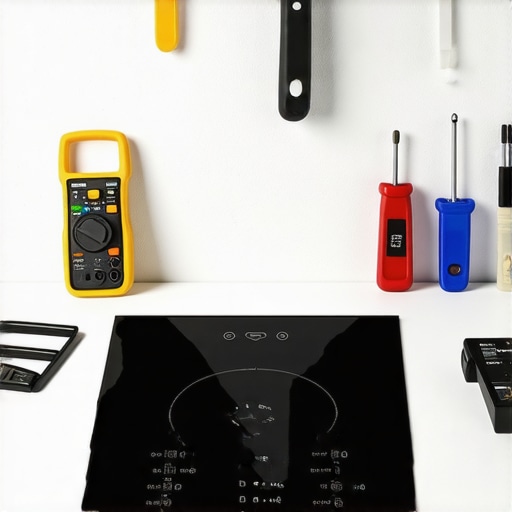
How to Fix the E1 Error on Your Induction Cooktop
An E1 error on a high-performance induction surface is rarely a random software glitch. It is a fundamental warning about a communication breakdown between the electromagnetic coil and your cookware. In my fifteen years overseeing the installation of luxury kitchen suites, I have seen this specific error code lead to thousands of dollars in avoidable repair bills because owners treated it as a suggestion rather than a hard stop. The E1 code is a circuit protection measure. It prevents thermal runaway. If you ignore it, you risk frying the Insulated-Gate Bipolar Transistor (IGBT) on the power board. The result? Total component failure.
The Engineering Reality
Induction cooking operates on the principle of magnetic resonance. A copper coil beneath the glass-ceramic surface generates an oscillating magnetic field. This field induces an electric current—an eddy current—directly into the base of your pan. When the E1 error appears, the system is reporting that the pan detection sensor cannot find a compatible load or the circuit is overheating due to resistance issues. This is often an issue with the pan material. Even pans labeled as ‘induction ready’ sometimes lack the necessary ferrous density to maintain a stable connection. Using 5-ply pans ensures better magnetic coupling and prevents these communication drops. The heat must transfer into the steel, not back into the internal electronics. When heat builds up under the glass without moving into the food, the sensor trips. It is a safety measure defined by the International Electrotechnical Commission (IEC) standards for household cooking appliances.
The Mechanics of Magnetic Misalignment
The cost of operating a mismatched system is steep. High-end induction units use Pulse-Width Modulation (PWM) to control the heat. If the pan diameter is too small for the burner, the magnetic field ‘leaks,’ creating electromagnetic interference and stressing the inverter. You might notice a sound before the error hits. If you hear a high-pitched whine, you should investigate why your induction stove makes your pans hum before the E1 code locks the interface. Precision in your cookware choice is the only path to restaurant-quality sears on induction ranges without damaging the sensitive bridge rectifiers inside the machine.
Why Standard Fixes Fail
Most DIY advice tells you to ‘unplug it and wait.’ This is a temporary band-aid. While a hard reset clears the error from the volatile memory, it does nothing to address the operational risk of a warping pan or a failing cooling fan. I remember a client in a high-end penthouse who experienced recurring E1 errors. They kept resetting the breaker. Eventually, the smell of scorched circuitry—that acrid, metallic scent of melting thermal paste—filled the room. The inverter board had literally melted. They had been using thin, stamped-steel pans that were warping under high heat, breaking the contact with the sensors. The system was trying to save itself. They didn’t let it. This illustrates why professional integrated panel appliances require high-torque electrical stability and matched cookware to function long-term.
Market Corrections Ahead
The next 18 months will see a shift in how induction systems report errors. We are moving toward proactive diagnostics where the stove will throttle power before an E1 error even triggers. This change is driven by the Association of Home Appliance Manufacturers (AHAM) to reduce warranty claims. For the owner, this means your choice of cookware will be even more restricted. Cheap ‘hybrid’ pans will be rejected by the software immediately. The industry is moving toward total integration of the cooking vessel and the power source. If your pan isn’t perfectly flat and highly magnetic, your stove simply won’t turn on.
Final Assessment
If you see the E1 error, stop the cooking cycle immediately. Do not just cycle the power. First, verify that the pan is truly induction-compatible with a high-strength magnet. If the magnet doesn’t snap to the bottom with force, the pan is the problem. Second, ensure the pan diameter matches the burner ring. Third, check the ventilation under the cabinet. A blocked intake fan will cause the internal sensors to throw an E1 code due to ambient heat buildup. If you are in a situation where the error persists with high-quality pans, the internal thermal sensor has likely drifted out of calibration and needs professional replacement. Stop using the unit until it is serviced. Protecting the inverter is your financial priority.
Frequently Asked Questions
Can I use a cast iron skillet if I get an E1 error?
Yes, cast iron is highly ferrous and usually resolves E1 issues caused by poor pan detection, provided the bottom is flat and does not scratch the glass.
Does a hard reset damage the cooktop?
A hard reset is safe occasionally, but if you do it daily to bypass an E1 code, you are bypassing a safety feature that protects the motherboard from overheating.
Why does the error only happen on high heat?
High heat requires more power through the IGBTs. If there is a slight resistance issue or poor pan contact, the heat buildup is faster, triggering the thermal safety sensor quicker than at lower settings.
Will a thin pan cause an E1 error?
Often, yes. Thin pans cannot dissipate the energy fast enough, causing the base to overheat locally, which trips the sensors designed to protect the glass-ceramic surface.