
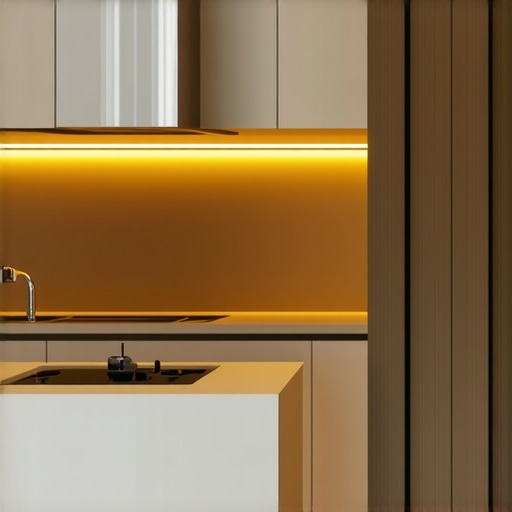
How to Design a Kitchen That Increases Your Home’s Resale Value
Designing a kitchen for resale is not a pursuit of aesthetics. It is a calculated exercise in engineering a high-yield financial asset. Most homeowners fail because they prioritize trends over structural and mechanical longevity. After running this company for fifteen years, I have seen ‘luxury’ renovations crumble under the weight of poor material choices and inefficient layouts. The stake is simple: a poorly executed kitchen can stagnate a listing for months, while a technically superior one drives bidding wars. High-end buyers in 2025 do not just look at the stone; they look at the hardware, the ventilation capacity, and the grade of the appliances.
The Engineering Reality of Cabinetry and Surfaces
Your cabinetry is the skeleton of your investment. If you choose inferior materials, you are building on sand. Many builders use particle board to save on margins, but the savvy buyer knows that plywood vs. particle board cabinetry is a debate where plywood wins every time for durability and moisture resistance. The smell of fresh adhesive from cheap MDF is a red flag to the trained nose. Instead, focus on the weight. High-density materials feel different. They sound different when a drawer closes. This is why the ROI of a high-end kitchen renovation is so high when you focus on the ‘bones.’ For countertops, avoid the soft traps of marble. Choose quartzite or high-grade granite. Buyers want to know they can sear a steak in premium cookware without etching the surface. It is about technical performance under heat and pressure.
The Appliance Ecosystem and Performance Metrics
A luxury kitchen is defined by its mechanical output. An under-powered range hood is a liability. A refrigerator that cannot maintain a consistent 37-degree environment is a failure. For serious resale value, you need to integrate professional-grade tools. This includes dedicated zones for espresso machines and high-torque stand mixers. However, do not clutter the visual plane. The modern solution is hidden pantries for small appliances like air fryers and blenders. This maintains the clean lines of a luxury kitchen while providing the utility of a commercial workspace. I always recommend induction cooking precision over standard electric. It is faster, safer, and shows that the home is ready for future energy standards. The National Kitchen & Bath Association (NKBA) reports that energy-efficient, high-performance appliances are the top request for high-net-worth buyers.
Implementation Risks and The Reality of Wear
Things break. I have walked into multi-million dollar homes where the ‘designer’ faucet wobbled because the sink deck was too thin. Or the dishwasher was so loud you couldn’t have a conversation. The clank of a cheap manifold is the sound of a bad investment. One local client spent sixty thousand on cabinets only to have the hinges sag after two years because they weren’t rated for the weight of the solid wood doors. Avoid this. Focus on the ‘touch points’—handles, hinges, and sliders. If it feels flimsy, it is flimsy. According to the National Association of Realtors (NAR), kitchens remain the top room for recouping costs, but only if the quality is consistent throughout. A high-end range paired with a cheap backsplash is a mixed signal that kills trust.
Market Corrections and Strategic Foresight
The market is shifting away from ‘disposable luxury.’ Buyers now want repairability and substance. In the next 24 months, we expect to see a surge in demand for kitchens that accommodate multi-generational living and advanced home-cooking techniques. This means more prep sinks, dual ovens, and integrated vacuum sealers. If you are designing for 2026, think about the infrastructure. Is your electrical panel ready for two ovens and a commercial-grade espresso setup? Is your plumbing optimized for a pot filler? These ‘invisible’ upgrades often provide more value than a fancy paint color.
The Executive Verdict
If you are looking to maximize resale, follow this strategy: Invest 60% of your budget in the ‘bones’ (cabinets and layout), 30% in high-performance appliances, and 10% in aesthetics. Do not over-customize. Keep the colors neutral but the materials superior. High-grade wood, real stone, and heavy-gauge steel. The result? A kitchen that speaks for itself during a walkthrough.
Frequently Asked Questions
Does a kitchen island always add value? Yes, provided it does not interrupt the work triangle. It must offer utility, such as a prep sink or storage, not just extra counter space.
Are smart appliances worth the extra cost for resale? Only if they solve a problem. A fridge that tracks your milk is a gimmick; a stove with precision temperature probes is a tool. Buyers pay for tools.
What is the biggest mistake in kitchen design? Choosing form over function. A beautiful kitchen that is hard to cook in will be rejected by the market. Proper lighting and ventilation are non-negotiable.
Should I replace my old gas range with induction? For high-end resale, yes. Induction is currently viewed as the more modern, premium option due to its safety and speed.