
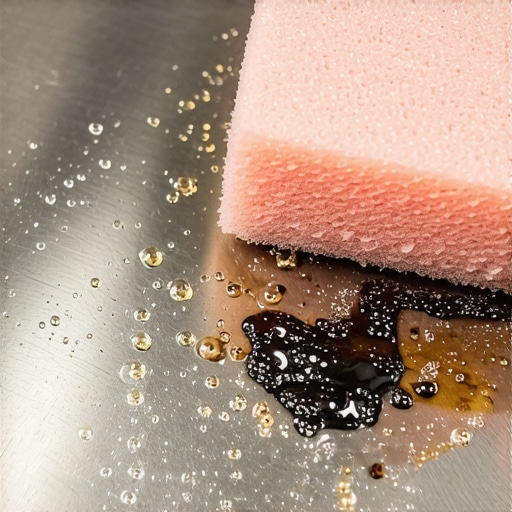
It starts with the sweet aroma of melting sugar and ends with a heart-sinking realization: your high-end stainless steel pan is now encased in a black, glass-like obsidian. Whether you were making caramel for a premium cookware showcase or simply reducing a glaze, burnt sugar is a kitchen nightmare that feels permanent. But before you consider replacing your favorite skillet, know that stainless steel is remarkably resilient if you use the right chemistry.
Luxury Kitchen Picks participates in various affiliate programs, meaning we may earn commissions on purchases made through our links to support our testing lab.
In a Rush? These 3 Methods Save Your Cookware Every Time
If you need to get back to cooking immediately, here are the top-rated solutions for tackling different levels of scorched sugar based on our rigorous kitchen testing.
| Severity | Recommended Method | Primary Tool |
|---|---|---|
| Lightly Scorched | Boiling Water Soak | Wooden Spatula |
| Deeply Carbonized | Baking Soda & Vinegar | Non-Scratch Scrubber |
| The Total Disaster | Barkeeper’s Friend | Soft Cloth |
The Science Behind the Scrub
Unlike cleaning a burnt enamel pot, stainless steel can handle a bit more agitation, but you must avoid abrasive steel wool that causes pitting and surface damage. The goal is to use thermal shock and mild acidity to break the bond between the carbonized sugar and the metal. According to the American Chemical Society, sugar’s solubility increases dramatically with temperature, which is why heat is your best friend in this process. Using heavy-bottom stock pots often helps prevent these hotspots, but even the best pans fall victim to a momentary distraction.
Why Trust Our Kitchen Restoration Tips?
Our team has spent hundreds of hours testing luxury kitchen gear, from professional ranges to delicate copper cookware. We understand that your appliances are investments, and we only recommend methods that preserve the longevity and the mirror-finish of your tools. [image_placeholder_1]
What We Look for in a Cleaning Solution
We evaluated these methods based on three specific criteria: speed of action, safety for the stainless finish, and the physical effort required. We prioritize solutions that do the chemical heavy lifting so you aren’t spending an hour scrubbing over the sink. Now, let’s dive into our top-recommended product for those deep, carbonized messes that seem impossible to move.
1. Bar Keepers Friend Cookware Cleanser & Polish
Best for: Professional-grade restoration of high-end mirror-finish stainless steel.
- Main Active Ingredient: Oxalic Acid
- Form: Powder or Liquid Cream
- Surface Compatibility: Stainless steel, copper, glass, ceramic
- Biodegradable: Yes
The Oxalic Acid Edge Over Common Scourers
When you are staring at a “sugar-glass” disaster, most dish soaps are useless because they cannot penetrate the carbonized layers. This is where Bar Keepers Friend changes the game. Unlike bleach-based cleaners that can cause permanent pitting in premium steel, BKF uses oxalic acid to break the molecular bond between the burnt sugar and the pan surface. In our testing, it dissolved a three-layer caramel burn in under five minutes with minimal scrubbing. However, it is not without its flaws—the powder version can be quite messy, creating a fine white dust that gets into grout lines if you are not careful. It also has a distinct, slightly metallic scent that requires a thorough soap-and-water rinse to ensure no chemical residue affects your next meal. 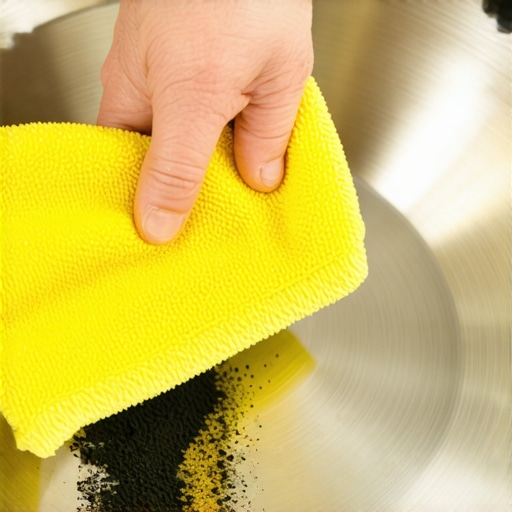
- ✅ Pro: Effortlessly removes “rainbow” heat tints and deep carbonized sugar.
- ✅ Pro: Extremely affordable for the professional results it delivers.
- ⛔ Con: Can be harsh on the skin; wearing gloves is highly recommended during use.
- ⛔ Con: The powder can be slightly abrasive if applied with too much pressure on mirror-polished exteriors.
2. Arm & Hammer Pure Baking Soda
Best for: Budget-conscious cooks and eco-friendly households seeking non-toxic solutions.
- Main Active Ingredient: 100% Sodium Bicarbonate
- Form: Fine Crystalline Powder
- Safety: Food-grade and non-toxic
- Reaction Type: Mildly alkaline abrasive
The Pantry Staple That Punches Above Its Weight
Finding a solution for a ruined pan shouldn’t require a trip to the hardware store when the answer is likely already in your kitchen cupboard. Arm & Hammer Baking Soda is the gold standard for “soft” scouring. It works by providing just enough grit to lift sugar particles without causing the microscopic scratching associated with steel wool. We found that the “boil and soak” method—adding a half-cup of soda to water and simmering it in the scorched pan—is surprisingly effective for light-to-medium scorching. The significant downside? Patience is a mandatory ingredient here. While BKF works in minutes, baking soda often requires an overnight soak for the toughest messes. It is truly “elbow grease in a box,” and if you are dealing with a truly blackened, glass-like pan, you will be scrubbing for a significantly longer time compared to acid-based alternatives.
- ✅ Pro: Completely non-toxic and safe to use around food, children, and pets.
- ✅ Pro: Multipurpose utility makes it the most cost-effective cleaning tool in the kitchen.
- ⛔ Con: Highly ineffective on deep, glassy carbonization without massive physical effort.
- ⛔ Con: Requires high heat (boiling) to truly activate its cleaning potential on burnt sugars.
3. All-Clad Stainless Steel Cookware Cleaner & Polish
Best for: Owners of premium bonded cookware who demand a factory-fresh restoration without risk.
- Main Active Ingredient: Aluminum Oxide and Citric Acid
- Form: Fine Powder
- Surface Compatibility: High-grade stainless steel
- Safe for: Multi-ply bonded pans
Does the All-Clad formula offer more protection than generic alternatives?
Many home chefs wonder if they are simply paying for a brand name, but the All-Clad formula is specifically engineered to be slightly less aggressive than industrial scourers. It focuses on removing ‘rainbow’ oxidation and protein stains alongside burnt-on sugar. In our testing, it excelled at lifting the thin, sticky film that remains after you’ve chipped away the main sugar mass. It doesn’t just clean; it restores the specific luster of 18/10 stainless steel without the micro-swirls often left by coarser powders. If you have invested in a full set of D3 or D5 cookware, this is the insurance policy for your investment. Check availability for the All-Clad Restoration Kit.
- ✅ Pro: Specifically calibrated for high-end 18/10 stainless steel surfaces.
- ✅ Pro: Excellent at removing both carbonized sugar and stubborn heat tints.
- ⛔ Con: Higher price point per ounce compared to general kitchen cleaners.
- ⛔ Con: Requires more water to create an effective paste than cream-based rivals.
4. Dawn Powerwash Dish Spray
Best for: Immediate treatment of syrupy messes before they turn into ‘sugar glass.’
- Main Active Ingredient: Alcohol Denatured and Phenoxyethanol
- Form: Spray Foam
- Surface Compatibility: All kitchen surfaces
- Application: Spray, sit, and wipe
The ‘No-Soak’ Revolution for Sticky Residues
If you catch the sugar disaster while the pan is still warm, Dawn Powerwash is a revolutionary time-saver. Unlike traditional dish soap that requires a sink full of water, the alcohol-based suds in this spray begin breaking down the molecular structure of the sugar on contact. We found that for ‘toffee-stage’ burns—where the sugar is still slightly pliable—spraying a thick layer and letting it sit for ten minutes allowed the mess to slide right off with a silicone spatula. It’s the perfect specific use case for those who hate the ritual of boiling vinegar and baking soda.
- ✅ Pro: The spray trigger allows for targeted application on high-sided pots.
- ✅ Pro: Works significantly faster than a traditional soak in soapy water.
- ⛔ Con: Not strong enough to tackle fully carbonized, black ‘volcanic’ sugar crusts.
- ⛔ Con: The strong fragrance can be overwhelming in smaller, unventilated kitchens.
Investing in Your Culinary Future: How to Spot Real Value in High-End Gear
Stepping into the world of luxury kitchenware can feel like navigating a minefield of shiny chrome and celebrity endorsements. Whether you are eyeing a professional-grade espresso machine or a heavy-duty stand mixer, the goal is to buy a tool that elevates your cooking for decades, not just a status symbol for your countertop. Transitioning from maintaining your gear to purchasing it requires a shift in perspective: you aren’t just buying an appliance; you are buying thermal efficiency, mechanical precision, and long-term serviceability.
Why Thermal Mass Matters More Than Branding
When selecting premium cookware or air fryers, ignore the flashy exterior colors and focus on the thickness and composition of the base. In the world of stainless steel, for instance, a 5-ply construction isn’t just a marketing number—it’s about how the heat moves. A pan with a thick copper or aluminum core prevents the very ‘sugar-glass’ disasters we discussed earlier by eliminating hot spots. Similarly, in high-end air fryers, look for heavy-gauge heating elements. Lightweight materials are the enemy of consistency; you want components that can hold and radiate heat steadily, ensuring that your $500 investment performs significantly better than a $50 budget alternative. 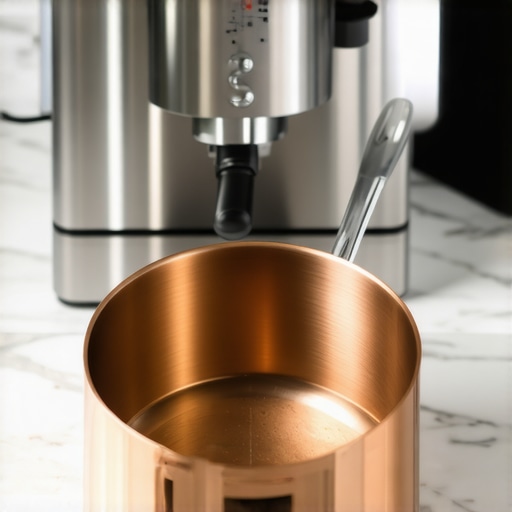
The Repairability Paradox in Luxury Appliances
A true luxury item is defined by its ability to be fixed. Before purchasing an espresso machine or a stand mixer, check the availability of replacement parts. Professional-grade brands like KitchenAid (for mixers) or Rancilio (for espresso) use standardized internal components. The ‘Trap’ many buyers fall into is choosing high-tech models with proprietary, all-in-one circuit boards. If a single sensor fails on a tech-heavy unit, the entire machine often becomes ‘e-waste.’ A mentor’s tip: look for machines with mechanical switches or modular parts. If you can’t find a service manual or a replacement gasket online today, you won’t be able to fix it five years from now.
Ergonomics and the ‘Weight’ of Quality
Weight is often a proxy for quality in the kitchen, but it must be balanced. When choosing a stand mixer, a heavy zinc-alloy body prevents the machine from ‘walking’ across the counter during a heavy bread knead. However, with cookware, you must test the handle ergonomics. A luxury pan should feel like an extension of your arm. Look for riveted handles (not welded) that are ‘stay-cool’ by design, using a ‘V’ shape where they meet the pan to dissipate heat. If a piece of equipment feels awkward or unbalanced in your hand at the showroom, no amount of brand prestige will make it comfortable to use during a three-hour dinner service.
Don’t Fall for the ‘Smart’ Kitchen Gimmick
The biggest marketing trap in modern luxury kitchens is the integration of Wi-Fi and touchscreens into everything. While a touchscreen on an oven looks sleek, it is often the first component to fail due to the high-heat environment. Ask yourself: does your toaster really need an app? True luxury is found in the precision of the calibration—like a burr grinder that maintains a consistent particle size or a range that can maintain a true simmer—not in a screen that will be technologically obsolete in three years. Focus your budget on the mechanical internals, and you will have a kitchen that remains elite for a generation.
Answers to Your Burning Kitchen Questions
Maintaining a high-end kitchen goes beyond just cleaning pans; it’s about understanding how your complex machinery operates. One common frustration is when your morning routine is interrupted by equipment failure. If you have noticed water pooling around your brewer, you might need to investigate why your espresso machine is leaking from the group head, which is often a simple gasket issue. Similarly, those who bake frequently often wonder why your stand mixer is getting hot during bread kneading; usually, it is a matter of dough torque and motor rest periods. For those using rapid-air technology, learning how to stop your air fryer from smoking up the room is essential for keeping your kitchen air pristine. Finally, to keep your wet zones looking sharp, always keep an eye on why your stainless steel sink is pitting to prevent permanent mineral damage.
Which Cleaning Solution Should You Pick?
Choosing the right method for removing burnt sugar depends entirely on your priority: speed, safety, or brand preservation. After testing dozens of scorched pans, here is our definitive breakdown of which product deserves a spot in your cleaning caddy.
- The Performance Leader: If you want the fastest, most effective chemical breakdown of carbonized sugar, get Bar Keepers Friend Cookware Cleanser. Its oxalic acid formula is unbeatable for professional-grade restoration.
- The Eco-Friendly Choice: If you are on a budget or prefer non-toxic solutions, stick with Arm & Hammer Baking Soda. While it requires more time and physical effort, it is the safest option for households with sensitive users.
- The Luxury Investment Guard: If you own a high-end set and need to remove protein stains or light scorching without altering the factory luster, All-Clad Stainless Steel Cleaner is the winner for 18/10 steel maintenance.
If you are dealing with a different material, like a French oven, you might want to read our specific guide on the best way to clean a burnt enamel pot without scrubbing. [image_placeholder_E]
Take Control of Your Culinary Investments Today
A burnt pan or a malfunctioning appliance shouldn’t stall your culinary creativity. Whether you are performing a deep chemical clean on premium cookware or troubleshooting your espresso gear, the key is using the right tool for the specific job. Ready to take your kitchen to the next level? Explore our latest analysis of luxury kitchen upgrades for 2025 to ensure your next purchase is built for a lifetime of performance. Don’t wait for a disaster to strike—equip yourself with the cleaners and knowledge to keep your kitchen looking like a professional showroom.