
Why Pros Are Ditching Granite for Quartzite Countertops
Granite is no longer the peak of kitchen performance. For twenty years, it sat unchallenged. Then came the era of engineered quartz, which offered consistency but lacked the raw heat resistance that a professional-grade kitchen demands. Today, the high-end market is moving toward quartzite. This isn’t a trend driven by aesthetics alone; it is a shift dictated by mineralogy. After fifteen years of sourcing slabs and managing high-stakes installations, I have seen granite fail in ways most homeowners don’t expect. It chips at the sink edge. It stains when a bottle of olive oil sits too long. Quartzite represents a tectonic shift in durability. The stakes are clear: choosing the wrong natural stone results in a surface that ages poorly and requires constant intervention. The pros are moving on. You should too.
The Engineering Reality
To understand why quartzite wins, you have to look at the pressure. Granite is an igneous rock, cooled from molten magma. Quartzite is metamorphic. It began as sandstone and was subjected to intense heat and tectonic pressure until the individual quartz grains recrystallized. This process creates a material that is significantly harder. On the Mohs scale, granite usually sits between 6 and 7. True quartzite hits a solid 7, sometimes higher. This hardness translates directly to scratch resistance. When you are moving premium cookware across the surface, granite can suffer from micro-abrasions that dull the finish over time. Quartzite stands its ground. The density also matters. Lower porosity means less reliance on chemical sealers that can break down under heat. If you compare the hidden costs of choosing marble over quartz or granite, quartzite emerges as the superior long-term play for those who actually use their kitchens.
[image_placeholder_1]
Mineralogical Superiority Over Resin
Engineered quartz is often mistaken for its natural namesake, but the two share little in common regarding thermal performance. Engineered products are roughly 10% resin. Place a hot cast iron pan from a 500-degree oven on an engineered surface and you will likely see a permanent yellow scorch mark. Natural quartzite laughed at that heat. It was born in the furnace of the Earth’s crust. This heat tolerance makes it the only logical choice for areas surrounding high-BTU ranges or built-in pizza ovens. The structural integrity of the stone remains intact where others warp or crack. When you prep your countertops before a major kitchen reno, you must account for the weight and the thermal load. Quartzite handles both with a level of indifference that granite cannot match. According to the Natural Stone Institute, the compressive strength of quartzite often exceeds that of high-density granites, providing a more stable substrate for heavy installations.
The Risk of the Mislabeled Slab
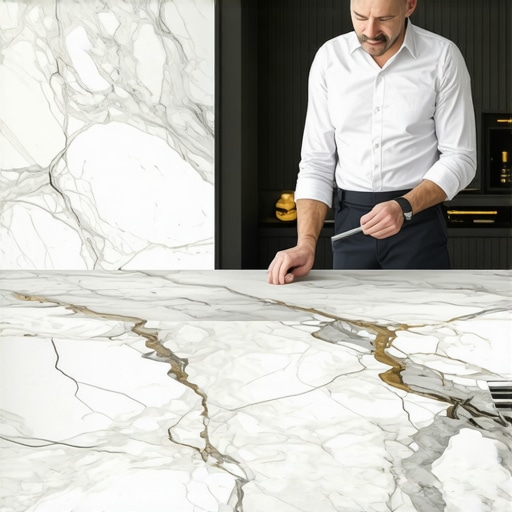
The industry has a dirty secret: mislabeling. Many slabs sold as quartzite are actually dolomitic marble. These “soft quartzites” look beautiful but etch the moment they touch lemon juice or vinegar. I have seen clients spend twenty thousand dollars on a kitchen island only to have it ruined by a spilled margarita on opening night. The smell of fresh adhesive hasn’t even faded before the panic sets in. The result? Avoidable failure. To prevent this, you must perform the glass scratch test. A true piece of quartzite will cut through glass like a diamond. Marble will simply slide over it. It is also vital to consider the edge. Choosing the right countertop edge profile that prevents liquid spills is a technical necessity. A mitered edge on a high-density quartzite creates a massive, monolithic appearance that defines the room. But if the fabricator lacks the diamond-tipped CNC tools required for this hardness, the edges will chatter and the seams will be visible. Quality requires the right equipment.
Market Corrections Ahead
The global stone market is tightening. High-quality quartzite quarries in Brazil are becoming more difficult to access, which is driving a valuation spike. In the next 24 months, expect prices for premium Taj Mahal or Perla Venata slabs to increase by 15-20%. This makes quartzite not just a surfacing choice, but a hedge against inflation in home equity. While granite has become a commodity material found in every suburban tract home, quartzite maintains an air of exclusivity and technical superiority. Buyers in the luxury segment now check for stone types during inspections. They know the difference. They see granite and think “remodel required.” They see quartzite and think “permanence.” This second-order effect on resale value cannot be ignored by anyone viewing their home as an asset. According to ASTM C615 standards, the physical requirements for granite are lower than the performance benchmarks we see in high-tier metamorphic quartzite.
The Executive Verdict
If you are building a kitchen meant to last thirty years without a surface refresh, buy quartzite. The initial capital outlay is higher, often 30% more than mid-grade granite, but the ROI is found in the lack of maintenance and the preservation of the stone’s luster. Avoid anything labeled “soft quartzite” or “super white” if you intend to do heavy cooking. If you are in a high-traffic environment with children and constant acidic food prep, do not settle for granite’s porosity. Demand a hard-density metamorphic slab. Test it yourself with a glass bottle. If it scratches the glass, it belongs in your home. The era of granite is over. The era of geological performance has arrived.
Frequently Asked Questions
Does quartzite need to be sealed? Yes, but less frequently than granite. A high-quality solvent-based sealer applied once every three to five years is typically sufficient for dense varieties. Will quartzite crack from heat? It is highly unlikely. It is one of the most heat-resistant natural stones available, though we still recommend trivets for extreme temperatures to avoid thermal shock at the seams. Why is quartzite more expensive to fabricate? The hardness of the stone wears down diamond blades faster than granite or marble, requiring more frequent tool replacement and slower cutting speeds. Can I use quartzite outdoors? Absolutely. Unlike engineered quartz, natural quartzite is UV-stable and will not fade or yellow in direct sunlight.