
How to choose the right CFM for a professional range hood
Most homeowners purchase ventilation based on a marketing number rather than a fluid dynamics calculation. They see a 1200 CFM rating and assume it will keep their kitchen pristine. It won’t. If your ducting is undersized or your house is too tight, that high-powered motor is just a noise generator. After fifteen years of diagnosing failed kitchen exhausts, I’ve seen more money wasted on oversized blowers that can’t breathe than on almost any other luxury appliance. Airflow is a system. The blower is just one part. The real challenge involves managing static pressure and ensuring a proper capture area for the thermal plume rising from your premium cookware.
The Thermal Plume Reality
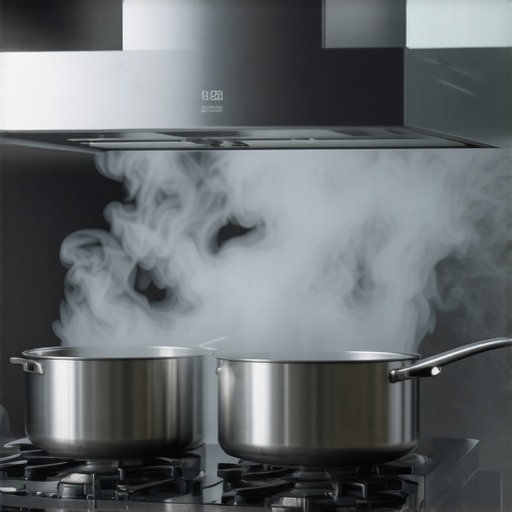
Heat rises in an expanding cone. This is the thermal plume. If your hood is too narrow or mounted too high, it doesn’t matter if you have 2000 CFM; the grease will bypass the filters and coat your ceiling. Professional ranges produce significant heat. You need a hood that extends at least three inches beyond the cooking surface on each side. The depth should cover the front burners. Anything less is a compromise in capture efficiency. I’ve stood in kitchens where the smell of searing ribeye lingered for days despite a massive blower. The reason? The hood was too shallow. The smoke simply rolled around the edge and into the room. This is where many architects fail. They prioritize the aesthetic of a sleek, thin hood over the physics of volume.
Calculating Required CFM
The standard industry rule suggests 100 CFM for every 10,000 BTUs of total burner output. A high-end 36-inch range might output 60,000 BTUs. Theoretically, you need 600 CFM. However, this assumes a straight duct run. Every elbow in your ductwork adds resistance. A 90-degree turn is equivalent to adding ten feet of pipe. The real cost of upgrading ventilation often lies behind the drywall. If you are pushing 900 CFM through a 6-inch duct, the air velocity becomes too high. The result is turbulence. You get more noise and less actual air movement. For anything over 600 CFM, you must use an 8-inch or 10-inch duct. This isn’t a suggestion. It is an engineering necessity to avoid premature motor failure and excessive decibel levels.
The Danger of Negative Pressure
Modern homes are built like plastic bags. They are airtight. When you turn on a powerful range hood, you are effectively trying to suck the air out of a sealed box. This creates a vacuum. In a house with a fireplace or a gas water heater, the range hood can actually pull carbon monoxide back down the chimney. This is backdrafting. It is lethal. According to the Home Ventilating Institute, any system over 400 CFM usually requires a Make-Up Air (MUA) system. This is a motorized damper that opens to let fresh air in while the hood is running. Ignoring this is the biggest operational risk in high-end kitchen design. I once visited a site where the front door was literally hard to open because the range hood was creates such a strong pressure differential.
The Noise Versus Efficiency Tradeoff
Remote blowers are the secret to a quiet kitchen. Instead of the motor sitting in the hood three feet from your ears, it sits on the roof or an exterior wall. You still get the power. You just don’t get the vibration. Inline blowers are another option, tucked away in the attic. When you evaluate a hood that actually sucks up smoke, look at the Sone rating. One Sone is roughly the sound of a refrigerator. A cheap hood on high speed can hit 8 or 10 Sones. That is the sound of a lawnmower in your kitchen. High-quality centrifugal blowers are quieter because they move air more efficiently with less RPM. Don’t settle for axial fans; they can’t handle the static pressure of a grease filter.
Strategic Foresight for Ventilation
The next 24 months will see a massive shift in local building codes regarding indoor air quality. We are moving toward smart hoods that sync with your range via Bluetooth. When the burner ignites, the fan starts. This removes the human element of forgetting to turn on the vent until the smoke alarm goes off. If you are planning a designated coffee station or a full remodel, pre-calculate your duct path now. Retrofitting a 10-inch duct into an existing floor joist is a nightmare. Do it during the framing stage or expect to pay three times as much later. Standards from ASHRAE are becoming stricter, and insurance companies are starting to look at kitchen ventilation as a fire prevention metric. Stainless steel baffle filters are the only professional choice. They don’t clog like mesh filters, and they are dishwasher safe. The weight of industrial-grade steel in a baffle filter is a telltale sign of quality.
The Executive Verdict
If your range is against a wall, aim for 1 CFM per 100 BTU, then round up to the next motor size to account for duct friction. If you have an island hood, increase that by 30%. Island hoods are more susceptible to cross-currents and need more raw power to maintain the plume. Never use a recirculating hood for a professional range; they are glorified paperweights that do nothing for heat or carbon monoxide. Buy a blower that is slightly more powerful than you think you need, but run it on a lower setting. This gives you the overhead for heavy searing while maintaining a conversational noise level. Check your cabinet depth secret for installation clearance before committing to a deep-profile hood.
Frequently Asked Questions
Can I vent a 1000 CFM hood through a 4-inch dryer vent?
Absolutely not. The static pressure will skyrocket, the motor will overheat, and you will move almost zero air. You need a dedicated 8-inch or 10-inch duct.
Do I really need make-up air for 600 CFM?
In most modern, energy-efficient homes, yes. Local codes often mandate it at 400 CFM. It is a safety issue, not just a code one.
Are baffle filters better than mesh?
Baffles are superior for high-heat cooking. They use centrifugal force to strip grease from the air and are much easier to clean without the clogged filter issues common in fine mesh.
How high should the hood be?
For most professional hoods, 30 to 36 inches above the cooking surface is the sweet spot. Any higher and you lose the capture area; any lower and you risk heat damage to the unit.