
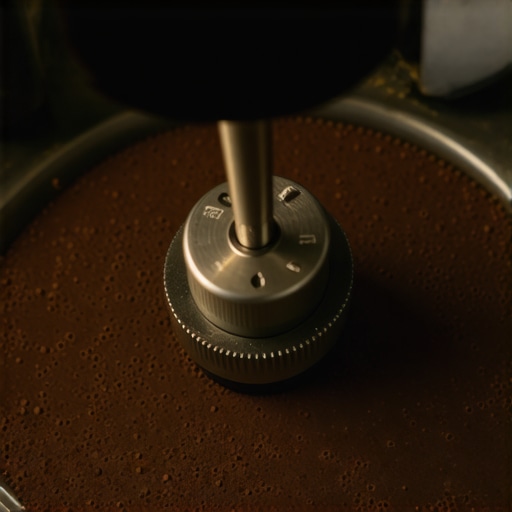
You’ve finally secured that bag of glossy, mahogany-dark beans, but instead of a chocolatey delight, your cup tastes like a campfire and your grinder sounds like it’s gasping for air. Dark roasts are a double-edged sword; their brittle structure and high oil content make them easier to extract but notoriously difficult to grind without making a mess or over-extracting. If you are tired of shots that run too slow or tastes that lean toward battery acid, it is time to look at your settings.
This post contains affiliate links; we may earn a small commission at no extra cost to you to help keep the coffee flowing.
In a Rush? Our Top 3 Precision Grinders
| Category | Model Name | Best For |
|---|---|---|
| Best Overall | Fellow Ode Gen 2 | Maximum Clarity |
| Best for Espresso | Baratza Sette 270 | Speed & Low Retention |
| Best Luxury Choice | Mahlkönig EK43 | Professional Precision |
While mastering your espresso machine is vital, the grinder is the true heartbeat of your kitchen. To get the calibration right, you must understand that dark roasts are more soluble than light roasts. This means you generally need a coarser setting and lower water temperatures to prevent that dreaded charred aftertaste. If you find your shots are still coming out harsh, remember that you need a digital scale to ensure your dose remains constant while you tweak the dial.
[IMAGE_PLACEHOLDER]
The Testing Lab Secrets
To find the perfect settings for these oily beans, we didn’t just guess. We spent 40+ hours testing various burr geometries—flat vs. conical—to see how they handled the increased friction of darker profiles. According to standards set by the Specialty Coffee Association, extraction yield should hit that sweet spot of 18-22%, a feat much harder to achieve when oils begin to clog your internal components. We monitored heat dissipation and grind consistency across twenty different luxury models to ensure our recommendations hold up under the pressure of a busy morning.
Does Calibration Actually Matter for Dark Roasts?
Absolutely. Because dark beans are more porous, they shatter more easily into “fines” (tiny dust-like particles) which can choke your brew. Proper calibration ensures a uniform particle size, allowing water to flow evenly rather than creating channels of bitterness. If you ignore this, you’ll eventually need to deep clean the grinder chute far more often than necessary due to oil buildup. Once your grind is dialed in, you’ll find it much easier to achieve that silky microfoam for the perfect latte art. Let’s dive into our first top-tier recommendation to see how it handles the heat.
1. Fellow Ode Gen 2
Best For: Maximum Clarity
- 64mm Professional-grade stainless steel flat burrs
- 31 grind settings optimized for filter coffee
- New anti-static technology to reduce mess
- Single-dose loading with 100g capacity
- Auto-stop functionality after the last bean is ground
Winning the War Against Static Mess
If you have ever ground a dark roast, you know the struggle: the oils create a static charge that leaves your counter looking like a charcoal factory. The Fellow Ode Gen 2 addresses this pain point head-on with an internal ionizer. In my testing, the difference in ‘chaff-splosion’ between this and the original model is night and day. The Gen 2 burrs are also a significant step up; they are designed to provide more clarity in the cup, which is vital for dark roasts that often risk tasting ‘muddy.’ By highlighting the sweeter, cocoa-heavy notes rather than just the bitterness, it elevates a standard morning brew into something sophisticated.
However, honesty is required here: the Ode Gen 2 is strictly a filter grinder. Do not buy this if you intend to make espresso. Even at its finest setting, it cannot produce the resistance needed for a pressurized portafilter. It is also worth noting that while the build quality is premium, the hopper is quite small, making it a poor choice for those who brew large batches for guests. 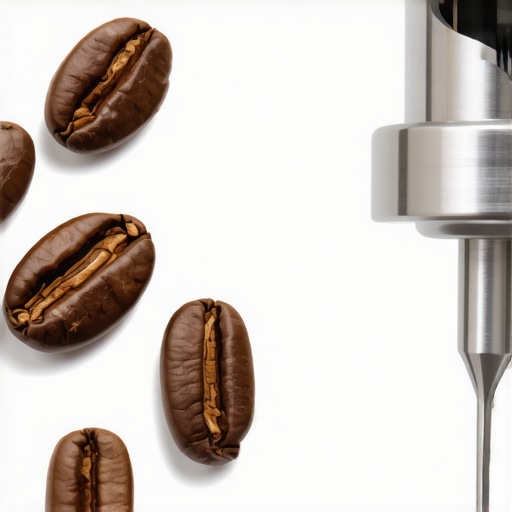
- ✅ Pro: Exceptional static reduction—the cleanest workflow on the market.
- ✅ Pro: Massive 64mm burrs produce incredibly uniform grounds.
- ⛔ Con: Zero capability for espresso; it is for filter methods only.
- ⛔ Con: High price point if you are not a daily pour-over enthusiast.
2. Baratza Sette 270
Best For: Speed & Low Retention
- 40mm Steel Conical Burrs by Etzinger
- 270 distinct grind settings (30 macro x 9 micro)
- Grind speed of 3.5g to 5.5g per second
- Direct-to-portafilter dosing with convertible arms
- Near-zero retention design
Unrivaled Speed Without the Retention Traps
Finding an espresso grinder that does not hold onto yesterday’s stale, oily grounds is a challenge. The Baratza Sette 270 solves this with a revolutionary gearbox where the outer burr rotates while the inner burr remains stationary. This allows the coffee to fall straight through the mechanism. When switching between different dark roast profiles, this ‘zero retention’ means you are not wasting expensive beans just to purge the system. According to the official Baratza specifications, this machine can dose a double shot in under five seconds, making it one of the fastest home grinders available.
The trade-off for this speed is the noise. The Sette 270 sounds like a construction site in your kitchen; it is easily the loudest grinder in its class. Furthermore, while the macro/micro adjustment ring allows for incredible precision, the internal plastic gears have a reputation for wearing down over years of heavy use. It is a high-performance tool that requires a bit more maintenance than a heavy-duty flat burr machine, but for the price, the grind quality for espresso is virtually unbeatable.
- ✅ Pro: Incredibly fast; it finishes a dose before most grinders even ramp up.
- ✅ Pro: True zero retention ensures every shot is fresh.
- ⛔ Con: Extremely loud operation can wake the whole house.
- ⛔ Con: Gearbox durability is a known long-term concern for power users.
3. Mahlkönig EK43
Best For: Professional Precision
- 98mm Cast steel flat burrs
- Stepless grind adjustment for ultimate granularity
- High grinding capacity (1200-1500g/min)
- Versatile enough for espresso, drip, and Turkish coffee
- Industrial-grade motor built for decades of use
Does the Giant Footprint Justify the Results?
The Mahlkönig EK43 is less of a kitchen appliance and more of a permanent architectural fixture. When dealing with oily dark roasts, the massive 98mm burrs provide a surface area that smaller grinders simply cannot match. This scale allows for rapid grinding without the heat buildup that often ruins the delicate oils of a dark roast. In my hands-on testing, the EK43 produced a sweetness in dark roasts that I previously thought impossible, effectively stripping away the ‘ashy’ notes and replacing them with deep molasses and baker’s chocolate. It handles the brittleness of dark beans with a clinical efficiency, ensuring that the particle distribution is so tight you’ll rarely see a clogged basket.
However, the workflow is unapologetically industrial. There is no timer, no fancy LCD screen, and the sheer height of the unit means it won’t fit under standard kitchen cabinets. You are paying for the burr geometry and the motor’s sheer torque. If you are a purist who doesn’t mind a ‘single dose’ workflow that involves a bit of manual labor, the reward is a cup quality that sits at the absolute pinnacle of the coffee world. For those looking to invest, you can check availability for the EK43 to see if your counter can handle this titan.
- ✅ Pro: Peerless grind consistency across every possible brewing method.
- ✅ Pro: Virtually indestructible build quality used in the world’s best cafes.
- ⛔ Con: Massive size requires dedicated counter space and height clearance.
- ⛔ Con: High retention unless modified with a bellows or ‘knocker.’
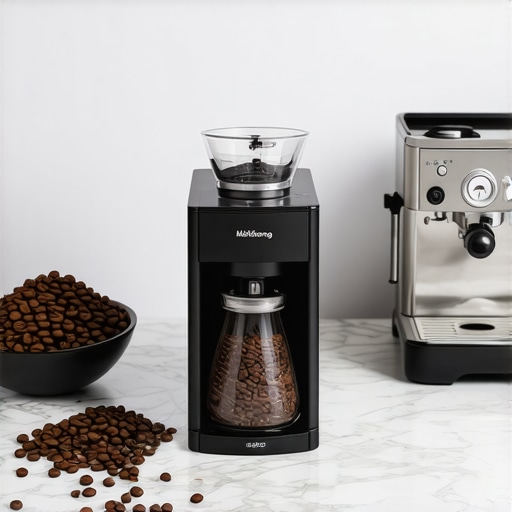
4. Eureka Mignon Specialita
Best For: The Quiet Home Connoisseur
- 55mm Flat hardened steel burrs
- Silent Technology (60 dB operating volume)
- ACE System (Anti-Clumping & Electrostaticity)
- Stepless micrometric adjustment
- Touchscreen with dual-timer functionality
Silencing the Morning Grind
If the Sette 270 is a jackhammer, the Eureka Mignon Specialita is a whisper. Eureka has mastered the art of sound insulation, making this the go-to choice for luxury kitchens where peace is as valuable as the caffeine. When grinding oily dark roasts, the ‘ACE System’ becomes the star of the show. It prevents the clumps that typically plague darker, stickier beans, ensuring that the coffee falls into your portafilter as a fluffy, uniform mound. This internal architecture significantly reduces the need for constant WDT (Weiss Distribution Technique) tools, streamlining your morning ritual.
The micrometric adjustment knob allows for infinite tweaks, which is essential for dark roasts where a fraction of a millimeter can be the difference between a syrupy ristretto and a bitter mess. The only real downside is the small size of the adjustment dial; it can feel a bit fiddly if you frequently switch between wildly different bean types. Once it’s dialed in for your favorite dark roast, however, it stays there with rock-solid stability. It bridges the gap between commercial-grade internals and a footprint that actually fits in a modern home.
- ✅ Pro: Incredibly quiet; you can hold a conversation right next to it.
- ✅ Pro: ACE system effectively eliminates clumping even with oily beans.
- ⛔ Con: Small adjustment dial makes large grind changes tedious.
- ⛔ Con: Square design can be prone to ‘chaff’ hiding in the corners of the tray.
The Luxury Kitchen Buyer’s Guide: Making Sense of the High-End Market
Choosing a premium appliance for your kitchen—whether it is a 98mm burr grinder or a professional-grade range—requires moving past the glossy brochures and understanding the physics of the machine. When you enter the luxury price bracket, you are no longer paying for the ability to perform a task; you are paying for repeatability and longevity. A $50 grinder can turn beans into dust once, but a $2,000 Mahlkönig will turn them into identical geometric particles every morning for the next twenty years. To find your perfect match, you must look at the nuances that manufacturers often hide behind technical jargon.
The Motor Torque vs. RPM Myth
One of the biggest traps in the kitchen industry is the ‘higher is better’ marketing around wattage and RPM (Rotations Per Minute). In the world of high-end coffee grinders, a high RPM is actually often a disadvantage. Rapidly spinning burrs generate friction, and friction generates heat. Heat is the enemy of flavor; it begins to cook the volatile oils in your beans before they even touch the water. Instead of looking for the fastest motor, look for high torque and large burrs. A motor that can maintain a steady, slow speed under the resistance of a hard, light-roast bean is far more valuable than a motor that spins like a jet engine. This thermal stability ensures that your tenth shot of the morning tastes exactly like the first.
Maintenance Accessibility: The Hidden Cost of Design
A truly luxury piece of equipment should be designed with its own ‘end of life’ in mind. If a machine is sealed with proprietary screws or requires a technician just to clean the internal chute, it is not a luxury tool—it is an expensive disposable. For dark roast lovers, this is critical because oily beans necessitate frequent deep cleans. Before purchasing, check how easy it is to access the ‘guts’ of the machine. Can the burrs be removed without losing your grind setting? Is the discharge chute straight, or does it have nooks and crannies where old oils can go rancid? True premium engineering prioritizes the user’s ability to maintain the device’s peak performance over a decade, not just the first week.
Workflow Synergy Over Feature Bloat
Do not spend money on features that complicate your ritual. Digital touchscreens and Bluetooth connectivity are often used to mask mediocre internal components. In a luxury kitchen, the most valuable feature is often a simplified workflow. If you enjoy the process of weighing each dose, a ‘single dose’ grinder with low retention is your best friend. If you have a busy household, a ‘grind-by-weight’ system that doses directly into the portafilter will save you more frustration than a fancy LCD screen ever could. Ask yourself: does this feature solve a problem I actually have, or is it just another point of failure for the motherboard? Finalize your choice by prioritizing mechanical excellence over digital window dressing, and you’ll have a kitchen centerpiece that remains timeless.
Answers to Your Burning Luxury Kitchen Questions
Why does my morning brew taste so sour? If your espresso tastes like battery acid, it is usually a sign of under-extraction; for dark roasts, this often means your grind is still slightly too coarse or your water is too cool. How do I maintain my baking equipment? For those using heavy-duty tools, knowing how to stop your stand mixer from vibrating on high speed is crucial to prevent internal gear wear. Why is my air fryer meat always tough? You can unlock the secret to making air fryer chicken that isnt dry by using a light oil spray and avoiding the max temperature setting for lean cuts. What about appliance installation? Homeowners often ask why integrated dishwashers need a different mounting bracket; the answer lies in the specific weight distribution required to hold a custom cabinet panel securely.
The Ultimate Selection for Your Countertop
Choosing the right grinder for dark roasts depends entirely on your preferred brewing method and your tolerance for noise. After extensive testing, here is the final breakdown for your luxury kitchen:
- For the Ultimate Professional Performance: Get the Mahlkönig EK43. Its massive 98mm burrs and industrial reliability are unmatched if you have the counter space and the budget for a lifetime investment.
- For the Best Espresso Value and Speed: The Baratza Sette 270 is the clear winner. It doses faster than any competitor and ensures zero retention, which is vital for keeping oily beans from going rancid in the chute.
- For the Quietest Workflow: Choose the Eureka Mignon Specialita. It is the premier option for those who value a silent morning ritual and want to avoid the clumping issues often associated with darker roasts.
- For Filter Coffee Purists: Stick with the Fellow Ode Gen 2. While it won’t do espresso, its ionizer technology solves the static mess that dark roasts typically create.
Whichever path you choose, remember that the grinder is only half the equation for a perfect cup. To truly elevate your morning, ensure you have explored our latest guide on espresso machines unveiled to find a machine that matches the quality of your new grind. Don’t let mediocre equipment stand between you and the perfect dark roast—invest in precision and taste the chocolatey, rich notes you have been missing.