
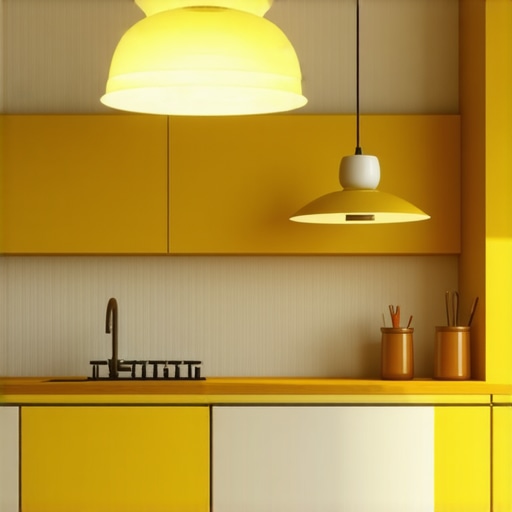
The Lighting Mistake That Makes Your Kitchen Look Dated
Lighting is not a finishing touch. It is a structural requirement. After fifteen years in this industry, I have watched homeowners drop six figures on a luxury kitchen only to kill the entire aesthetic with a single, amateur choice: poor color temperature. The result? Avoidable failure. When you invest in premium cookware and high-end espresso machines, you expect them to gleam. Instead, under the wrong light, they look flat and industrial. We are talking about the difference between a high-end gallery and a surgical suite. The stake is your property value and your daily sanity.
The Physics of Spectral Power Distribution
Most people buy bulbs based on wattage. That is an archaic metric. In 2025, the only number that matters is the Color Rendering Index (CRI) and, more specifically, the R9 value. Cheap LED bulbs found in big-box stores typically have a CRI of 80. This means they are missing significant portions of the color spectrum. If you are searing a dry-aged ribeye in your professional kitchen appliances, a low CRI light makes that meat look gray rather than rich red. You need a CRI of 95 or higher. Anything less is a compromise that dates your home instantly. According to standards by the Illuminating Engineering Society (IES), high-quality light should mimic the full spectrum of natural sun. The hum of a cheap driver or the flicker of a low-quality diode is a sensory signal of a budget renovation. It cheapens the high-end hardware finishes you spent months selecting.
The Driver Reliability Crisis
The hardware is only as good as the power behind it. I have seen hundreds of integrated LED strips fail within twenty-four months because of thermal bridging issues in the cabinetry. When heat cannot escape the diode, the color shifts. Your once-warm 2700K under-cabinet lighting suddenly turns a sickly purple. This is the hallmark of a dated, poorly executed kitchen. Modern high-output systems require remote drivers located in accessible, ventilated areas. Think of it like the boiler in a commercial building. If you bury the tech behind the drywall, you are designing for future demolition. You must account for the voltage drop over long runs of tape lighting. This is where the engineering reality hits the Pinterest dream. A stand mixer sitting on your counter should not cast a harsh, distorted shadow. It should be bathed in uniform, diffused light that highlights its industrial design. Proper diffusion requires deep-channel extrusions, not just raw tape stuck to the bottom of a cabinet.
The Impact on Appliance Aesthetics
Consider the visual weight of your air fryers or your espresso machines. These are often finished in brushed stainless steel or polished chrome. Under high-Kelvin lighting—anything above 4000K—these surfaces reflect a cold, blue tint that feels clinical. It is a common error in timeless kitchen color palettes. The blue light clashes with natural stone and wood grains. It creates a visual dissonance that the brain perceives as ‘cheap.’ To fix this, you must layer your light. Ambient, task, and accent lighting must all share the same chromaticity. If your recessed cans are 3000K but your functional range hood has 5000K internal bulbs, the space will feel disjointed. This is why we insist on tunable white systems that allow for 2700K in the evening and 3500K during food prep. The National Electrical Manufacturers Association (NEMA) highlights that dimming compatibility is the primary failure point in modern residential lighting. If your lights flicker when you dim them, your kitchen is functionally obsolete.
The Cost of Poor Integration
I remember a project in a high-rise where the client used 5000K ‘daylight’ bulbs throughout the open-plan space. The result was a kitchen that looked like a gas station at midnight. The heavy-bottomed stock pots and copper pans looked like scrap metal. We ripped it all out. We replaced the fixtures with high-CRI, warm-dimming units that transition from 3000K down to 1800K as they dim. The transformation was immediate. The marble veins popped. The walnut island felt rich. This isn’t just about looks; it’s about the second-order effects on your mood and circadian rhythm. In the next 12-24 months, we will see a massive shift toward human-centric lighting that adjusts automatically based on the time of day. If you aren’t pre-wiring for these smart systems now, you are building a relic. Ensure you have hidden appliance storage solutions that include integrated lighting triggers. Opening a dark pantry is a design failure.
The Executive Verdict
The strategy is simple: Buy high-quality, high-CRI 2700K or 3000K LEDs and never look back. If you are renovating a luxury kitchen, do not let the electrician provide the ‘standard’ contractor-grade fixtures. Specify the spectral requirements yourself. Hold the line on quality. A kitchen with $100,000 in appliances and $50 lighting is a bad investment. Buy high-end drivers and specified diodes. Sell the idea of ‘cool white’ daylight bulbs in a residential setting. Hold your budget until you can afford the correct dimming modules. Your kitchen should look as good at 10 PM as it does at 10 AM.
Frequently Asked Questions
What is the best Kelvin rating for a luxury kitchen?
Stick to 2700K for a traditional, warm feel or 3000K for a slightly crisper, modern look. Avoid 4000K and above in residential kitchens.
Why do my LED lights flicker when I use the dimmer?
This usually indicates a mismatch between the LED driver and the dimmer switch. You need a magnetic or electronic low-voltage (ELV) dimmer that matches your specific transformer.
Does CRI really matter for cooking?
Absolutely. High CRI (95+) allows you to see the true color of your food, which is essential for gauging doneness and freshness of ingredients.
Should I light the inside of my cabinets?
Yes, but only if you have glass fronts or use them for frequent task access. Integrated sensors that turn lights on when the door opens add a level of sophistication that defines modern luxury.